
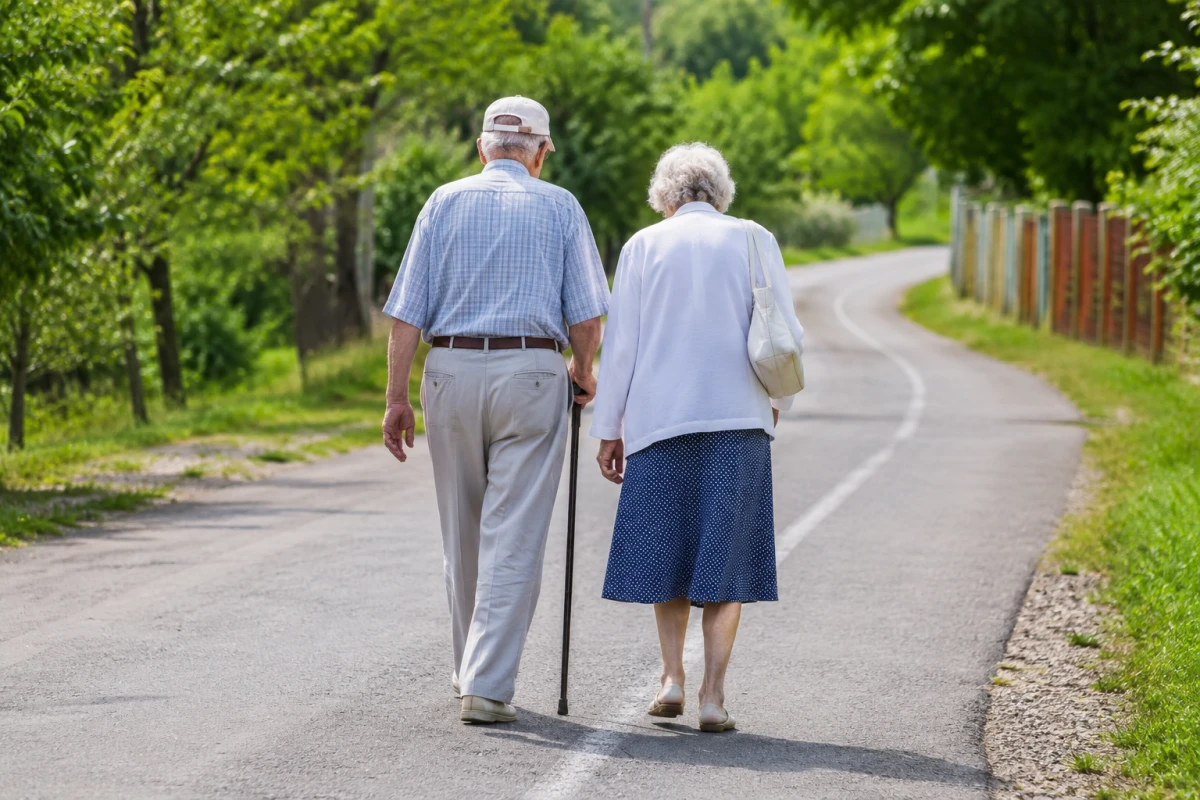
The slowing of gait in older age is traditionally associated with the loss of muscle strength. However, a new study by researchers from Flinders University has shown that the main reason lies not in the muscles, but in the functioning of the brain. It turns out that the body consciously sacrifices speed for safety and to reduce the risk of falls.
Many believe that as people age, they begin to walk slower due to muscle weakening and deterioration of physical fitness. However, the results of a new study published by Earth.com indicate otherwise.
Researchers from Flinders University have discovered that a key role is played by changes in the functioning of the nervous system. During normal walking, the ankle joint performs two functions at once: it cushions the impact when the foot touches the ground and provides a powerful push forward. In young people, this mechanism works smoothly, with muscles alternating between tensing and relaxing.
As people age, the situation changes. The researchers found that in older adults, the muscles on both sides of the ankle joint begin to contract simultaneously. As a result, the foot becomes stiffer even before it contacts the ground.
According to specialists, this is not a sign of disease or a consequence of bodily wear and tear. The brain consciously chooses a more cautious movement strategy to reduce the risk of losing balance and falling.
However, this protection comes at a cost. A significant portion of energy is spent on stabilizing the joint, leaving fewer resources for the final push forward. This results in shorter strides, less amplitude in movements, and a decrease in walking speed.
The study also questioned the effectiveness of some traditional rehabilitation programs that focus primarily on increasing leg muscle mass. According to the researchers, even strong muscles cannot fully compensate for changes in the functioning of the nervous system if the brain continues to restrict joint mobility for safety.
Experts believe that to maintain an active lifestyle in old age, more attention should be paid to developing coordination, balance, and flexibility.
Among the most beneficial types of activities, researchers highlight:
-
tai chi exercises;
-
coordination exercises;
-
training on balance platforms;
-
exercises for developing stability and body position control.
Such training helps the nervous system to trust its own movements again and reduces the need for excessive joint stabilization.
The new study shows that age-related slowing of gait is related not so much to the loss of physical strength as to changes in the brain's strategy, writes bb.lv. The body seeks to protect the individual from falls by making movements more cautious. Therefore, to maintain mobility in adulthood, exercises for balance, coordination, and flexibility are just as important as traditional strength training.















Leave a comment