
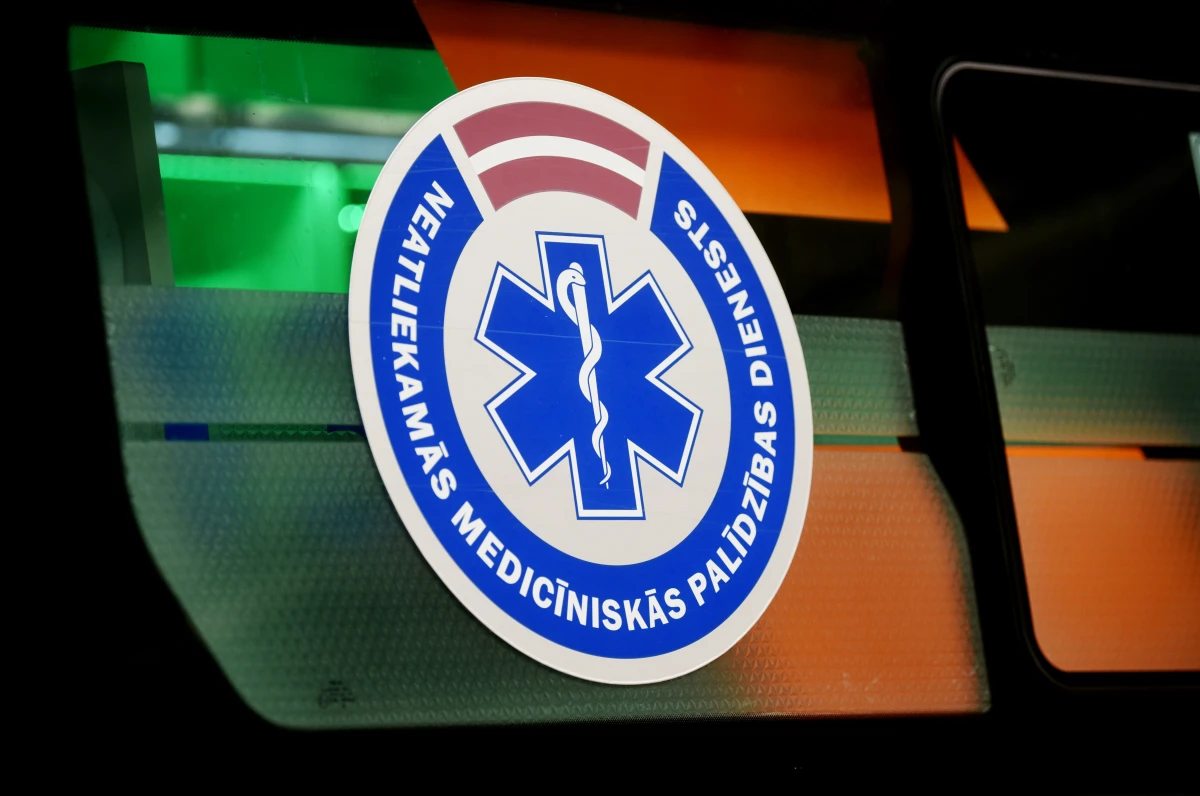
A petition has begun on the ManaBalss portal to restore a 24-hour emergency care center at the Riga 1st Hospital. The authors of the initiative believe that this will help reduce queues at the largest hospitals in the capital and decrease the waiting time for ambulance teams.
In Latvia, a petition has begun to restore 24-hour emergency medical care at the Riga 1st Hospital, where such a center was closed back in 2010.
The initiative was submitted on the ManaBalss portal by the head of the support center for the ambulance service "Krassts," Rafael Ciekurs. To submit the proposal to the Saeima, 10,000 signatures must be collected. By Saturday morning, more than 300 people had supported the initiative.
The main idea is to create an additional emergency care point in the center of Riga that could accept some patients and thus relieve the largest hospitals in the capital.
The initiative was prompted by the regularly occurring queues at the emergency departments of the Stradins Clinical University Hospital and the Riga East Clinical University Hospital. At certain times, ambulance teams have to wait for hours to transfer patients, remaining unavailable for new calls.
For patients, this means longer waiting times for medical assistance, and for the ambulance service, it results in reduced operational efficiency during peak loads.
The author of the initiative proposes to implement the project in stages. In the first stage, a 24-hour emergency care point could be established at the Riga 1st Hospital, staffed with a duty doctor, nurses, X-ray facilities, and basic laboratory diagnostics.
It is expected that patients with mild to moderate injuries, acute illnesses, and other conditions not requiring treatment at the university clinic level could be directed there.
However, this is not about replacing major hospitals. The authors emphasize that patients with strokes, heart attacks, severe injuries, sepsis, and other dangerous conditions still need to be transported to specialized medical centers.
In the second stage, it is proposed to ensure state funding for such services through the National Health Service. A clear algorithm for distributing patients among the capital's medical institutions should then be developed.
Particular attention is proposed to be paid to evaluating the results. One year after the system is launched, the author of the initiative suggests conducting an independent analysis to determine whether the load on the emergency departments of the largest hospitals has been reduced and whether the waiting time for ambulances has been shortened.
The problem of overcrowding in emergency departments has been discussed for several years. Recently, Latvian Television reported that one ambulance team had to wait almost two hours to transfer a patient at the Stradins Hospital. Similar situations have been recorded before.
At the Stradins Hospital itself, they explain that delays are related not only to the work of the emergency department but also to the overall load of the inpatient facility, the number of available beds, and the complexity of treating incoming patients.
Supporters of the initiative believe that utilizing the infrastructure of the Riga 1st Hospital could be one way to improve access to emergency medical care in the capital. Now, the future of the proposal will depend on whether the necessary 10,000 signatures can be collected.















Leave a comment