
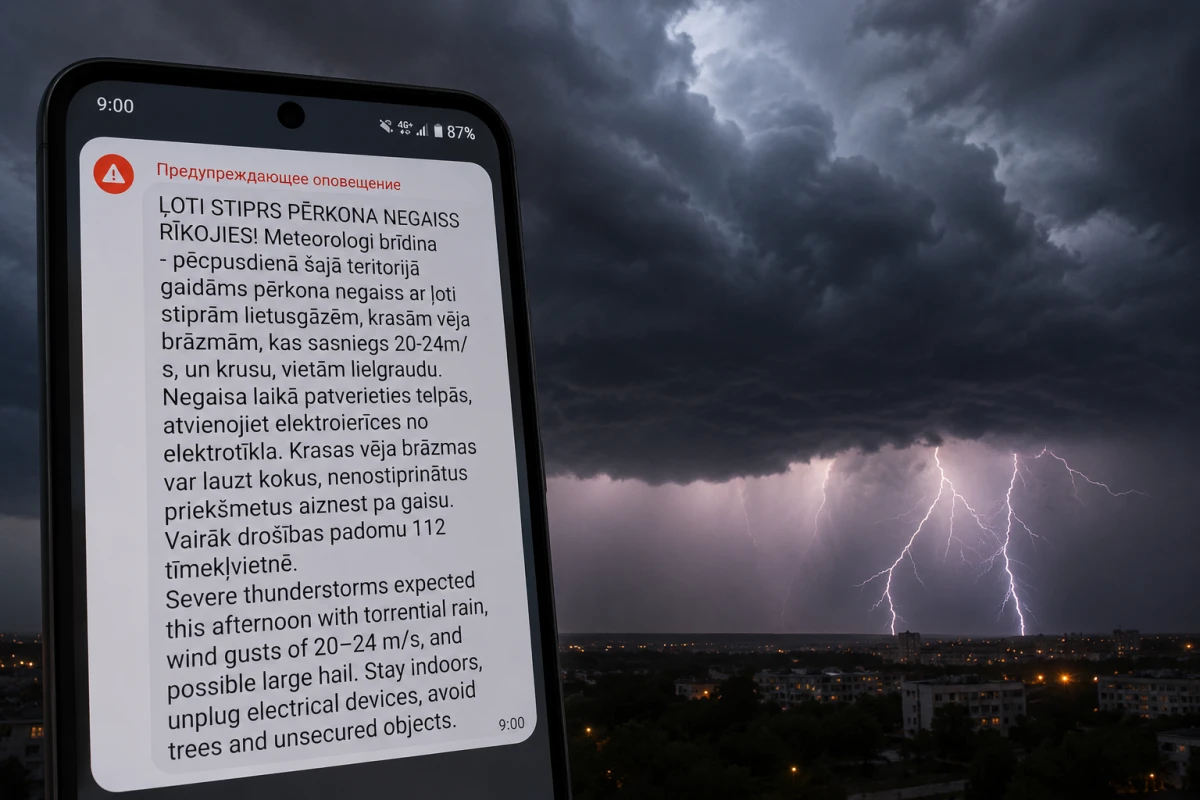
The emergency alert about a possible dangerous storm sent to residents of most of Latvia elicited mixed reactions. Although the predicted storm ultimately bypassed Riga, experts are convinced that the decision to warn the population was justified.
On Thursday morning, emergency alerts about possible dangerous weather phenomena were sent to the mobile phones of residents in about two-thirds of Latvia, including Riga.
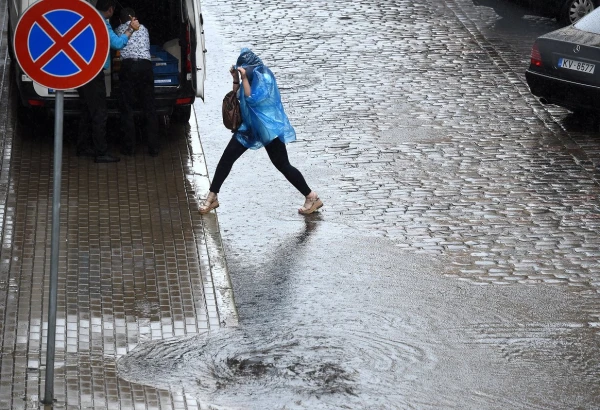
Many took the message seriously: they canceled plans, monitored forecasts, and prepared for a severe thunderstorm. However, for a significant portion of the capital's residents, the day ended with just regular rain.
This once again raised the question that is discussed after such cases in many countries: will people eventually start ignoring warnings if danger does not regularly materialize where it was expected?
According to experts, the threat this time was quite real. Forecasts indicated that a powerful storm front could bring large hail, strong winds, and even tornadoes. However, the weather system shifted east of the predicted trajectory and most strongly affected Selia.
Opinions among residents were divided.
Some believe that it is better to receive an unnecessary warning than to be left without information in a truly dangerous situation.
Others admit that after such cases, trust in emergency messages may decline.
"We were waiting for a strong storm, but it never came. Perhaps someone will really stop believing such warnings," acknowledged one of the surveyed Riga residents in an interview with TV3 News.
The Latvian Environment, Geology and Meteorology Centre emphasizes that the forecast met the criteria for an orange level of danger. According to the head of the forecasting and climate department, Andris Viksna, the situation could have developed quite differently.
"If the storm system had shifted just 50–100 kilometers west, serious consequences could have affected the central part of the country. In this case, Riga was just lucky," the specialist noted.
Meteorologists remind that in summer, it is particularly difficult to accurately determine the location of individual storm cells. Even modern models do not allow for absolute precision in predicting which populated area will be hit by the elements. Based on forecasts, the decision to send messages through the cellular alert system is made by the State Fire and Rescue Service.
Deputy Chief of the SFRS Ivars Nakurs believes that it is wrong to criticize warnings simply because the danger did not materialize in a specific location. According to him, the situation is much more dangerous when people find themselves in a disaster zone without any warning.
That is why services prefer to act cautiously, especially when it comes to potential threats to life and health.
Severe summer storms, squalls, and localized extreme weather phenomena have been occurring more frequently in Latvia in recent years. This means that residents are likely to receive similar emergency alerts in the future.
The main challenge for services today is to maintain public trust in the warning system while not risking people's safety in situations where danger can materialize at any moment.








Leave a comment