
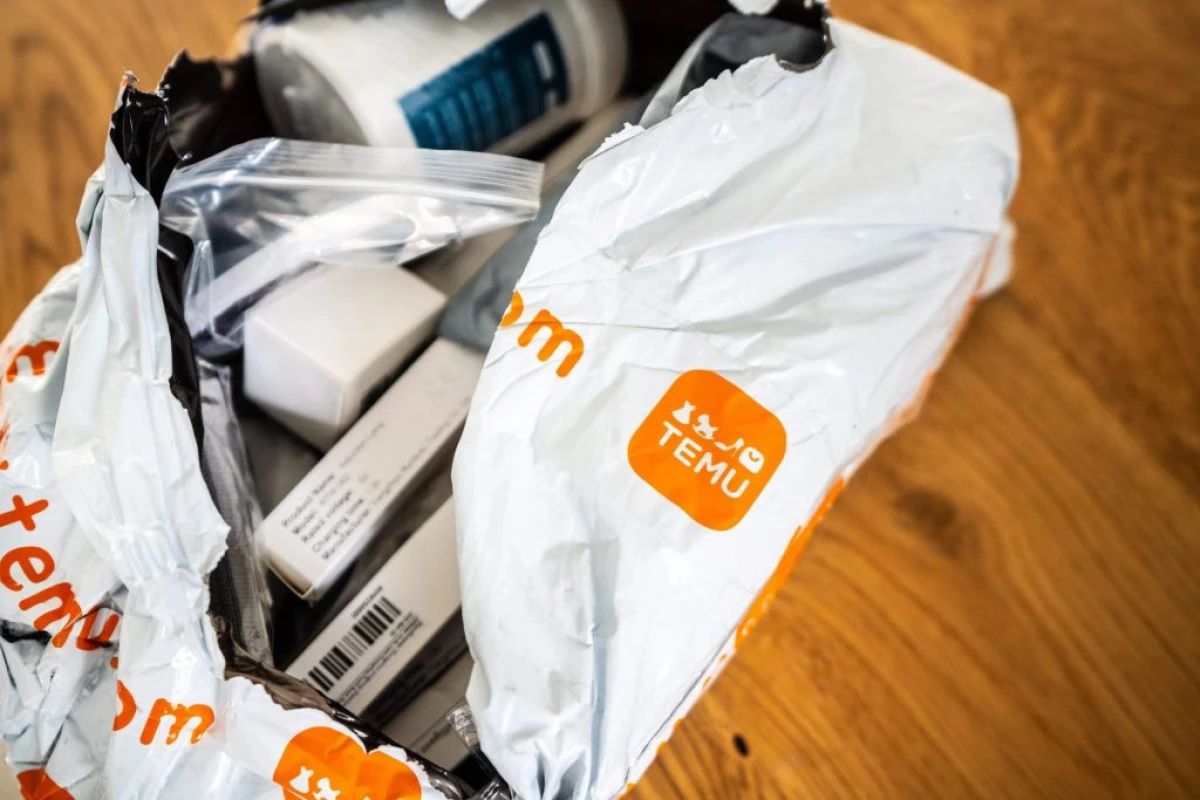
It must be acknowledged that when visiting sites like 'Temu', 'Shein', or 'AliExpress', many find it hard to resist the temptation to buy eye-catching items. Low prices create the impression that this is the most economically advantageous solution and a good way to save, writes Nasha.lv. However, the question is increasingly being raised — is it really that simple?
This topic was raised on the social media platform "Threads" by Mairita: "I am glad that Latvia is part of Europe. Unsafe and harmful products should be left in the past. We need to reduce waste. Workers around the world deserve protection. Our data must be protected. We do not need Russian oil — neither directly nor indirectly."
The woman also attached images to her post that outline the main reasons why, in her opinion, people should avoid such trading platforms. One of the arguments mentions unsafe goods that do not always meet European Union standards.
She also points out the enormous amount of waste generated by purchasing very cheap products, which are often thrown away shortly after or not used at all.
However, it quickly became clear in the comments section that people's opinions on this issue vary significantly.
Santa writes: "Mairita, I would urge you to speak only for yourself. If the same product on 'Temu' and in store X differs in price by 4 times, then it is unlikely to be about the safety of the product. I highly doubt that every single item and every shipment is so thoroughly checked that it justifies a 4-fold difference."
In turn, Eva is convinced that similar products can also be found in many Latvian stores: "Our Latvian stores are also full of Chinese goods, including from 'Temu', 'Shein', 'Aliexpress'."
Māris is also not ready to give up shopping on these platforms: "I don't need some smart person who will tell me whether the product is 'safe' for a miserable 10-fold markup. People should be allowed to understand for themselves what is good, and to decide how to spend their hard-earned money."
Meanwhile, Kevin believes that the core of the problem lies in Europe's competitiveness: "Why can't we honestly say — the EU with its requirements is no longer able to compete with cheap Chinese goods? This threatens the EU economy! And that is a fact."
In turn, Kris points out the issue of data security: "We worry about 'Temu' data, but the fact that our expensive smartphone is listening to us and as a result of a casual conversation the next day we see ads referencing it — no one cares at all."
Many commentators also point out that shopping on such platforms is often not a choice for luxury, but a necessity.
"In my opinion — I don't buy clothes, cosmetics, electronics, etc. there, but if identical garden lights, decorations for a themed party, or other small items cost four times more in the store, then I will buy them on 'Temu'," writes Iveta.
Daniela shares a similar opinion: "I disagree. People buy on 'Temu' not out of a good life. Prices in Latvia are inadequate. For many, China is a way to buy everything necessary for themselves and their entire family, children, home, pets."
Meanwhile, decisions have already been made in the European Union that may soon affect the popularity of such platforms.
Bb.lv has already reported that starting from July 1, 2026, a new customs duty on low-value goods sent from countries outside the EU, including from Chinese platforms 'Temu', 'Shein', and 'AliExpress', will be introduced in the European Union. It is planned that a fixed fee of three euros will apply to shipments valued at up to 150 euros.
The European Union explains that such changes are necessary to reduce unfair competition, limit the entry of potentially unsafe goods into the market, reduce fraud risks, and address environmental issues related to mass shipments.










Leave a comment