
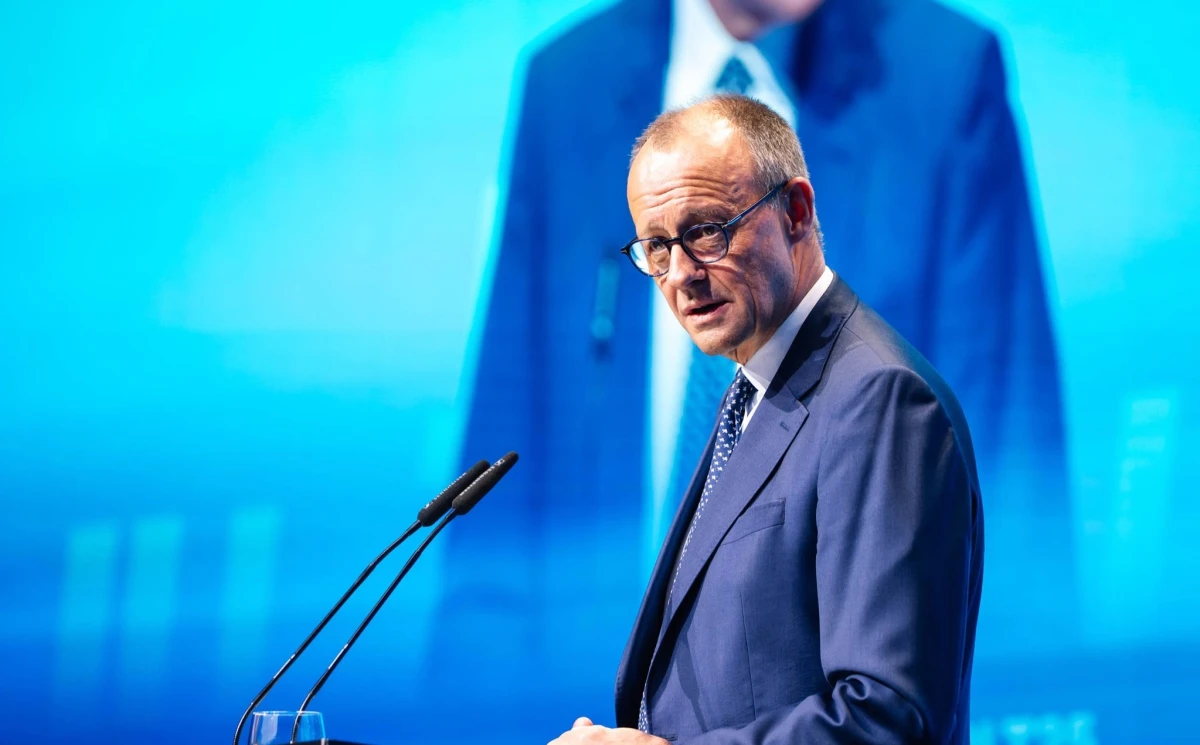
After Germany's crushing defeat in the struggle for a seat on the UN Security Council, one thing became clear: the country is on life support. An authorial column by Euronews editor-in-chief Klaus Strunz.
After 16 years of Angela Merkel's rule, marked by major miscalculations in energy, economic, and migration policies, and three catastrophic years of a dysfunctional coalition led by Olaf Scholz, Friedrich Merz's cabinet is rapidly heading towards historical lows.
The Germans could still somehow explain to themselves the fact that the international community trusted smaller countries (such as Portugal and Austria) rather than Germany - the leading power in Europe. Portugal has many friends around the world, enjoys significant sympathy in Africa, and the UN Secretary-General is Portuguese. But the fact that neighboring Austria received significantly more votes is both a humiliation and a sobering signal.
Germany has clearly lost trust and squandered its authority. Politically, it is no longer taken seriously, and economically it is increasingly seen as a state experiencing a downturn. Praise is now mainly directed at past achievements, and "Made in Germany" is increasingly associated with high costs and inefficiency. Germany has turned into a nursing home and a museum of a world that no longer exists. Yet it was supposed to be the engine of Europe's future.
If Germany Does Not Get Back on Its Feet, the Very European Union Will Be at Risk
Is this fair?
As someone who takes pride in being German and European, I find it hard to write the following sentence: Yes, it is fair. Worse still, Germany has brought itself to this state.
For too long, politics has been guided by an ideology hostile to future prosperity or simply unrelated to it. Conservatives have largely turned into progressives, thereby making themselves politically unnecessary.
Europe already has enough leftist parties. As a result, the vital balance between pragmatism and ambition, between preservation and reform - qualities that once existed across the political spectrum - has been lost.
Today, much more is at stake than another parliamentary vote, salary increases for politicians, a ban on internal combustion engines, or debates about gender identity. At this stage, Germany's future is inseparable from Europe's future.
If Germany cannot get back on its feet, the very European Union will be at risk. It is no coincidence that in Brussels, one can often hear, sometimes jokingly and sometimes with genuine concern: The EU exists as long as Germany pays.
Therefore, the time has come for a decisive turnaround.
Values Only Matter When Backed by Power
In a world of growing competition, economic power, technological sovereignty, and political capability become decisive. Values remain important, but they only have influence when backed by strength. The fuel for such a turnaround is not difficult to describe: pragmatism instead of ideology.
This cannot be achieved through speeches or moral exhortations - one of the least appealing habits of Western Europe. Leadership grows from economic strength, political reliability, and the ability to solve problems.
For this mission of rethinking, four areas are particularly important:
First, Germany must regain its economic competitiveness. High energy prices, excessive bureaucracy, slow digitalization, and insufficient investment levels have weakened Europe's largest economy. A strong Europe is impossible without a strong Germany.
Peace and Stability Can No Longer Be Taken for Granted
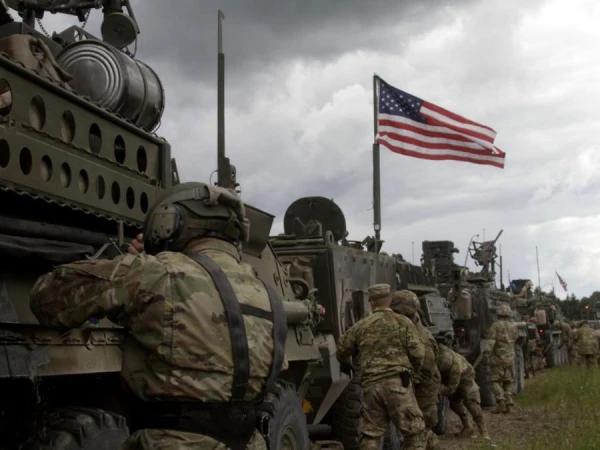
Second, Germany must restore its defense capabilities and take greater responsibility for Europe's security. The geopolitical reality has changed. The world and stability can no longer be taken for granted. Europe needs credible deterrence and strategic capabilities.
How sensible the goal of transforming the German armed forces by 2039, exactly one hundred years after Nazi Germany's attack on Poland, into "the most powerful conventional army in Europe" is a matter of debate. But at least it resembles a plan.
Migration Needs to Be Managed Much More Effectively
Third, Germany must manage migration much more effectively. Humanity and order are not mutually exclusive. A country that does not protect its borders, hardly deports illegal migrants, and loses control over irregular immigration will not be taken seriously. Securely guarded borders, a functioning asylum system, and successful integration are necessary conditions for social cohesion and trust in a democratic rule of law.
Fourth, Germany must again become a center of innovation. Artificial intelligence, digital infrastructure, advanced manufacturing, scientific research, and new energy technologies will determine the level of prosperity for future generations.
Europe cannot continue to lag behind the USA and China. A country that was once a model in education and inventiveness but today has no world-class university, is falling in international rankings for education quality, wins few major scientific awards, no longer sets global standards, burdens research with regulations, overly regulates the AI sector, abandons nuclear research, turns away from the development of internal combustion engines, and rejects advancements in genetics will struggle to compete with the most innovative states in the world.
Europe Needs a Strong and Reliable Germany
To avoid misunderstandings: this is not about German hegemony.
Europe needs a reliable, strong, and capable Germany. A partner in the pursuit of peace and prosperity. If Germany renews itself, it can once again drive Europe forward. If not, the entire continent will find it much harder to maintain prosperity, security, and influence.
The good news is that it is never too late: one just needs to start. In 1648, the Peace of Westphalia was concluded, ending the Thirty Years' War. It devastated, and in some regions of Central Europe - primarily in Germany - decimated the population. This treaty ended the war through a pan-European peace congress and became the starting point for modern European diplomacy.
In 1945, Germany and Europe lay in ruins. Then came recovery, reconciliation, and the establishment of European forms of cooperation. Prosperity and progress followed.
In 1990, the Cold War ended. This was followed by German reunification, the Iron Curtain that divided Europe disappeared, and for most Europeans, this once again meant democratization, restoration, and further development of Europe for the benefit of all.
Now Germany and Europe need a new start. Not tomorrow, but now.
There are two paths out of intensive care: one leads back to life, the other to hospice (palliative care institution). Chancellor Merz will largely determine the direction in which Germany and, along with it, Europe will go. He may be remembered in history books as the doctor who saved the patient or as the gravedigger.



Leave a comment