
Public transport in Latvia is becoming more accessible for people with disabilities, elderly passengers, and parents with strollers. However, many issues remain unresolved — from ticket purchasing to information access and infrastructure adaptation.
The accessibility of public transport in Latvia is gradually improving; however, there is still much work to be done to create a truly convenient environment for people with mobility, vision, hearing impairments, and other special needs, writes Diena.
To coordinate decisions in this area, an Advisory Council on Mobility and Accessibility Equality was established at the Ministry of Transport at the end of 2023. As reported at a meeting of the Saeima subcommittee on reducing inequality by the director of the department of mobility and inter-sectoral planning of the ministry, Ginta Veipa-Kopylova, the council addresses issues related to both infrastructure and the accessibility of information for passengers.
The focus is on ways for blind and hard-of-hearing individuals to obtain information, ticket purchasing and fare discounts, the possibility of requesting assistance and assistants, as well as ensuring that vehicles and infrastructure meet the needs of people with disabilities.
One of the problems remains the use of electronic identity cards to obtain fare discounts. For some individuals with mental disorders, such solutions prove too complicated for everyday use. Therefore, alternative options are currently being considered, including a digital wallet and a new version of the Mobilly app, which will be able to perform identity verification functions.
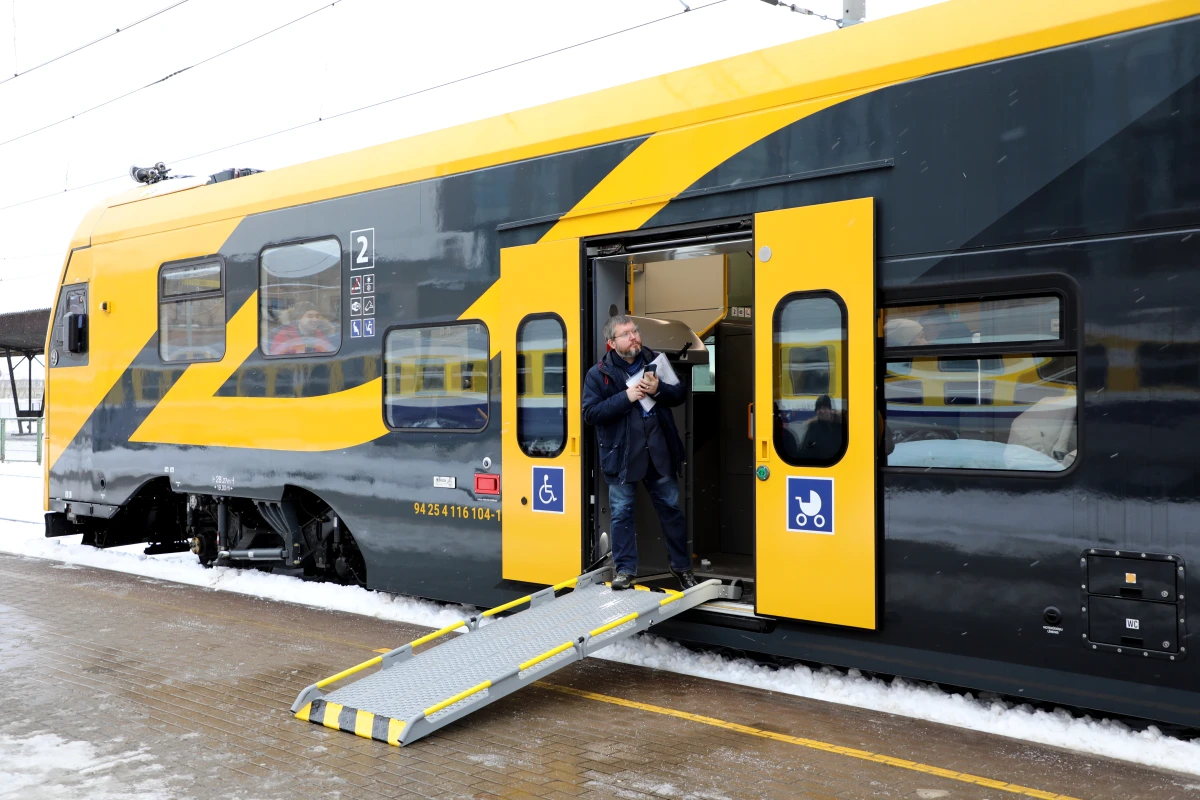
Significant changes have also occurred in the railway sector. In the electrified zone, all trains are now serviced by new low-floor electric trains, which significantly ease travel for people with limited mobility, elderly passengers, and families with strollers.
The time required to apply for the use of a mobile lift for boarding trains has also been reduced from 36 to 24 hours. Such lifts are already available at 20 railway stations across the country.
An important role in enhancing accessibility is played by the "Stacija 2.0" program, which allows municipalities to create modern mobility points near railway stations. The program includes the improvement of access roads, the construction of parking lots for cars and bicycles, and the enhancement of connections between various modes of public transport.
A total of 64 million euros from European Union funds has been allocated for the implementation of the program. In the first phase, funding was granted to nine projects — eight in Riga and one in Cesis.
As explained by the head of the internal communications department of "Latvijas dzelzceļš," Toms Kalnitis, principles of universal design for railway infrastructure have been developed in collaboration with the society of disabled individuals and their friends, "Apeirons."
These principles include the construction of high passenger platforms, the installation of ramps and handrails, as well as the creation of more spacious canopies to protect passengers from rain and wind.
Despite the progress made, specialists acknowledge that transport accessibility remains a complex task. In addition to adapting stations and vehicles, it is necessary to ensure clear information, convenient digital services, and the possibility of independent movement for all categories of passengers, regardless of their health status.













Leave a comment