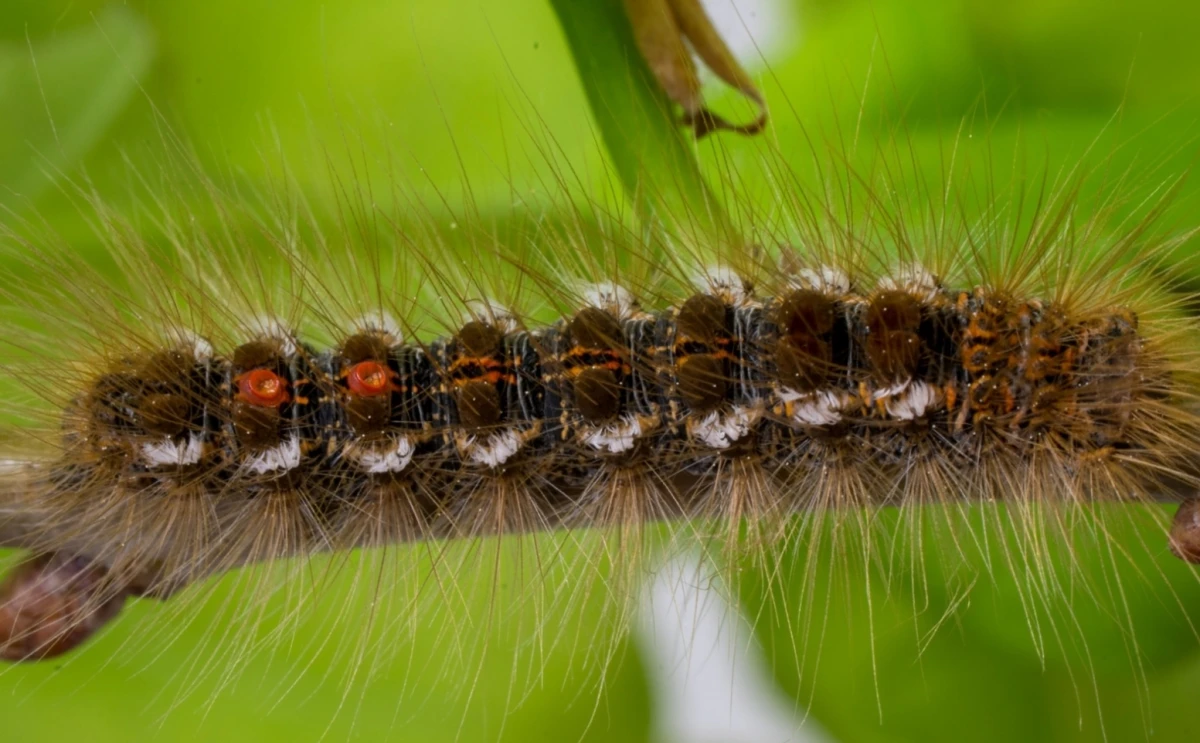
The State Plant Protection Service has again recorded the spread of the golden tussock moth in Zemgale. This pest is dangerous not only for trees but also for people: the toxic hairs of the caterpillars can cause severe allergies, skin inflammation, and serious breathing problems.
The golden tussock moth has been discovered again in Zemgale — a dangerous pest that threatens both trees and human health. This time, the caterpillars were found in the Lielplatona parish of the Jelgava region, and specialists from the State Plant Protection Service confirmed that it is indeed the golden tussock moth.
The mass spread of this pest in the region was first recorded back in 2021. Since then, new outbreaks have regularly appeared in various locations in Zemgale.
The main danger comes not from the butterflies themselves, but from the caterpillars.
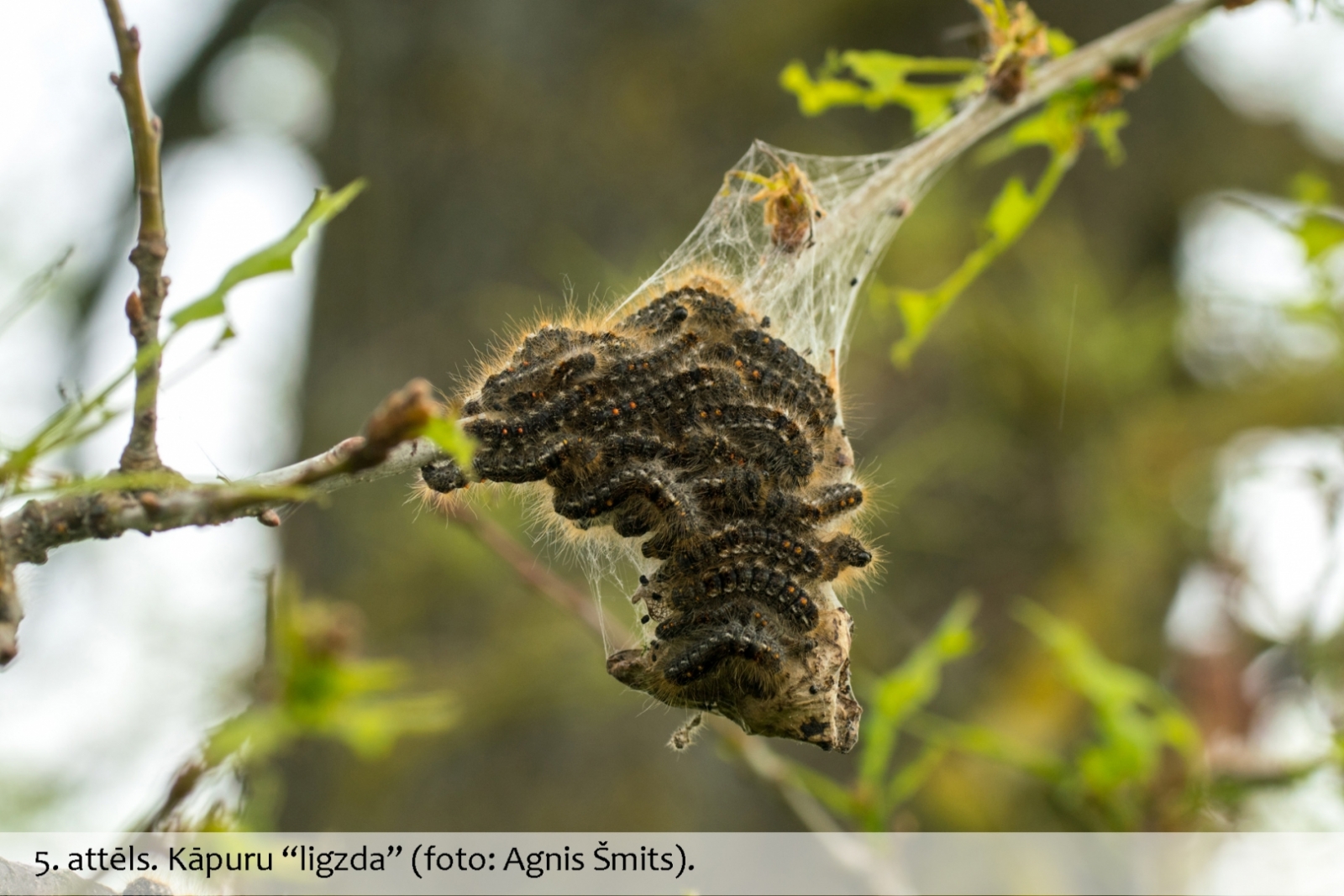
Their bodies are covered with thousands of microscopic hairs containing a toxic substance. When threatened, the caterpillars shed these hairs into the environment. They are very light, can remain airborne for a long time, and can even be lifted by the wind years later.
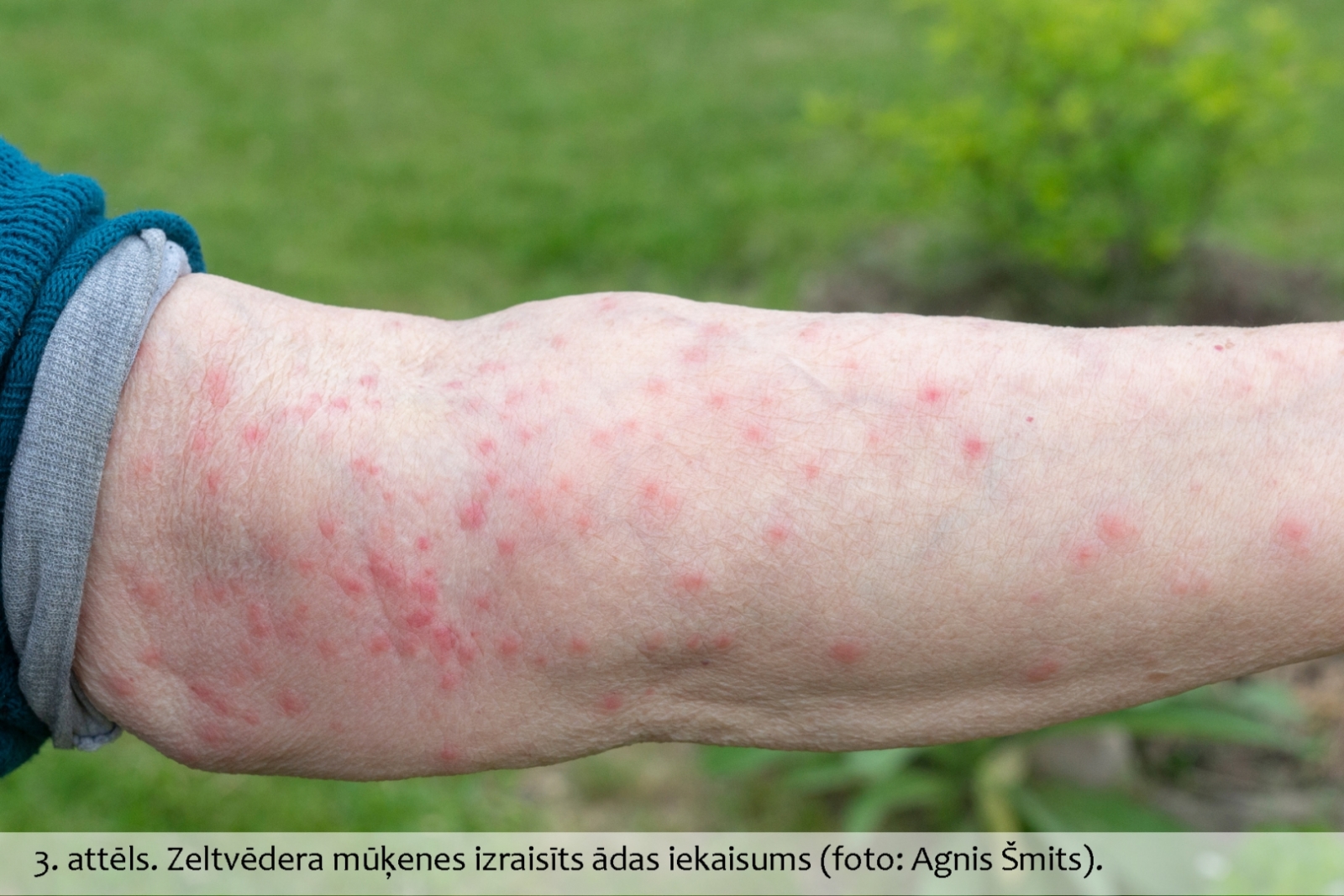
Contact with them can cause skin and eye inflammation, severe itching, rashes, and allergic reactions. For people with asthma, the consequences can be particularly serious — up to severe breathing problems.
Not only the caterpillars themselves are dangerous, but also their web nests, cocoons, and shed skins after molting.
The highest risk occurs from May to the end of July.
In addition to the health threat, the golden tussock moth is also dangerous for trees. The caterpillars can completely strip the leaves of oaks, linden trees, aspens, fruit trees, and other deciduous species. In cases of prolonged mass spread, trees can die. The pest prefers sunny and warm places — it is most often found at forest edges, in gardens, alleys, and sparse forests.
Specialists warn that fighting the golden tussock moth should be done carefully. The most effective method is to remove branches with caterpillar nests and burn them. It is essential to use gloves, protective goggles, and a respirator during this process.
Before working in the garden or mowing grass, it is recommended to water the area to prevent toxic hairs from becoming airborne.
A separate problem is the caterpillars' ability to spread via vehicles. If a car is parked under an infested tree, the pest can get onto the body and be transported to other locations.
In residential homes, it is recommended to vacuum the caterpillars using a water filter vacuum, adding a bit of soap to the water. Removing web nests in winter or early spring — before the caterpillars leave their shelters — is considered particularly effective.
The State Plant Protection Service asks residents of Latvia, especially in Zemgale, to report sightings of the golden tussock moth and send photographs of the caterpillars via email to zinas@vaad.gov.lv.
The situation shows that the golden tussock moth is gradually becoming not only a problem for forests and gardens but also a public health issue in certain regions of Latvia.