
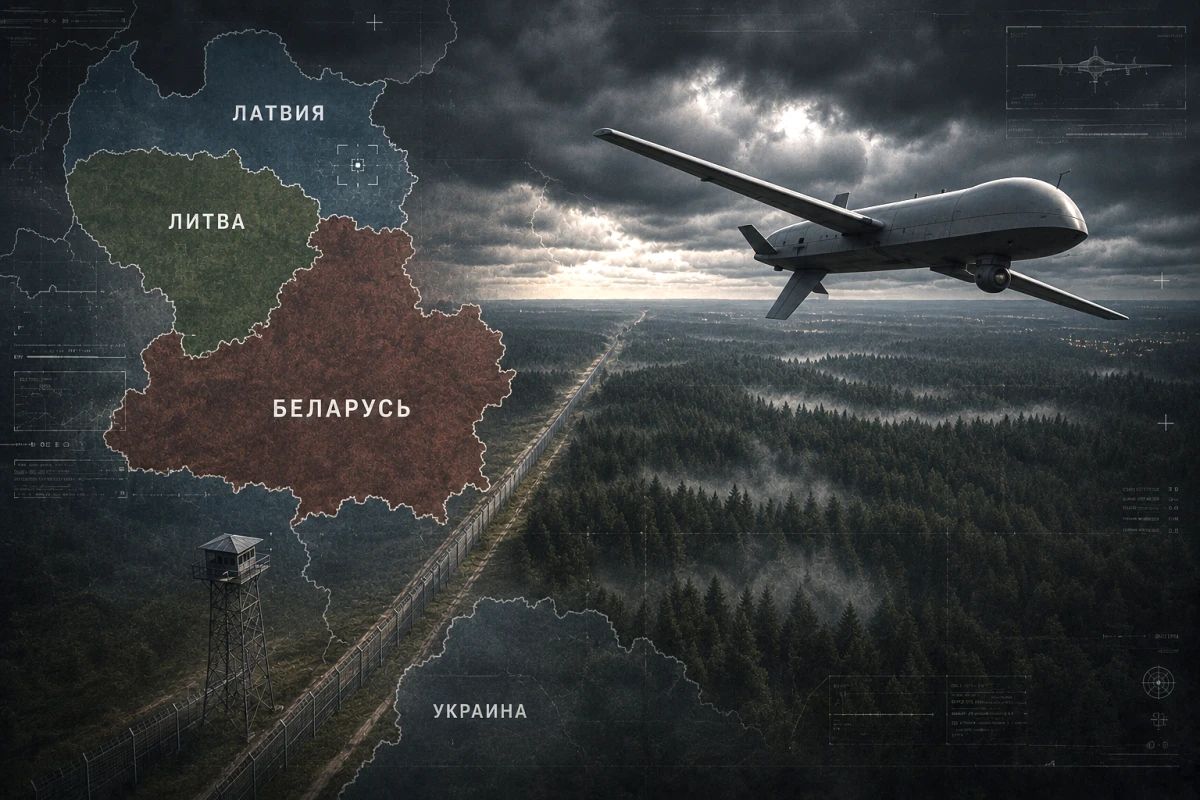
Drone incidents in the Baltic countries may become a new permanent reality for the region. British defense analyst Glen Grant believes that Russia has already learned to redirect Ukrainian drones using GPS signal spoofing, while NATO is responding to such provocations too softly.
British defense analyst Glen Grant believes that the Baltic countries have effectively become part of the risk zone for war between Russia and Ukraine.
"In essence, we have become an extension of Western Ukraine," he stated in an interview with the Lithuanian public broadcaster LRT, writes tv3.lv. According to the expert, NATO is currently willing to tolerate significantly more Russian provocations than it should.
"It seems that only a ground invasion could provoke a more serious response from the alliance," Grant noted.
He believes that Europe, in general, still does not take the situation around the airspace of the Baltic countries seriously enough.
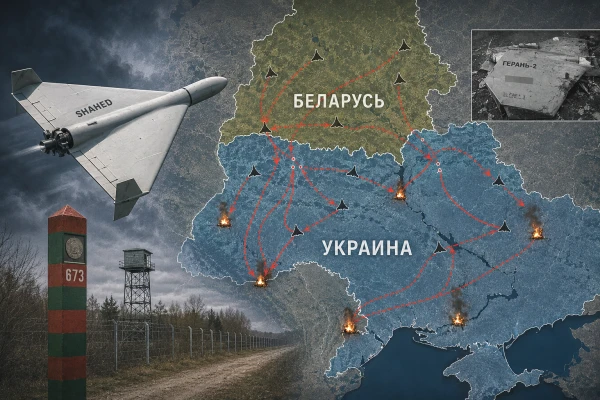
In recent weeks, there has been an increase in the appearance of drones and warnings about potential aerial threats in Latvia, Lithuania, Estonia, and Finland. According to the analyst, this is due to the fact that Russia has likely finally learned how to effectively redirect Ukrainian drones.
"Now Russia can do this, and that’s why it does," Grant said.
He stated that GPS signal spoofing is used to change the route of drones. As a result, the drone receives false coordinates and alters its flight direction.
The expert notes that for the Baltic countries, the problem is complicated by geography. Large forested areas and sparsely populated territories make it extremely difficult to search for downed drones.
"If a drone falls somewhere in a forest in Latgale, it may remain unfound for several weeks," the analyst explained.
Grant also draws attention to the limited resources of the armies of the Baltic countries. "Neither Lithuania nor Latvia has huge armed forces," he noted. In his opinion, it is simply impossible to deploy military personnel en masse to search for every downed drone.
"If it’s just a drone and it hasn’t hit anything, let it lie there until someone finds it," the expert added.
However, if a drone falls near a populated area or infrastructure facility, it is usually found more quickly.
As an example, the analyst cited two drones near an oil storage facility in Rezekne. In his opinion, the drones could have automatically identified the object through an oil infrastructure recognition system. However, Grant considers it unlikely that Russia specifically directed both drones at this facility.
The expert is confident that such incidents will continue. The scale of the problem, he says, may depend on the activity of Ukrainian attacks towards St. Petersburg.
At the same time, Grant emphasizes: Ukraine is interested in maintaining the support of the Baltic countries and will likely be forced to reconsider the software and principles of using its drones.
A series of drone incidents in the Baltics demonstrates that electronic warfare and navigational attacks are gradually becoming part of the region's everyday security — even without direct military confrontation.










Leave a comment