“We are born and leave for the sun, and the departure is not always as beautiful as one would like,” – philosophically stated Andris Berziņš, chairman of the Saeima Committee on Social and Labor Affairs.
Latvia is aging increasingly – in our republic, there is a multitude of "complex patients without a limit on life expectancy," as it was eloquently stated during a parliamentary meeting.
Whose Elderly Are You?
The country still experiences fragmentation of services and support for the elderly, making emotional assistance difficult, including for relatives and informal caregivers. Three structures are responsible for the elderly in Latvia:
-
The Ministry of Health must ensure home visits by doctors and nurses, physician services, consultations and examinations by specialists, day hospitalization, and medical rehabilitation;
-
The Ministry of Welfare – benefits, technical aids, emotional support, and short-term or long-term social care;
-
Local governments – provide social worker services, home care, specialized transport.
– Let’s be honest, we all have relatives who have experienced a coma or are at home, – said Andris Berziņš. – Caring for them is a complex task, one must give up work. I speak from my own experience.
According to Liga Aboliņa, parliamentary secretary of the Ministry of Health, such patients can be hospitalized for two weeks, "but that is not the most appropriate place."
– Partially, these patients could be transferred to social care centers, where there is a medical assistance point, but such centers are not available everywhere. Not all centers are ready to work with such patients.
And Children Too
Such clients are classified as third and fourth care groups, requiring multidisciplinary work. Currently, efforts are being made to prepare mobile teams. Large hospitals – Stradiņš and Eastern, have already adopted an algorithm for home visits to previously discharged patients. Of course, medicine alone will not help – if a person does not eat and is not cared for...
But not all patients are severely ill – age-related: currently, more than 400 individuals are registered at the Children’s Clinical University Hospital, who have received diagnoses incompatible with normal life since childhood. Thanks to medicine, many of them have crossed the threshold of adulthood.
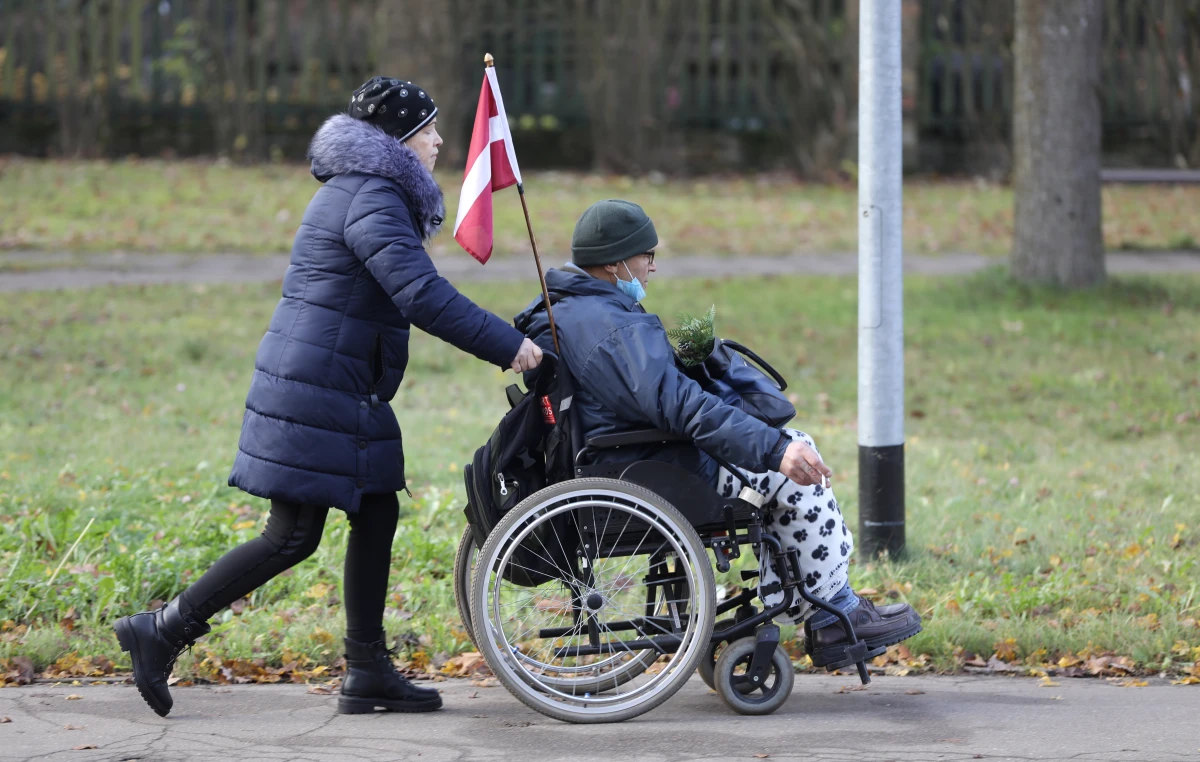
At home, 1,400 children receive assistance, half of which is paid for by the state. But in total, there are more than 9,000 children with disabilities in Latvia, of which over 4,000 require specialized care!
Of course, besides state and municipal support, there are alternative solutions – for example, in Liepāja, a "commune" for care has recently become popular, providing 24/7 all types of assistance – from dressing and washing dishes to walks and purchasing medications; but despite such a "socialist" name, this service is still private and paid.
Life After Surgery
In the Riga 1st Hospital, owned by the local government, there is a consultation room for patients with a stoma. This surgically created artificial opening connects the cavity of an internal organ (most often the intestine or ureter) with the surface of the body. It is brought out to the anterior abdominal wall for the body's waste products when natural pathways do not function due to diseases, injuries, or surgeries.
The stoma lacks nerve endings, which explains the absence of pain in the intestine itself. However, pain, itching, and burning at certain stages cause discomfort for stoma patients. They are caused by irritation of the skin around the stoma. For this reason, it is critically important for a person with a new physiological status to learn how to care for it properly.
Many hundreds of people at home also require enteral nutrition – a method of therapeutic nutrition where specialized liquid or dry mixtures are delivered to the gastrointestinal tract through the mouth, a tube, or a stoma. It is used when a person cannot or should not eat independently, providing the body with a balanced composition of proteins, fats, carbohydrates, vitamins, and minerals.
A sore point in all respects for Latvia remains the care of patients with ALS, or amyotrophic lateral sclerosis. This progressive, incurable disease of the nervous system affects motor neurons. It causes muscle weakness, paralysis, and difficulties with breathing and speech. Unfortunately, a unified system of assistance for these patients has not yet been developed in the country...
Mobile teams, which just a couple of years ago were considered a panacea, are now in question. As L. Aboliņa told the deputies, it would be more cost-effective for the budget to keep severely ill patients in social centers – then transport costs would not be required (after all, fuel is becoming increasingly expensive!)
From a Human Rights Perspective
Ineta Rezēvska, a representative of the Ombudsman’s Office, reported that the main state human rights defender, Karina Palkova, held a thematic meeting with the Ministries of Health and Welfare in April. The discussion focused on eliminating administrative barriers, providing informational support, and creating a national care mechanism.
– We see that people in potentially dangerous situations do not receive adequate assistance. Local governments in Latvia urgently need funding from the state to ensure support for clients in need, noted I. Rezēvska. The Ombudsman’s Office is fundamentally on the side of home care. However, in this case, "relatives are removed from the full labor market."
Andris Berziņš expressed that a person is certainly "better off in an environment where they feel more comfortable."
– But how to achieve this? It is necessary to assist family members in this.
No One to Care
At a parliamentary commission meeting, it was noted that hospice care is currently developing throughout Latvia, including for oncological and neurological patients, and after strokes, with a long life prognosis. There are patients who are on artificial ventilation – and can only blink their eyes. And there are people in remission – when the needs of ordinary elderly people arise, such as dental treatment and simply rehabilitation in nature...
The most challenging challenge today is the burnout of care staff. The work is hard, not very well paid, and despite social bonuses for employees, only 30% remain in the field after training.