
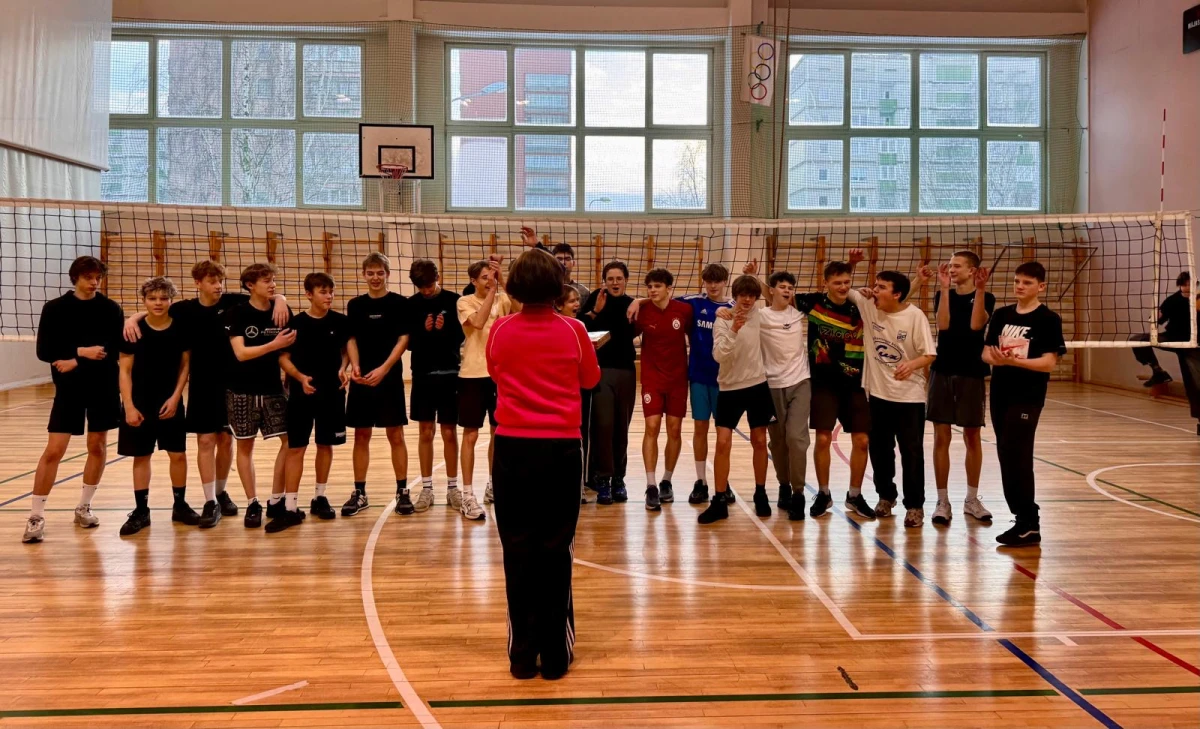
I nostalgically remember the stadium of the 43rd Riga Secondary School, which now bears the name of the German scholar Herder – forty years ago, our PE teacher Viktor Busygin, a mime and aikido master, was so good at motivating the kids! I can't even imagine being able to repeat my own achievements from the tenth grade now – 15 pull-ups, 3 lifts-flips on the horizontal bar. And the regular runs around the 1905 park, or the ski track around the school...
In general, the prestige of physical education was already high in our class – many officer's children, and several classmates played in the factory football team "Commutator." Usually, there was only one of our friends on the bench, who was indeed seriously ill since childhood – but, as they would now say, chose inclusive education.
Generation of Smartphones
By the end of the school year, the parliamentary subcommittee on sports became concerned about the physical condition of the younger generation of Latvians.
Currently, physical education is essentially the only opportunity for students, especially high schoolers, to step away, even if for a short time, from their constant presence "on the phone" (students of the basic school in Latvia are now required to store their communication devices in lockers during classes).
In the republic today, there are officially three groups of children regarding their engagement in sports:
- main (body condition – stable),
- preparatory (partially limited due to past acute illnesses – flu, bronchitis, pneumonia),
- special (with constant measurements or partial medical restrictions).
Inga Upatniece, Deputy Director of the Department of General Education, explained to the deputies that exemption from the subject "Sports and Health" (which includes not only physical exercises but also theory!) will no longer be allowed. Amendments have established that if a child is exempted for at least one semester based on a doctor's recommendations, an individual plan must be developed for them, adapting the loads and achievable results accordingly.
With Asthma and Fractures
"In cases of severe disability, unstable health conditions with a high risk during physical activity, a multidisciplinary board of doctors makes a decision on assessment or non-assessment with a note in sports classes. The board does not decide on exemptions from sports lessons."
For example, if a child has asthma, they will perform all the same exercises as students in the so-called main group under the supervision of a teacher. "Note: inhaler to be used if necessary." "If breathing symptoms occur, a short rest is required."
Similarly, students will be directed to physical education classes after healing from bone fractures, with moderate loads.
What We Were Not Taught in School
It was quite interesting to study the modules of sports and physical activity in modern schools in Latvia presented in the Saeima by Dr. Sandra Rozenstoka. There are quite familiar, so to speak, standard activities – brisk walking; running at various paces and distances; long and high jumps; sports games… Regarding the latter, volleyball and basketball are mentioned, but for some reason, not the mega-popular football in our times. However, here’s what is newly offered – badminton, table tennis, and even golf!
It would be quite interesting to see the execution of the exercise "strikes on an object"; perhaps schools will introduce boxing bags? In any case, they now seriously promise to teach unarmed self-defense – stance, grouping, escaping from opponent holds, various types of rolls…
There is also a section called "Adventure Activity." Within its framework, students will have to hike in unknown, rugged terrain, navigating by map, with various reliefs and paces. Unfortunately, this was lacking in our times – the concept of a "hike" meant a trip by electric train with our teachers to the Kalngale-Garciems area, followed by eating sandwiches and drinking tea from thermoses… "Drink of the gods!" – demonstrated boy Denis with a bottle of orange color. That’s how I first tasted Fanta.
What Are School Nurses Doing?
Ainis Dzalbs, head of the Latvian Association of Rural Family Doctors, proposes a "universal approach" to children. Except, of course, for those who are seriously ill, with assigned disabilities (let the boards decide on that). All data on students should be entered into the state system e-veselība (e-health). However, compiling all the data on children by the beginning of the school year would be "unrealistic."
The doctor also raised the role of school nurses – what do they do besides formal functions, like compiling dietary menus? From the family doctors' side, he promised full support for school sports.
Evgeny Bondin, a representative of the Latvian Association of Family Doctors, said on his part that for sports teachers, the main concern is students' grades. "Theoretically, if a leg is broken – they can participate in lessons." An electronic notification system for educators is needed; moreover, the question must be resolved – do they need to know the student's diagnosis, after all, it is medical confidentiality.
The head of the sports medicine residency program at the University of Stradins, Sandra Rozenstoka, noted that until recently, medicine exempted from physical education "situationally," with a known certificate in the U27 form. Deputy of the Saeima Agita Zarinja-Sture ("New Unity") said that she has "many concerns": "We are mainly speaking from the doctors' side."
In turn, she received feedback from classes where there are 30 students – with 5 children who require special attention. "We excluded a very important link, the parents. How will they know if neither the group nor the numbers tell them anything?"
Is It All Easy and Simple?
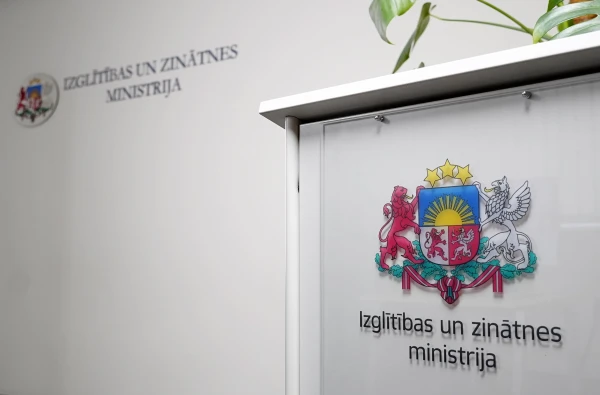
The politician pointed out that the "individual plan" proposed by the Ministry of Education and Science for students who have had illnesses – does not work, although "we are putting in tremendous efforts." After all, teachers are already required to develop such personalized programs for those lagging behind in studies and for those who misbehave in lessons and breaks!
"Some mystical folder, digital or paper… You cannot work in such a form in school," stated A. Zarinja-Sture, herself a professional educator.
– If we are developing something, we need to see how it works. The individual plan is simply attached.
Well, the representative of the State Education Development Agency, Gita Perkone, reported – soon teachers in Latvia will have a "digital teacher's room." Looked at from a smartphone – here’s all the information and necessary recommendations! At least for the education officials – everything is easy and simple.

Leave a comment