
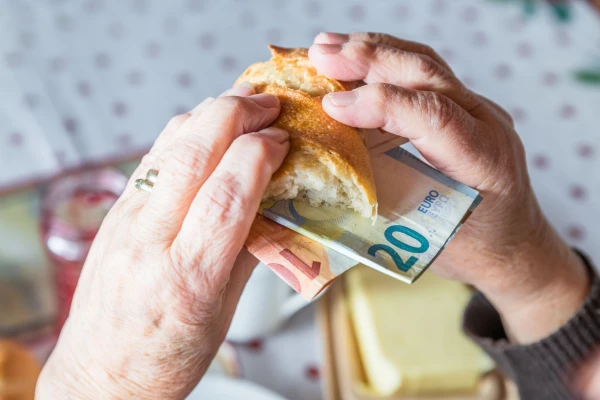
Starting January 1, a new life begins: for some – as planned, for others – because "it just happened" (after all, New Year's miracles are still not canceled, right?), for some – by choice. Yours or someone else's. Let us hope that your life, dear readers, will change for the better.
Pensions
The minimum pension amounts and state social security benefits are increasing. The State Social Insurance Agency (VSAA) explains who will be affected by these changes and who will receive payments differently starting in January.
Minimum Pensions and Increases
-
Old-age pensions will be €187 (previously €166);
-
Survivor pensions for children under 7 years old will be €213 (previously €189), for children aged 7 and older – €255 (previously €266).
The amount of the state social security benefit for persons with disabilities of the 1st and 2nd groups, as before, depends on employment: an additional payment is assigned to the unemployed.
Examples of Minimum Pension Calculations
When reaching retirement age, it may turn out that you have work experience, but it is insufficient. Or social security contributions for it were very small. In such cases, the pensioner is assigned a minimum pension.
How calculations are made:
by applying a coefficient of 1.2 to the base calculation of the minimum old-age pension (normally €213, for persons with disabilities from childhood €255) and increasing the amount by 2% of the base calculation of the minimum old-age pension for each subsequent year of insurance experience exceeding the required for assigning an old-age pension (20 years).
If the insurance experience in Latvia:
-
is at least 20 years (or if the pension is assigned before December 31, 2025, with less insurance experience required for assigning an old-age pension) – then the minimum old-age pension cannot be less than €255.60 (€213 × 1.2)
-
for 21 years and more, the minimum old-age pension increases by €4.26 for each year of insurance experience, for persons with disabilities from childhood – by €5.10 for each year of insurance experience
-
for persons with disabilities from childhood – €306.00 (€255 × 1.2).
Benefits
-
For a participant in the liquidation of the consequences of the Chernobyl nuclear power plant disaster and the family of a deceased participant in the liquidation of the consequences of the Chernobyl nuclear power plant disaster – €187 per month,
-
for burial in case of the death of a family member dependent on the insured person – €561 (€3 × €187), if the dependent died on January 1 or later,
-
for burial in case of the death of an unemployed person – €561 (€3 × €187), if the unemployed person died on January 1 or later,
-
compensation for harm (for workplace accidents before January 1, 1997) for persons to whom it is established at the level of the state social security benefit – €187 per month,
-
unemployment benefit – 60% of double the amount of the state social security benefit (60% of €374), The benefit in the new amount will be paid for the period of unemployment starting January 1.
New Payments: Who Will Receive in January
The recalculated VSAA minimum pensions for old age, disability, and survivor pensions, which are paid for the current month, as well as minimum insurance payments, clients will receive already in January.
State social security benefits and survivor pensions paid for the previous month will be paid in February for January.
What to consider:
-
for the current month, survivor pensions assigned before December 31, 2020, and whose payments continue without interruption are paid;
-
for the previous month, survivor pensions assigned from January 1, 2021, are paid.
The "Threshold" of Guaranteed Minimum Income Will Increase
From January 1, 2026, the "threshold" of guaranteed minimum income (GMI) will be higher, as well as the "income thresholds" for recognizing households as low-income and in need.
GMI Threshold in 2026:
-
€187 for the first or only person in the household (previously €166);
-
€131 for other persons in the household (previously €116).
Status of Needy Household
- for the first or only person in the household – €425 (previously €377);
- for other persons in the household – €298 (previously €264).
Status of Low-Income Household
depends on specific municipalities, but the threshold should not exceed 80% of the median income, but not be lower than the income threshold of a needy household;
-
for the first or only person in the household – €680 (previously €604),
-
for other persons in the household – €476 (previously €423).
Reminder: statuses of needy or low-income households provide the opportunity to receive assistance from municipalities for housing and medical expenses, the right to food packages, reduced electricity bills, tax benefits up to 90%, exemption from reimbursement of court costs, free state legal aid, etc.
Assistance to Families
-
The child care benefit has been reduced to 1.5 years (previously 2 years), but its amount will increase from €171 to €298 per month,
-
one-time benefit for the birth of a child – €600 (previously €421.17),
-
the benefit for children aged 16-20 will remain if the child is studying in college, in university full-time and has not married,
-
the caregiver benefit for the maintenance of a child up to 7 years old – €390 per month (previously €215), for a child aged 7-18 – €468 per month (previously €258),
-
reward for caring for an adopted child – €1,041 per month (70% of the average salary subject to social contributions). If the reward was assigned in 2025 and its payment continues in the following year, it will be €956 per month. Currently, the minimum amount of such a reward is €171 per month.
-
caregiver reward – €298 per month (previously €54.07).
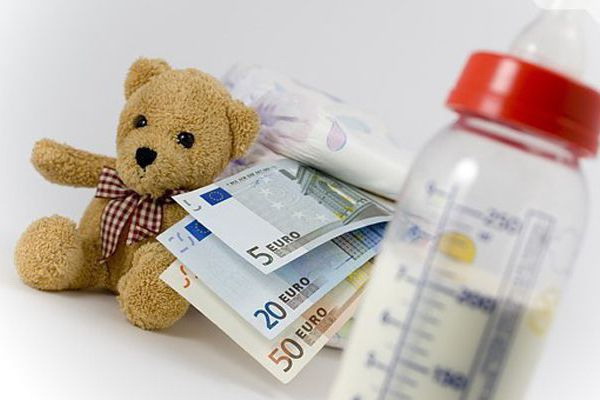
Amendments to the Law on State Social Insurance provide that contributions for unemployed caregivers will be paid from the state budget for mandatory insurance - pension, possible unemployment, or disability.
-
adoption benefit for a child up to 7 years old – €195 per month (previously €107.5), for a child aged 7-18 – €234 per month (previously €129);
-
one-time reward for adopting a child – €2,433 (previously €1,422.87).
-
the benefit for working parents will remain at the previous level – 75%.
You Can't Pay Less
From January 1, the minimum wage will be €780 (previously €740).
The Ministry of Welfare called this step an important signal for more than 100,000 people receiving the "minimum wage" for their work.
The Ministry of Finance reminds: "In the labor sector, continuing previously initiated changes, next year the non-taxable minimum income will increase by €40 and will be €550 per month, thus increasing the net income of workers."
According to the CSB data for 2025, on average 117,895 workers (15.3%) in Latvia received the minimum wage or less. Three years earlier, this figure was 4.1 percentage points higher (19.4%).
Alimony
In 2026, due to the increase in the minimum wage to €780, the amount of minimum alimony will also increase:
-
for each child from birth to 7 years – 25% of the "minimum wage", or €195 per month;
-
for each child aged 7-18 – 30% of the "minimum wage", or €234 per month.
If a parent does not pay alimony for any reason at least at the minimum amount set by the state, the other parent or guardian, as well as the child who has reached adulthood and continues to receive basic, secondary, vocational, or special education up to 21 years old, has the right to apply to the administration of the Guarantee Fund for Maintenance (GFS, UGF) for payment of alimony from the state budget.
-
On January 1, 2026, amendments to Cabinet Regulation No. 616 will come into force, which provide for an increase in payments from the fund by €30.
-
€155 for each child from birth to 7 years (currently €125);
-
€180 for each child aged 7-18 (currently €150);
-
€180 for an adult aged 18-21, if he or she continues to receive basic education, secondary education, vocational or special education (currently €150).
At the same time, it should be noted: payments from the fund are made for the previous month, so the increased alimony for January will be paid in February 2026.
Electricity Bills Will Increase
From January 1, 2026, many residents of Latvia will see an increase in their electricity bills. The state will stop providing assistance to limit the sharp rise in tariffs for individuals, which will affect the distribution service bills for the most common connections of private users with a capacity of 16 to 25 amps and the Pamata/Base tariff plan.
Calculations: how much you will have to pay
-
for households with single-phase connections, the monthly payment for maintaining power will increase by €0.20–1.26 per month (excluding VAT), depending on the chosen power,
-
for households with three-phase connections – by €1.92–3.50 (excluding VAT),
-
changes will not affect households that did not receive state support, i.e., connections with a capacity of 32 A and above, and legal entities.
Who Will Receive Assistance and How Much
-
protected electricity users – low-income or low-income individuals, large families, or families raising children with disabilities, individuals with first group disabilities:
-
needy or low-income household (individual) – €20;
-
large family – €25;
-
family (individual) caring for a child with a disability – €20;
-
individuals with first group disabilities or their guardian – €20;
Gas Bills Will Increase
Depositphotos
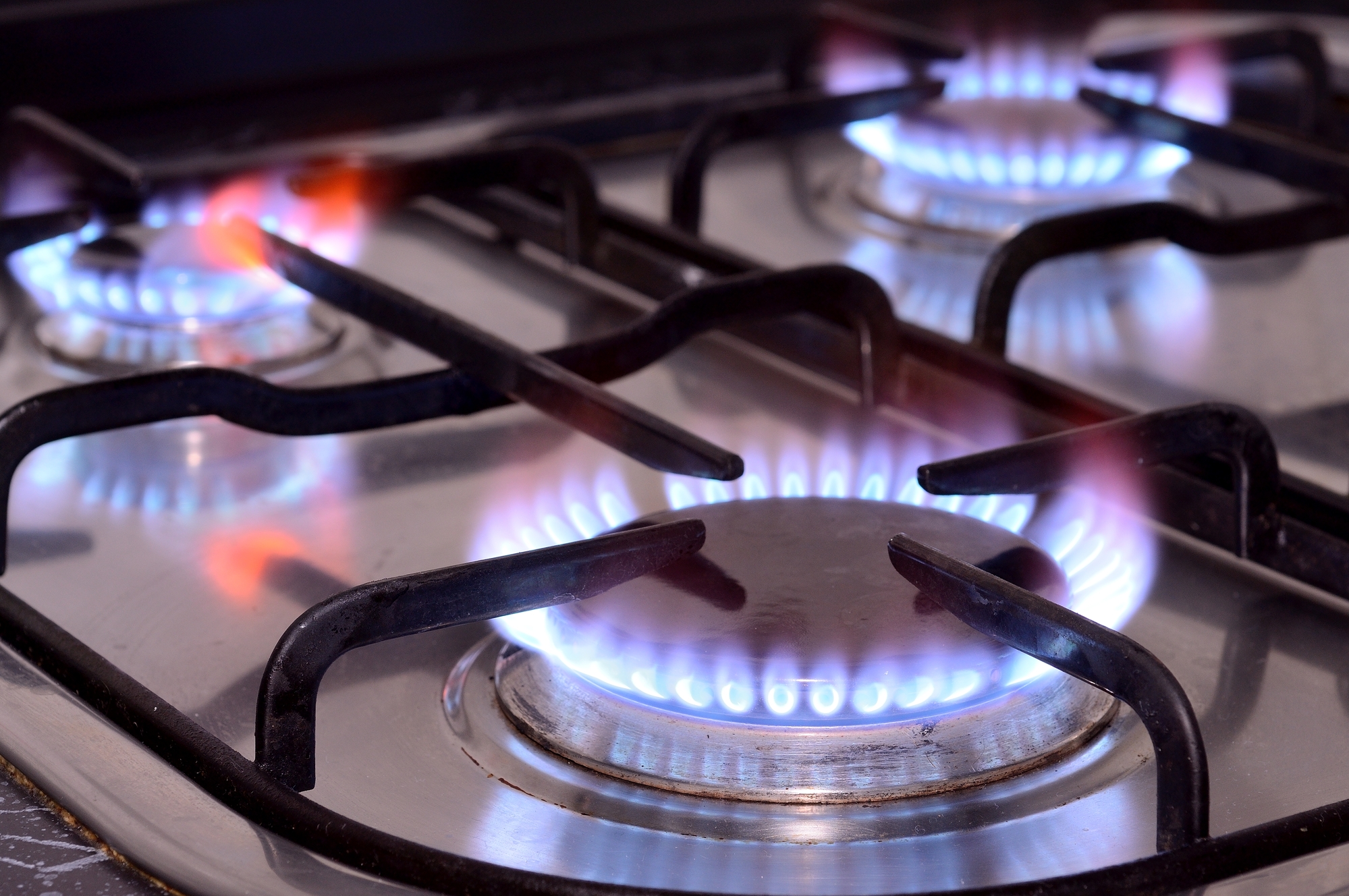
From January 1, 2026, new tariffs for the natural gas distribution system services of AS Gaso, approved by the Utilities Commission (Regulator), will come into effect.
-
for households using gas for cooking, the average fee will increase by €0.60 (excluding VAT),
-
for users with gas heating, the increase will be up to €5 (excluding VAT) per month, depending on the volume of gas consumed.
Garbage Collection Will Become More Expensive in Riga
In Riga, garbage collection tariffs are rising twice in the last three months: by 1% in October, and from January 1 – by 2.1%–2.41% depending on the service area.
What is the reason for the price increase?
According to the official version, the price increase from October 1 is related to the increase in waste management costs, simply put – salary increases. And from January 1, prices will rise "due to increased costs for the burial of household waste, including the natural resources tax."
From October 1, the fee for managing unsorted household waste will be up to €27.38 per cubic meter depending on which company and from which area of Riga collects the garbage.
From January 1, the fee will increase to €28.25 per cubic meter.
Prices for Letters and Packages Will Increase
From January 1, Latvijas pasts tariffs for universal postal services will increase by 9%:
-
the price of the most demanded service – domestic simple letter weighing up to 20 grams in Latvia – will be €2.35 (previously €2.30)
-
tariffs for cross-border shipments will increase by 15%, the discount for registered, tracked, or insured shipments when ordered on the websites manspasts.lv and mans.pasts.lv will be €0.46 excluding VAT,
-
the cost of sending a registered domestic package weighing up to 1 kg will be €7.01 (previously €6.82), with an additional charge of €1.25 for each subsequent kg,
-
the cost of sending an insured domestic postal package weighing up to 1 kg will be €8.39 (previously €6.87) and an additional charge of €1.25 for each subsequent kg.
Heating Prices Will Rise in Jurmala, Jekabpils, and Other Cities
Jurmala: the tariff for thermal energy from Jurmalas siltums will increase from January 1, 2026, to €86.8 per megawatt-hour (MWh) excluding VAT (although the Jurmalas siltums tariff was €80.93 per MWh from November 1, 2025, it increased to €86.34 per MWh from December 1).
Jekabpils: the tariff for thermal energy from Jēkabpils siltums will increase by 4% from January 1, 2026, to €80.71 per megawatt-hour (MWh). And from October 1, 2026, the final tariff for thermal energy from Jēkabpils siltums will be €84.21 per MWh.








Leave a comment