
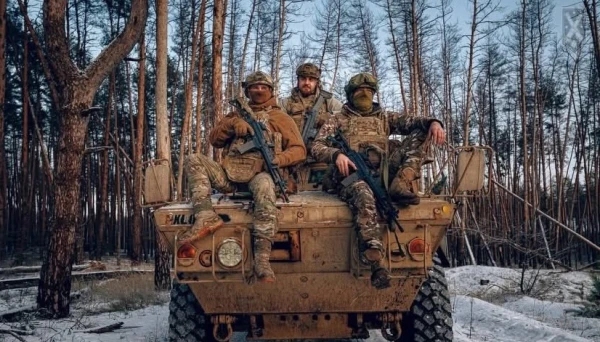
When the war in Ukraine eventually comes to an end, Latvia and Europe as a whole will face a new challenge — how to integrate people who have gone through combat. Political scientist Filip Raevski urges to think now about potential risks and solutions.
In the broadcast of the program "Preses klubs" on TV24, political scientist and co-founder of the public relations agency Mediju tilts, Filip Raevski, stated that the end of the war in Ukraine will bring not only relief but also serious social challenges. According to him, it is necessary to think in advance about what will happen to the servicemen who have spent a long time in the trenches and on the front lines. Primarily, this concerns Ukrainian soldiers. Various scenarios are possible: some of them will go to Latvia to join their families who fled the war, while in other cases, families will go to them.
"We need to understand what we will do because these will be very difficult people who have gone through war," emphasized Raevski. He noted that such individuals will differ from society not only in experience but also in their internal state.
The political scientist recalled the negative experiences from the Soviet era after the war in Afghanistan, when some veterans with combat skills found themselves outside the social support system. "To ensure that such factors do not arise, as they did after the Afghan war in the USSR, when gangs of people capable of fighting emerged," he explained.
In Raevski's opinion, this problem may affect not only Latvia but all of Europe. He also pointed out the psychological consequences of war. "They will have skills that no one here possesses. They will have psychological problems, and as much as possible, they will need help," noted the expert. The main thing, the political scientist emphasized, is not to push these people away but to think in advance about mechanisms for their support and integration into peaceful life.





Leave a comment