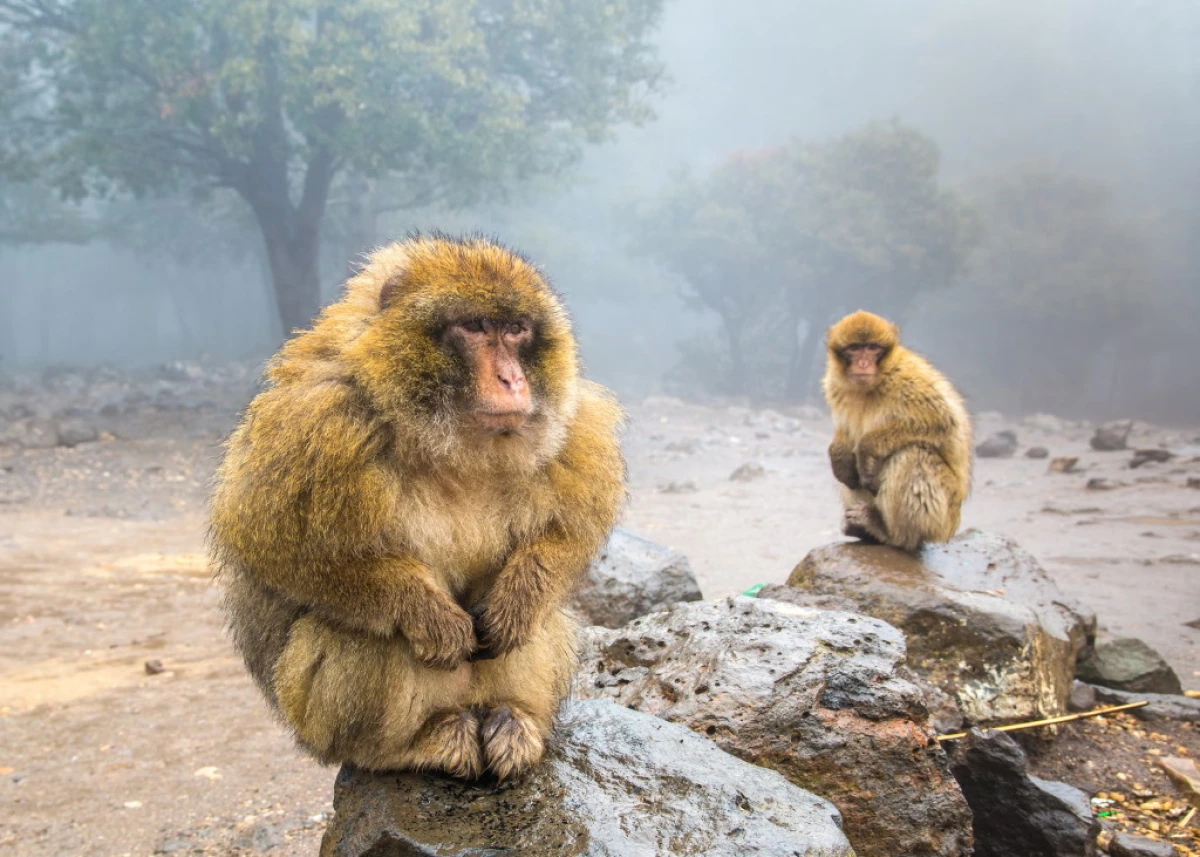
Scientists have recorded unusual behavior among Barbary macaques in Gibraltar: the animals are increasingly consuming soil. As a study published in Scientific Reports showed, this habit is directly related to changes in their diet due to contact with tourists.
According to TechInsider, unusual behavior has been observed among Barbary macaques in Gibraltar: the animals have begun to regularly consume soil, which may be linked to their contact with tourists.
A study published in the journal Scientific Reports, based on observations of the population from 2022 to 2024, showed that this habit is more common among individuals living closer to areas frequented by travelers. There are approximately 200–300 Barbary macaques in southern Europe, which often approach people to beg for food or steal it.
Scientists note that the diet of animals in tourist areas has significantly changed: it increasingly includes sweets, cookies, chips, and ice cream, which are not suitable for their digestive system. Against this backdrop, macaques have started to periodically eat soil, doing so shortly after receiving treats from humans.
Researchers suggest that the soil may help the animals compensate for the effects of such a diet. It is specified that the soil chosen by the primates contains iron and clay. Clay is believed to reduce acidity in the stomach and bind some harmful substances, which facilitates the digestion of fatty and sweet foods and reduces the burden on intestinal microflora.
Researchers believe that eating soil helps macaques cope with the consequences of "human" food—sweets and fast food—that disrupt their digestion. Moreover, this behavior spreads within groups through learning, indicating the animals' rapid adaptation to new conditions, writes bb.lv. Scientists emphasize that human intervention is already changing the lifestyle of wild populations, and without restrictions on contact, the consequences could become more serious.