The Land of the Rising Sun is enticing tourists during a period of instability.
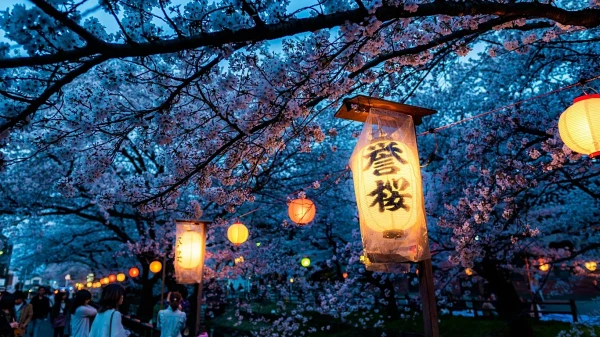
Both independent trips and package tours this year are showing more competitive prices; there is an increase in price competition in the market. The cherry blossom season in Japan traditionally attracts a large number of tourists and often leads to price hikes. However, 2026 may turn out to be one of the cheapest years in recent times for those who want to see the famous cherry blossoms.
The country has faced a sharp decline in the number of tourists from mainland China following statements made late last year by Japanese Prime Minister Sanae Takaichi that in the event of a Chinese attempt to invade Taiwan, the country could deploy armed forces.
This has led to a decrease in flight and accommodation costs, which is expected to continue in March and April, when cherry blossoms typically bloom.
At the same time, Japan has introduced a number of new tourist fees and taxes, so the cost of a trip depends on the destination and your plans.
Why might a trip to see the cherry blossoms in Japan be cheaper this year? "We are seeing a 23 percent increase in bookings from clients in the UK and Europe over the past year," says Kenny Onishi, General Manager of Intrepid Japan, to Euronews Travel.
However, the main tourist market for the country remains East Asia, and the number of visitors from China has decreased by about 45 percent this month compared to the previous year, the Japanese Ministry of Transport reported on Tuesday.
China has mandated its airlines to reduce flight schedules to Japan until March. For instance, Air China canceled 23 flights between Shanghai and Osaka and 14 flights between Chongqing and Tokyo in December 2025, according to the analytics company Cirium.
Combined with the historically low yen exchange rate, this has reduced prices for flights, hotels, and tours by 10-20 percent compared to 2025.
The most significant drops are noted in popular cities such as Kyoto and Osaka, Ben Julius, founder of the travel company Tourist Japan, reported to The Straits Times.
Both independent trips and package tours have become more competitively priced this year.
"The weakening yen means that other currencies, such as the euro and British pound, have greater purchasing power in Japan," says Onishi.
"In 2026, prices for our Intrepid tours in the UK have generally decreased slightly compared to last year for this reason."
At the beginning of the month, the Japan Meteorological Corporation published a cherry blossom forecast, predicting milder weather and earlier blooming.
In Tokyo, the start of blooming is expected on March 20, and in Osaka on March 24. In Okinawa, it occurs earlier, from January to February.
This means that for such destinations, travelers can take advantage of the reduced travel costs.
However, even if accommodation and tour prices have decreased, there may be other expenses in 2026 that should be factored into the budget.
Tourists in Japan should budget for increased fees in 2026. The long-standing visa fees in Japan are under review. Currently, a single-entry visa costs about 3,000 yen (19 euros), and a multiple-entry visa costs about 6,000 yen (38 euros).
If aligned with comparable economies, such as £127 (150 euros) in the UK or €90 for a Schengen visa in the EU, travelers who need a visa may face a significant increase in expenses.
The government is now proposing to raise the fee to ¥15,000 (80 euros) for a single-entry visa and to ¥30,000 (161 euros) for a multiple-entry visa, starting around April 2026.
Those heading to Tokyo, Osaka, or Okinawa, where the cherry blossom season falls in March or earlier, will be able to avoid the increased fee. However, for example, in Hokkaido, blooming occurs from April to May.
Those traveling to Kyoto for the cherry blossoms, which are forecasted to start on March 24 this year, will also need to budget for increased accommodation taxes.
Under the new system, which comes into effect on March 1, guests staying in luxury hotels will pay 10,000 yen (56 euros) and more per night, while mid-range accommodations will charge between 1,000 and 4,000 yen (from 5.50 to 23 euros).
A minimum rate of 200 yen (about 1 euro) will apply for budget accommodations costing less than 6,000 yen (34 euros) per night.
The Japanese government also plans to increase the international departure tax later this year.
This fee, levied on all departing the country, most commonly on those traveling by air, was introduced in 2019 at a fixed rate of ¥1,000 (about €5.50). It is now being raised to align with "international standards."