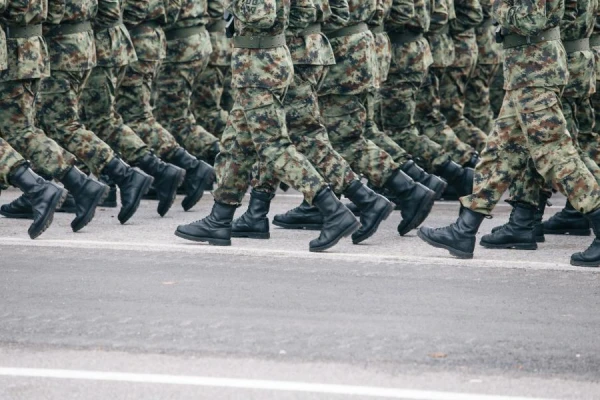
Residents of Russia are being prepared for the continuation or scaling of the war through the implementation of manipulative technologies via entertainment broadcasts on TV, media reports citing Western analysts.
It seems that on TV, Russians are being prepared for the continuation of the war under the guise of entertainment programs for the New Year. This is indicated by the analysis of the visual series of entertainment programs in the style of "New Year's Fire", shown on Russian television channels, prepared at the request of propaganda by psychologists and NLP specialists.
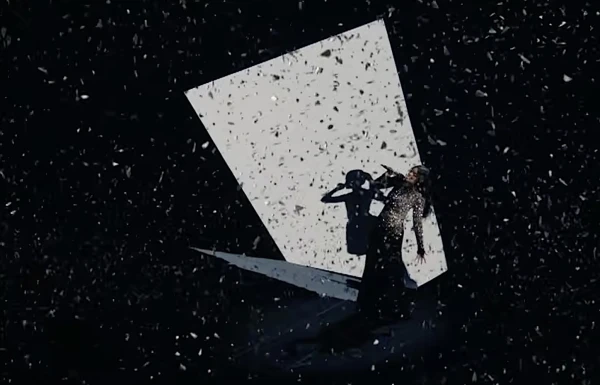
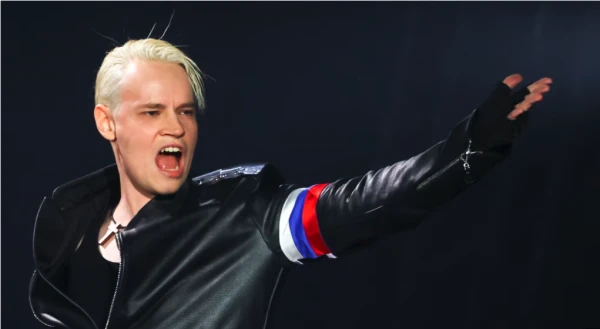
For example, on one of the country's main channels, the performer Shaman appeared in a Santa Claus costume and later sang the song "I am Russian". The video footage displayed fire, explosions, and other signs of war. The song conveys the message "to be Russian in spite of the whole world" - the goal is not to create something good and bright, but rather "I am Russian in spite of the whole world" (a quote from the song). This is best characterized by the Russian proverb "to freeze my ears to spite my mother".
In turn, just before the performance of Russian President Vladimir Putin this year, the song "Batyania Kombat" ("**And in war, as in war - bullets, vodka, and tobacco are in demand. And in war, it's hard work, and you shoot yourself, or you'll be killed") was shown - Nikolai Rastorguev took the stage. The Russian soldiers sitting in the hall listened to the master with tears in their eyes, - the aim here was to touch the audience.
Immediately after the anthem on Channel One, the same Rastorguev sang as part of a trio - with Grigory Leps and "Shaman". They performed the military Soviet song "At the Nameless Height". The lyrics of the song: "the rocket shone as it fell, like a dying star. Anyone who has seen this at least once will never forget it."
Throughout the New Year's night, an advertisement was shown in which three illustrated poets recited their poems dedicated to the "strength of Russia" - Pushkin, Lermontov, and Blok.
In turn, Larisa Dolina sang the song "For Money - Yes!" in an expensive cabaret on TNT "Incredible Adventures of Shurik".
It is no coincidence that the name chosen for the propaganda special project is "Shaman". It is not for nothing that he is promoted on all channels in modern Russia. In ancient cultures, shamans used the music of the drum to accelerate entry into the subconscious, where they programmed a person, for example, for healing (or solving another set task, influencing the subconscious of the person). This was called the "shaman's frequency" because among many peoples, the frequency of drum beats was equal to 4-4.5 beats per second.
In many tribes, shamans used a drum or several drums, with a beat frequency ranging from 4 to 4.5 times per second. In modern terms, this was what we now call "isochronic rhythm" when the sound with a carrier frequency is turned on and off 4.5 times per second, affecting the pituitary gland, thus synchronizing the activity of the brain hemispheres. Both the right and left hemispheres tune into this frequency, which allows harmonizing and opening the way to the subconscious. The shaman then used his voice to attune to a particular organ and eliminate the cause of an illness or disease - or solve another set task that he conveys vocally to the person in a trance. Modern audio-visual technologies can easily create trance-like transitional states in viewers.
In turn, song lyrics have a significant impact on the emotional state, attitudes, and behavior of listeners — and this influence goes far beyond just being a background to the music. This conclusion was reached by psychologists Pablo Marin-Liebana and Javier Ibiás, who published a systematic review and meta-analysis in the journal Psychology of Music (PM).
The authors analyzed 82 empirical studies and combined data on 42 psychological indicators. The results showed that song lyrics evoke a strong emotional response and also have a lasting — though moderate — influence on attitudes and cognitive-behavioral reactions. Moreover, the effect almost always matched the content of the lyrics: aggressive, prosocial, or romanticized themes triggered corresponding psychological reactions.
The authors analyzed 82 empirical studies and combined data on 42 psychological indicators. The results showed that song lyrics evoke a strong emotional response and also have a lasting — though moderate — influence on attitudes and cognitive-behavioral reactions. Moreover, the effect almost always matched the content of the lyrics: aggressive, prosocial, or romanticized themes triggered corresponding psychological reactions.
Researchers note that words in songs shape images, scenarios, and interpretations of social reality, influencing how people perceive themselves and others. Even without conscious analysis, listeners automatically process the lyrics, making music a powerful channel for emotional and social influence.
Based on the data obtained, the authors suggest considering music not only as entertainment but also as an important object of critical analysis in education. In their opinion, the development of critical musical thinking can help listeners perceive song lyrics more consciously and reduce their uncontrolled psychological influence in everyday life.