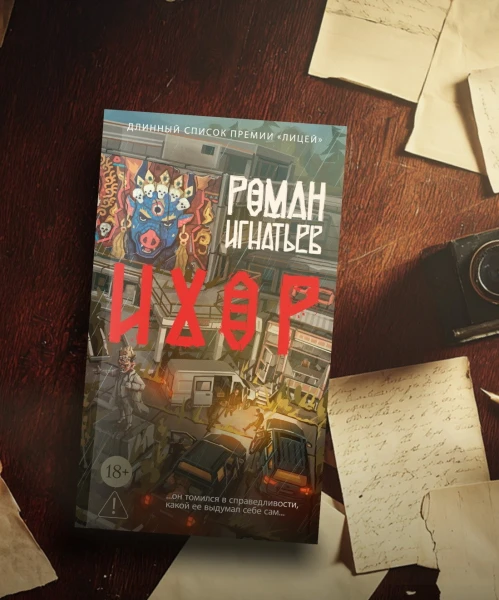
Roman Ignatiev, "Ichor". Moscow: Azbuka, 2025.
Decades ago, it was noted: Russia is a country of women. This is because the Russian state has a feminine face (not the one seen on television, but the one an ordinary person encounters in a clinic, school, or social security office), and also because the most popular sport (figure skating), music (Pugacheva), cinema ("Moscow Does Not Believe in Tears"), and books (Dontsova) – all of this, both in the late Soviet and early post-Soviet times, was predominantly female.
Female Prose
In the new millennium, it seemed that the picture was blurring – now we are convinced: it seemed. The main YouTube interview of last year – still with Pugacheva, "Moscow" was remade in a serial format by Zhora Kryzhovnikov, and there is hardly anything to say about literature: it is now consumed and produced almost exclusively by women in Russia.
Even in such an unsentimental genre as horror, they now have practically a complete monopoly. Out of eleven horror books of the year selected by Kinopoisk, eight were created not by male writers, but by female writers, who are also the authors. In nine of them, the action takes place in a forest, village, or, at worst, a large but provincial city.
Horror and Weirdness from the Province
If we consider that horror is the trendiest genre of contemporary Russian fiction, we can state: the literary throne in the historical homeland is currently occupied by a novel about provincial mystical horror, written by a young (among the loud horror debuts of the year, surprisingly many are debuts) native of the province.
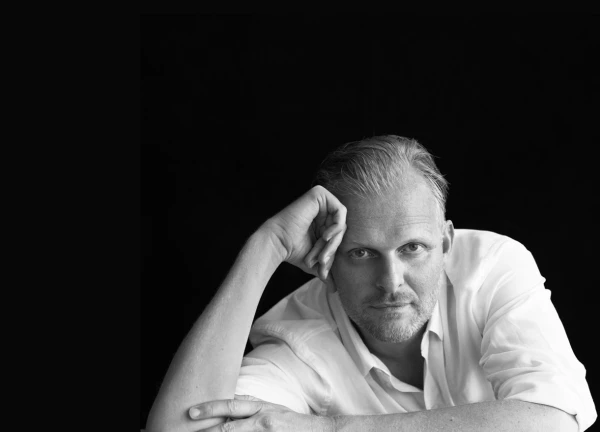
"Ichor" matches this "photofit" in all parameters – except for gender. Before us is a novel about mystical horror and weirdness, set in a distant province, and this is the debut of a provincial author. The back cover recommends "Ichor" to readers (mostly, probably, female readers) of trendy horror mistresses like Karina Shaynyan ("Saspyga") and Svetlana Tyulbasheva ("Forest"). But still, the author is male: Roman Ignatiev from Tver.
Continuation of the Civil War
Indeed, the ethnographic horrors (which, in full accordance with yet another persistent trend – magical realism, Ignatiev saturated his story with) are not Tverian at all, but rather Mongolian. The main character, Foma Bessonov, arrives somewhere shortly after the COVID pandemic, coughing, in the fictional city of Kostugai. In the local nursing home, Foma's grandfather, who was engaged in the literary processing of the memoirs of an ancient old woman named Rita Raum, has died. She is still alive and hires Foma to finish what his grandfather left unfinished.
He immerses himself in the memories of the Civil War – and the ghosts of that time appear in the present...