
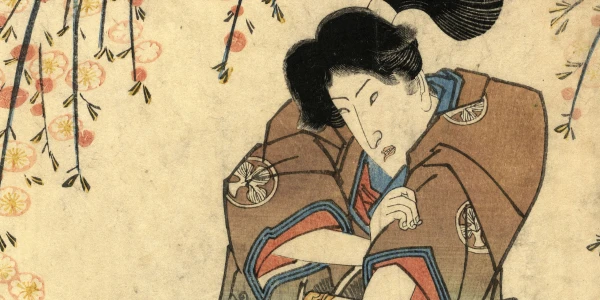
From February 21 to May 3, 2026, the exhibition 'Snow Melts. Japanese Art' will take place at the Rīgas Birža Art Museum.
Spring in Japanese culture unites the rhythm of nature, the human life cycle, and the aesthetic perception of the world into a single, symbolically rich experience. It marks the boundary between the old and the new in both nature and human life and becomes an important starting point for change.
In Japanese aesthetics, spring is associated with the understanding of the transience of beauty. The blooming of cherry, plum, and other spring flowers is interpreted as the culmination of beauty precisely because of its impermanence, encouraging coexistence and a conscious capturing of the moment.
Spring is not only a part of nature; people experience it together. In Japan, rituals during this time of year hold special significance. Traditions such as hanami, seasonal festivals, and religious ceremonies have brought people together in one space and time for over a thousand years. This collective experience is reflected in both theater and visual arts, where spring is not just a decorative background but a significant principle that shapes images, composition, and emotional impact on the viewer.
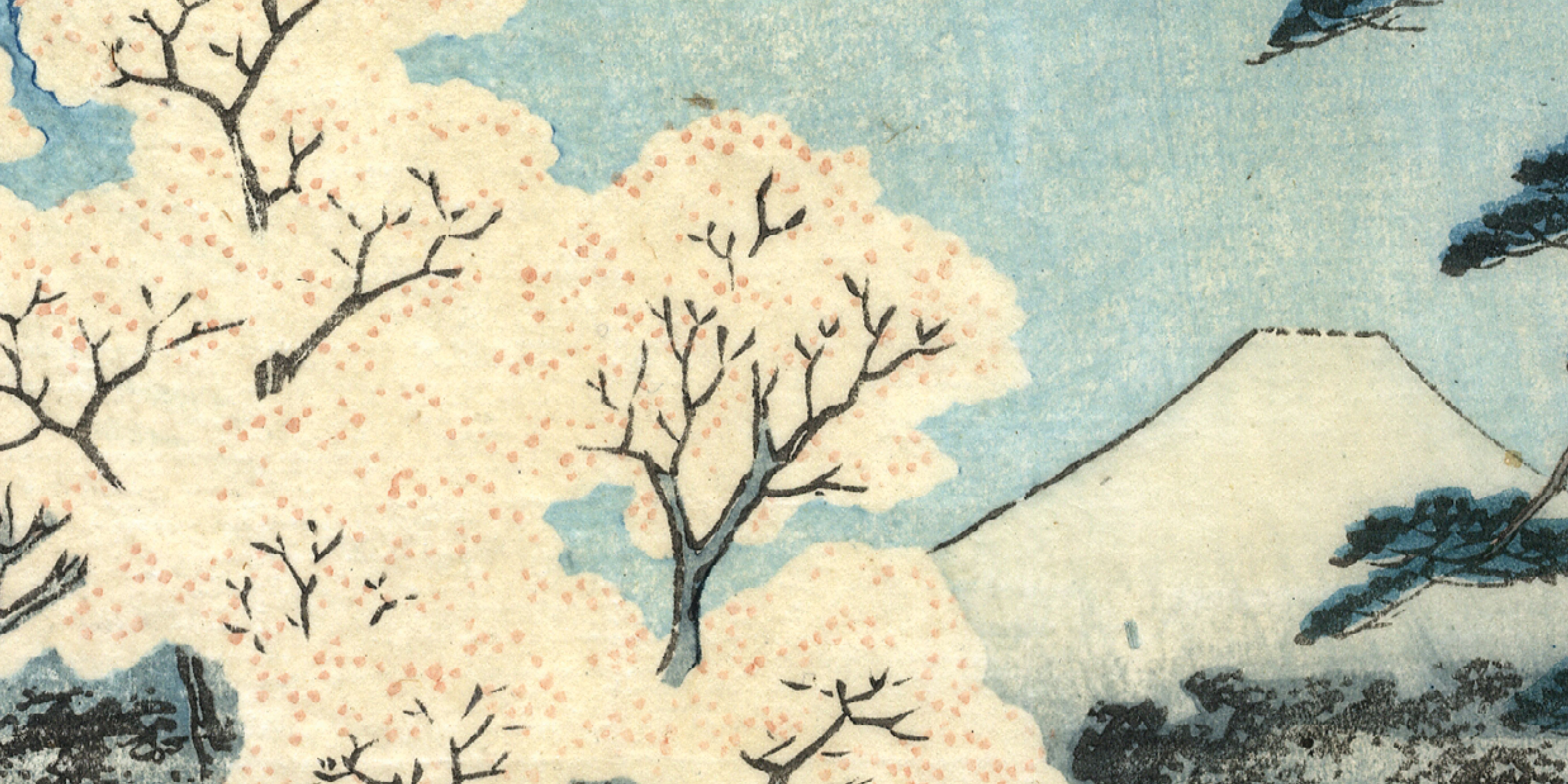
The exhibition includes works from the collection of Japanese art of the Latvian National Museum of Art – colorful ukiyo-e prints, lacquerware, porcelain, and ceramic items that illustrate this crucial season for Japan from various perspectives.
The exhibition consists of three parts – "Observing Flowers," "Kabuki," and "Rituals," which reveal the role of this season in Japanese culture in various aspects. The "Observing Flowers" section reflects the very process of observation, which combines the presence of spring, awareness of natural cycles, aesthetic experience, and social unity. In contrast, in the "Kabuki" section, spring is not just a season but a dramatic, symbolic, and social foundation that permeates the plots of theatrical performances, visual language, and audience perception. The final section, "Rituals," is small but no less important, as spring in Japan is traditionally seen as a transitional moment when one cycle ends and another begins; thus, many rituals are associated with purification, restoration of harmony, and prayer for a favorable future.














Leave a comment