These intellectuals love to hunt at night.
The presence of the common jackal (golden jackal) has been confirmed in the Chernobyl Radiation and Ecological Biosphere Reserve – a species that has been actively expanding its range in Ukraine and Europe in recent decades. Researchers reported that a jackal was found on the road between Chernobyl and Pripyat, having been killed by a vehicle.
"This finding is an important confirmation of the species' presence in the reserve, as it was previously recorded only through camera traps, tracks, and visual observations," specialists explain.
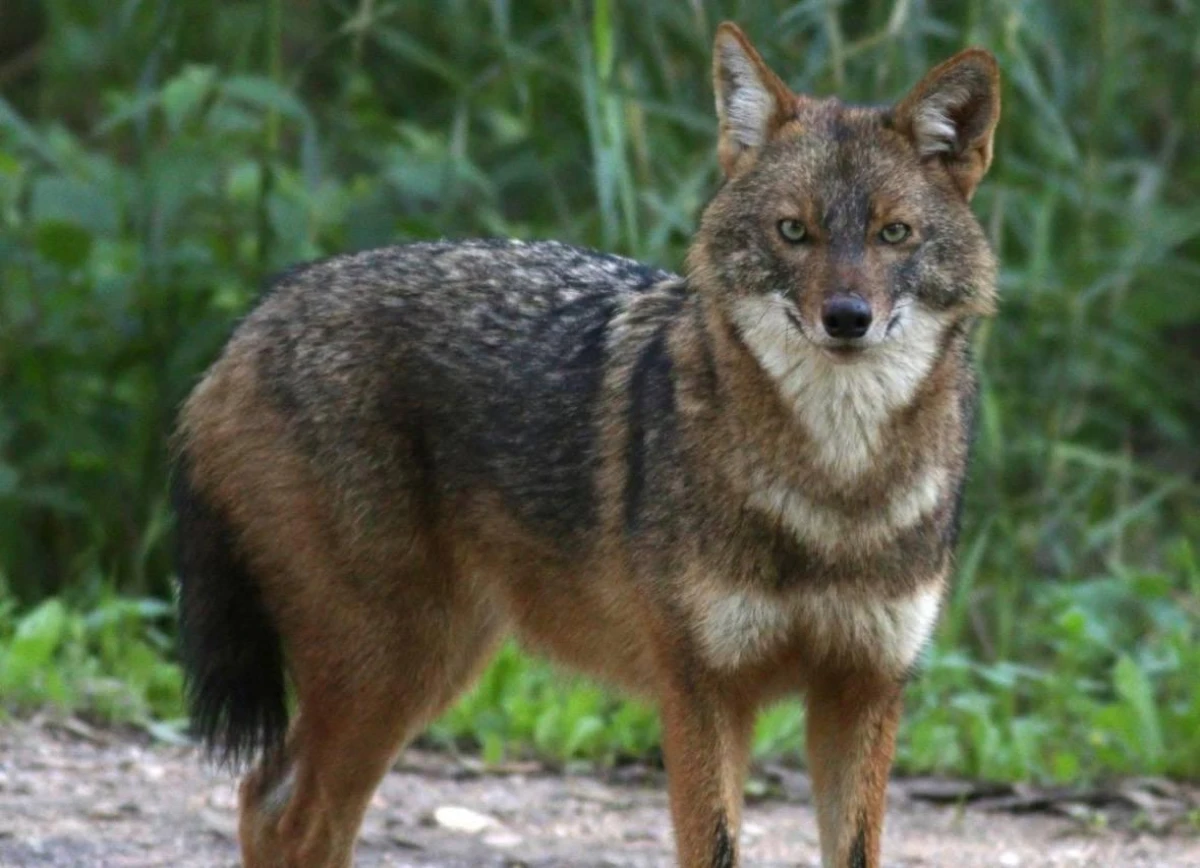
It is said that the jackal occupies an intermediate position between a fox and a wolf: it is larger than a fox but significantly smaller than a wolf. This cautious nocturnal predator avoids encounters with humans and adapts well to various living conditions.
Specialist Sergey Zhila explains that the presence of this animal in the Chernobyl reserve may slightly reduce the population of foxes and the Ussuri raccoon dog. The appearance of the jackal will change the situation, but it is not a catastrophe. As is known, foxes and Ussuri raccoon dogs are the main carriers of rabies, adds Zhila.
According to Zhila, the jackal is a little-known species for most residents of Polesia, so few can visually distinguish it or identify its tracks.
"In our area, very little is known about these animals. The jackal weighs about 15 kg. It has gray or reddish-golden coloring, a relatively short tail with a black tip. The pads of the middle toes on the front paws are somewhat fused – this allows its tracks to be identified. The animal is primarily active at night. It leads a discreet lifestyle; it is omnivorous," says the researcher.
Jackals form family pairs and raise their offspring together. They do not pose a danger to humans.
A healthy jackal is afraid of people and reacts panically to encounters with us. Only individuals infected with rabies may pose a danger. In such a state, they lose their fear and can behave somewhat aggressively. In 2014, a jackal infected with rabies was spotted near a village in the Polesia reserve area.
After the animal was frightened, it ran away. Attempts by hunters to find this jackal were unsuccessful. However, later shepherds noticed and killed the sick predator.
Historically, the jackal has had a negative image in the eyes of people. Despite quite a diverse amount of information about this species, its appearance is usually accompanied by extremely disapproving publications. One reason is that the animal poses a serious threat to domestic poultry.
According to the specialist, the jackal has decent intellectual abilities, is well aware of human behavior, and easily evades pursuit. The jackal's diet in the Chernobyl reserve will likely consist of carrion left by wolves, rodent-like mammals, birds, roe deer, and young deer.
<iframe width="560" height="315" src="https://www.youtube.com/embed/72HNJkAz3K8?si=5NpxrWcydo9N4W_x" title="YouTube video player" frameborder="0" allow="accelerometer; autoplay; clipboard-write; encrypted-media; gyroscope; picture-in-picture; web-share" referrerpolicy="strict-origin-when-cross-origin" allowfullscreen></iframe>