It is known that many animals tend to get rid of the offspring of their rivals.
Scientists once witnessed a mother orca and her son dropping a calf from another pod into the water. However, such behavior is observed not only in large predators but also in seemingly harmless creatures like parrots. Interestingly, some of them, while getting rid of the offspring of a competing pod, others gladly take on the care of the children of deceased or missing companions.
“Criminal Activities” in the Bird World
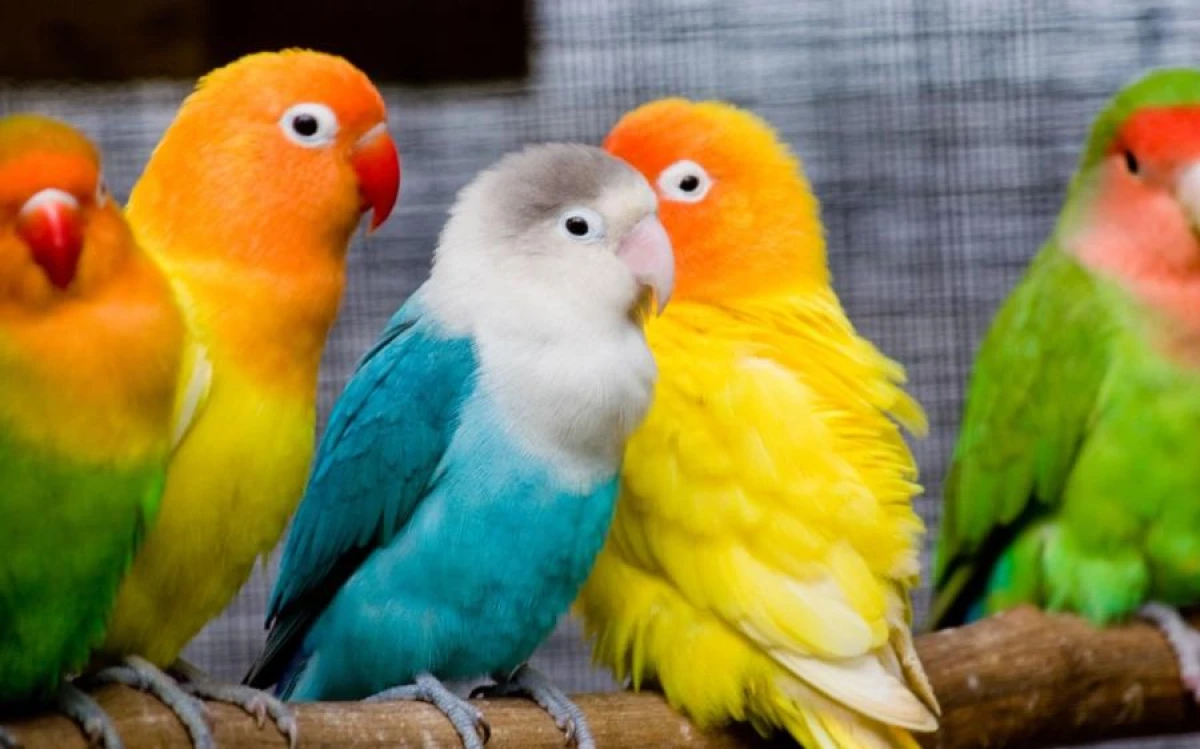
As reported by biologists from the University of California, Berkeley, they have been observing a population of sparrow-sized parrots residing on a cattle ranch in Guarico (Venezuela) since 1988. These birds prefer to nest in tree cavities and fence posts in meadows, and to better observe their family dynamics, the scientists prepared convenient nesting sites. Large PVC pipes installed throughout the ranch were used as such sites. To better track the parrots, they marked them with colored bands.
From the very beginning of the study, the biologists were astonished to find dead chicks in one of the nests without any obvious signs that they had been killed. However, when the scientists began to monitor some nests more closely, they saw a foreign male enter one of them and exit with a bloodied beak.
This sight gave the biologists their first clue that parrots might be prone to chick killing. This became the starting point for further investigation into instances of such behavior.
Reproduction at Any Cost
From 1988 to 2015, the biologists observed more than 2,700 nests. During this time, parrots killed or injured chicks in 256 nests. In most cases, the attacks were carried out by solitary parrots or pairs that then settled in the devastated nests. Moreover, the attacks increased during periods of high parrot population when competition for the best nesting sites became particularly fierce.
Based on this, the biologists concluded that unlike most mammals and birds, where chick killing is often related to sexual selection or the desire to reproduce, sparrow-sized parrots resort to this behavior while competing for nesting sites. That is, they are not killers by nature — they simply have a strong drive to reproduce. And when resources become scarce, the birds have no other choice.
Chick killing also occurred in nests where one parent had died, and the remaining individual found a new partner. In this case, the new “husbands” and “wives” were equally likely to “adopt” non-related offspring as they were to kill it. Interestingly, from a human perspective, “adoption” is perceived more easily than chick killing; however, from a scientific standpoint, this phenomenon calls into question Darwin's ideas about natural selection.
The study also showed that males who “adopted” non-related offspring continued to nest with widowed females and began reproducing at a younger age than their competitors. Additionally, together with a new partner, they gained “real estate.” Nothing personal — just cold calculation.