
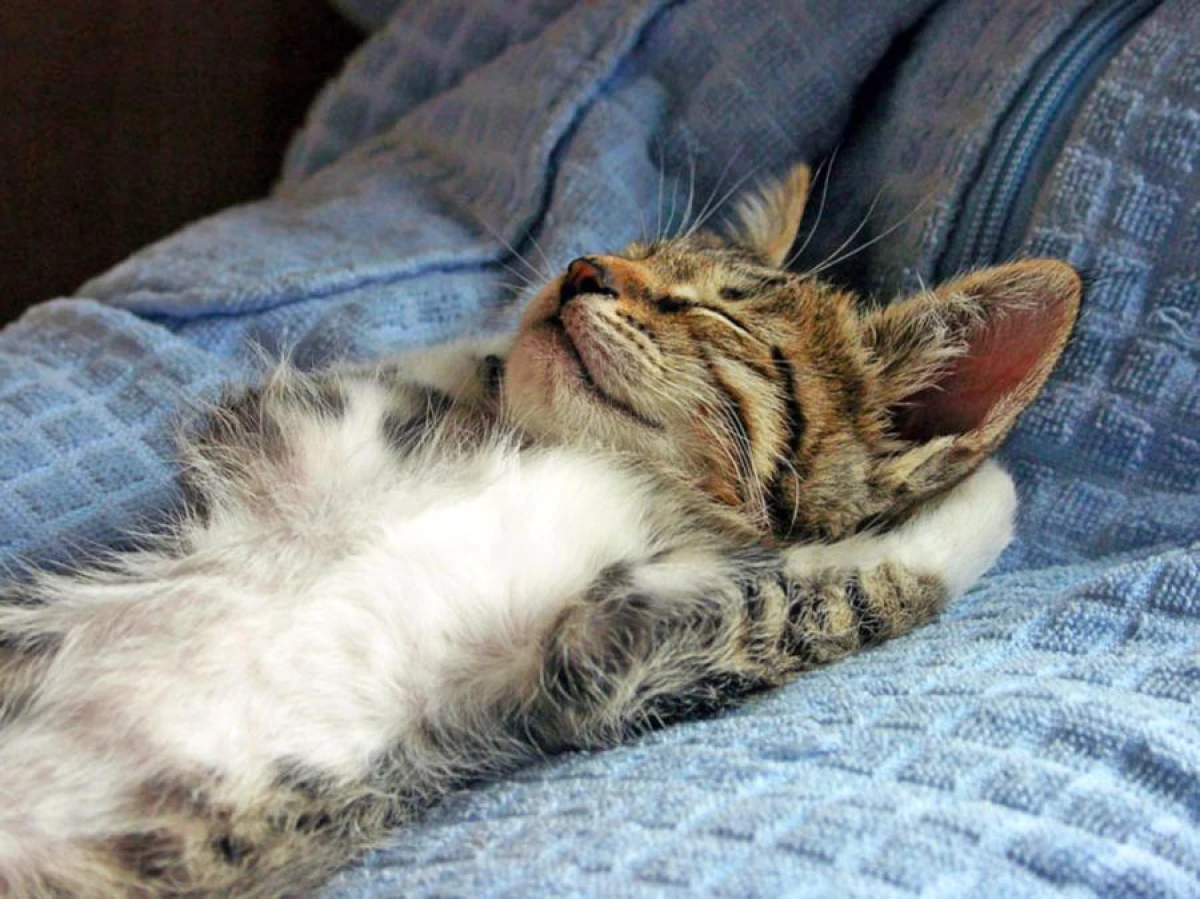
This is explained in terms of physics and neuroanatomy.
Cats invariably land on their feet when they fall, which has puzzled scientists for many years. These animals seem to defy the laws of physics by altering their body position in the air without any external assistance. How do they manage this?
Several factors influence a cat's ability to land on its feet.
One reason physicists have been amazed by cats' ability to rotate in the air is the conservation of angular momentum. What does this principle entail? If one part of the body rotates clockwise, another part will rotate in the opposite direction. This allows a cat to twist the front part of its body in one direction while the back part twists in the other. This enables it to flip over and align its position if, for example, it initially falls upside down.
However, there are other mechanisms that assist cats in the air. These animals can extend their front legs and tuck in their back legs, which reduces the inertia of the rear part of the body and decreases resistance to changes in rotational motion. The cat then does the opposite: it tucks in its front legs and extends its back legs.
Cats also employ a technique known as the “tail propeller,” which operates on a similar principle. When the tail rotates in one direction, the body can move in the opposite direction.
The ability to land on their feet can also be explained from a neuroanatomical perspective. Unlike a simple reflex, such as a knee-jerk reaction, the righting reflex in cats is more complex and, interestingly, they can be aware of it.
These aerial maneuvers are made possible by the flexible lumbar region of cats. These animals have small and pliable vertebrae, which distinguishes them from other four-legged vertebrates.






Leave a comment