
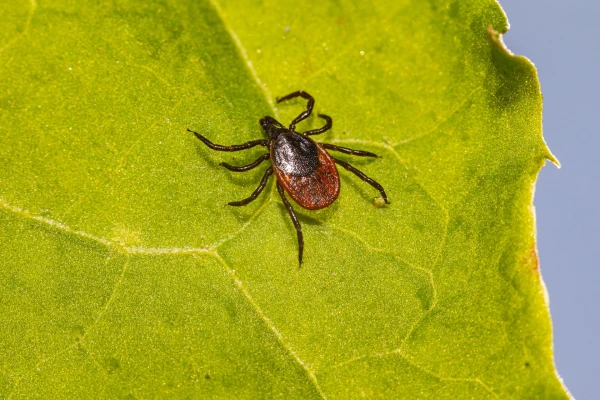
After the past winter, increased tick activity is expected in Latvia. Despite the frosts, the weather conditions turned out to be favorable for them - and this is already causing concern among specialists.
There will be more ticks this summer than usual: the snowy winter has increased the risk.
Why didn’t winter help, but rather 'preserved' the ticks? Experts explain: cold alone does not destroy blood-sucking insects. On the contrary, as noted by Latvian entomologists, the snow cover acts as a protective 'blanket,' writes Lsm.lv in its publication.
Ticks hibernate in foliage and grass, and snow protects them from temperature fluctuations. Under the layer of snow, they successfully survive the frosts. According to specialists, the past winter was 'very favorable' for ticks - in spring, approximately the same number of individuals will awaken as went into hibernation.
Ticks awaken at temperatures as low as +3…+5 degrees, so their activity can begin very early - sometimes as early as the end of winter or the beginning of spring.
In 2026, the first active ticks were spotted as early as March, confirming the trend of an extended tick season.
Where Ticks Are Most Common The prevalence of ticks in Latvia depends on the natural environment. They are most abundant in forests and habitats of wild animals. There is an increased risk where there are animal resting places. This means that the danger is higher not only in forests but also in suburbs and garden areas.
Specialists remind us: ticks are increasingly found not only in the forest but also in shrubs, tall grass, garden plots, and near homes. This means that the risk of bites exists even in urban environments.
Ticks in Latvia carry dangerous infections: tick-borne encephalitis and Lyme disease.
According to the Center for Disease Prevention and Control, 186 cases of encephalitis and over 530 cases of Lyme disease were registered last year. At the same time, specialists emphasize: the consequences of these diseases can be severe, making prevention especially important.
Dangerous diseases such as encephalitis and borreliosis can also include alpha-gal syndrome, or red meat allergy, which can occur after a tick bite. For example, around 30 cases of alpha-gal syndrome have been registered in Estonia, reports ERR.
Residents are urged to be cautious and not to forget about vaccination, which is available for free to children and certain population groups, reports LSM.lv.











Leave a comment