
Archaeologists excavating in Hungary made an unusual discovery: a 5th or 6th-century lynx skeleton buried beneath the remains of four dogs.
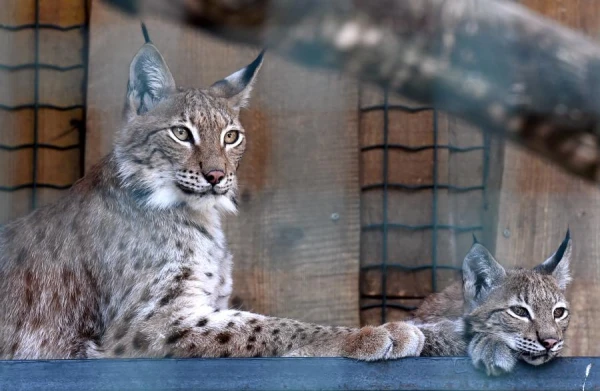
The Eurasian lynx (Lynx lynx) is a wild cat known for its cute ear tufts and large paws. This animal inhabits forested areas of Eurasia.
The lynx can be found in the forests of Western Europe, Russia, and Central Asia. However, it is extremely rare in archaeological finds—usually in the form of claws and skins used in the clothing of ancient peoples.
Now, archaeologists have managed to discover the skeleton of a wild cat that is about 1500 years old.
Burial of the Lynx
In a recent study published in The International Journal of Osteoarchaeology, scientists described the skeleton of a lynx found during excavations in Zamardi-Kutvölgyi-dulo in central Hungary. Human remains and artifacts dating to the 5th or 6th century AD were also discovered at this site.
The remains of the lynx were located at a depth of 1.4 meters—just above them were buried four dogs (two males and two females). The dogs were about the size of modern German shepherds.
According to the scientists, this is the only complete archaeological skeleton of a lynx found in Europe.
More Questions than Answers
This burial has puzzled researchers—they cannot understand its significance.
Archaeologists found no signs of skinning on the lynx's skeleton, indicating that it was unlikely killed for its fur. It is also unlikely that the lynx was buried as part of any deliberate ceremony—the position of the animal remains does not appear to suggest that the bodies were arranged with special respect.
It is possible that the lynx was killed for sport or because it was hunting domestic animals in the settlement.
There is also a possibility that the lynx and the dogs died as a result of a fight. The pets may have cornered the wild cat, which in turn may have attacked the attackers. It is possible that the lynx's fur was damaged during the struggle, and that is why people did not skin it.
In any case, the ultimate meaning of this burial remains a mystery, and it is unlikely that scientists will ever be able to solve it.












Leave a comment