Does your dog love you? Most likely, yes. But what about your cat? Or your pig? How can you determine which pets truly love humans and can comfortably live in an apartment?
In search of answers to questions about the attachment of pets to their owners, journalists turned to breeders of popular pets and biologists specializing in animal behavior. As a result, a list was compiled ranking animals by their ability to love humans, that is, to bond with their owners and demonstrate this attachment. This list does not claim absolute objectivity or scientific rigor, although specialists relied on the results of scientific research. Nevertheless, it sheds light on the relationships between owners and their pets.
1. Dog: the embodiment of adoration
The relationship between dogs and humans is unique; our shared history spans, according to various estimates, from 12,000 to 25,000 years. During this time, dogs have learned to live alongside humans: to digest carbohydrate-rich food, read our emotions, and distinguish words in human languages.
Kyle Kittleson, an animal behavior specialist, says, “The primary way dogs express love is through touch. They lick people and allow themselves to be petted, thereby demonstrating their attachment. Additionally, dogs can read your behavior and adapt to it — so when a child enters the home, the dog typically starts to protect them.” Dogs are capable of loving in a way no other animal can, which is why they take the top spot on our list of pets that love humans.
2. Parrot: love tinged with jealousy
A dog loves a human like a sibling — or like a best friend. Parrots (except for budgerigars, which will be discussed later) express their love differently — as a jealous and sometimes unstable romantic partner.
“Parrots require a lot of attention,” says biologist Deji Asiru-Balogan, adding, “If a parrot does not receive enough attention and love, it may start to behave strangely and even self-destructively — for example, pulling out its own feathers or banging its head against walls.” Parrots are not just social; in the wild, they live in large flocks, and their survival depends on constant interaction with their peers. Communication is critically important for these birds to maintain both physical and mental health. If you encounter a solitary parrot in the wild, it means it is either injured or sick.
Asiru-Balogan also notes that a parrot makes a good pet only for a person who takes it in as a chick: they become strongly attached to their first owner but struggle to adapt to a new one. This should be taken into account when getting a parrot, as they can live a very long time — sometimes over 70 years!
3. Pig: tenderness and loyalty
There are many stereotypes associated with these pets. Everyone knows the sayings: “dirty/gluttonous/sloppy as a pig.” However, in reality, pigs are clean animals, and their obesity can be avoided if they are not overfed, as is often the case in pig farms.
Keeping pet pigs (especially small mini-pigs) has become trendy for about ten years — and not without reason. Pigs ranked third on our list of pets that love humans due to their ability to bond with people and demonstrate this attachment almost as intensely as dogs do. They are social enough to appreciate interaction and affection, and smart enough to learn commands. “They enjoy being scratched on their backs and sides; this shows that they trust people — and such trust indicates deep attachment,” specialists assert.
4. Rats: intelligence and attachment
Rats make excellent pets that are also capable of loving humans. Sonya Jorg, a PhD who has written a dissertation on animal behavior, notes, “In the wild, rats actively communicate with their peers and perceive the humans they live with as large rats.” The indicator of trust, according to Jorg, is the distance between you and the animal: in the wild, rats live close to each other, often touching, so if your pet spends time calmly on your hands or lap, it means it considers you its own.
5. Horses: love in singular
Horses do not quite fit into the category of “pets,” but they are certainly capable of loving humans and bonding with those who care for them. This is why several specialists interviewed for this article voted to include horses on the list.
Moreover, their history of living alongside humans is not much shorter than that of dogs. Horses are not always friendly to all people; sometimes their bond with an owner becomes exclusive, in the sense that the horse allows only one person to ride it or care for it. They accept affection and even seek it out, being sensitive to intonations. Whether to call a horse's attachments love or not is a matter of style, but it can certainly be strong and multifaceted.
6. Cats: pure contradictions
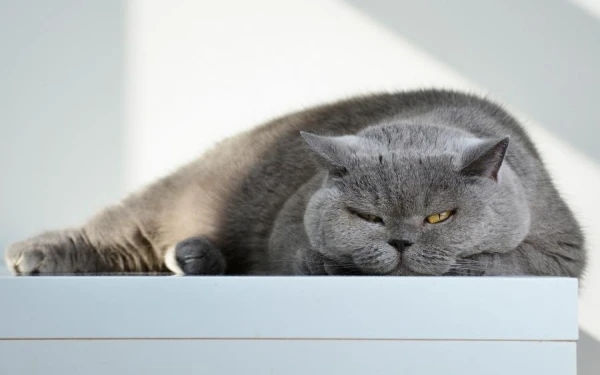
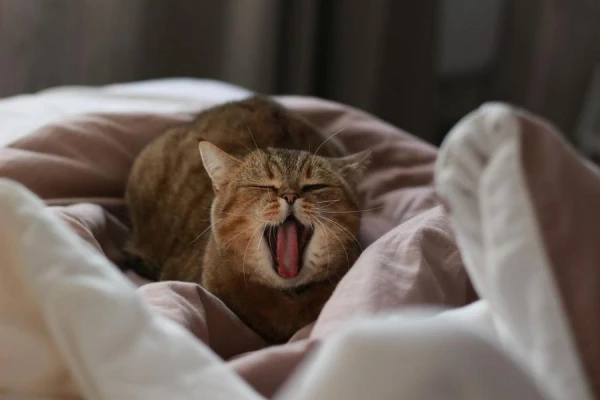
Cats are the most controversial pets on this list: specialists claim they do not care about humans, yet some examples of their behavior are difficult to interpret in any other way than as expressions of attachment and love for humans.
Socialization is not mandatory for cats: in the wild, they live alone, although they sometimes form groups where they interact quite closely. However, their survival does not depend on the ability to recognize signals and guess the emotions of other cats; domestic Felis silvestris catus and their closest wild relatives do not hunt or raise offspring together, so their social skills leave much to be desired.
On the other hand, domestic cats have five thousand years of coexistence with humans behind them. This time spent together has softened their character and made them gentle companions, but it is unlikely to have taught them to love. “Cats see you as staff,” asserts Asiru-Balogan. Jorg holds a similar view: “You are likely a source of food and sometimes entertainment for a cat, so it may leave you to find a new table and home.”
Nevertheless, it is not uncommon for cats to attempt to “feed” their owners — bringing a dead mouse or bird. Additionally, many domestic cats can distinguish their owners from strangers, trusting the former and fearing the latter. Perhaps in their little heads, there is still a flicker of love for humans — as contradictory as they themselves are.