
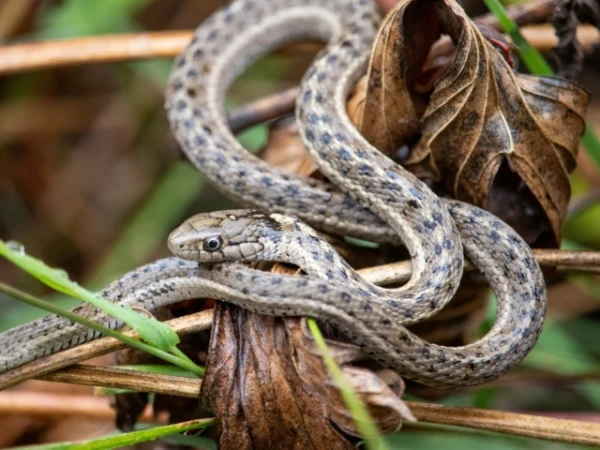
According to modern paleontological and genetic studies, the loss of limbs in snakes, which occurred approximately 100–150 million years ago, was most likely associated with the adaptation of their ancestors to a burrowing lifestyle rather than to an aquatic environment.
The study of the fossils of the ancient snake Dinilysia patagonica has shown that the structure of its inner ear has key similarities with modern burrowing reptiles. This indicates an underground lifestyle as the main evolutionary driver.
At the molecular level, this transition was facilitated by a complex of genetic changes, particularly the loss of segments in the PTCH1 gene, which plays a critical role in limb development, as well as modifications in the regulatory regions of the Sonic hedgehog (SHH) gene, which acts as the main genetic "switch" for limb bud formation.
In primitive snakes, such as pythons and boas, this process halts at the embryonic stage, leaving rudimentary bony protrusions near the cloaca. In more advanced species, even these traces completely disappear.
A profound genetic restructuring aimed at enhancing burrowing ability has proven to be an extremely successful evolutionary strategy. It has allowed snakes, despite the absence of legs, to diversify and inhabit nearly all ecosystems on the planet, making them one of the most numerous groups of reptiles.










Leave a comment