
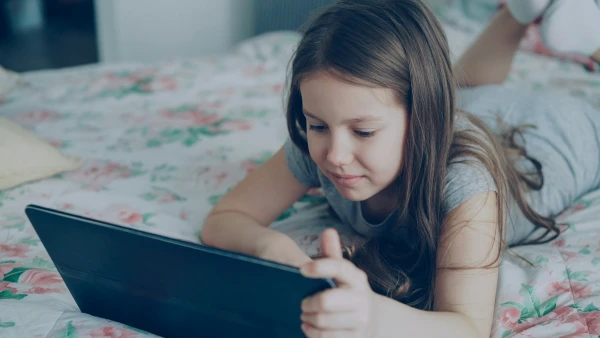
This year, Australia became one of the first democratic countries in the world to legally ban the use of social networks by teenagers under 16. France and Denmark intend to follow its example, and a common regulation at the European Union level is being developed, albeit slowly, to protect the younger generation from harmful and undesirable content, addictions, and ridicule in the digital environment. Should Latvia also move towards stricter restrictions on the use of social networks, and what risks should be considered?
In Australia, a new law regarding the use of social networks places the responsibility on platforms such as Facebook, Instagram, TikTok, YouTube, Snapchat, X, Reddit, and others to block accounts of users under 16 years old. Companies face fines in the tens of millions for non-compliance. Thus, the Australian government hopes to protect children from the risks of the digital environment — addiction, bullying, harassment, and other harmful and inappropriate content, reports TV3 News.
Following Australia's lead, France and Denmark want to implement similar measures in Europe — details are still unclear, but the arguments are similar: the safety of children, which is undermined in various ways by social networks.
Should we introduce digital adulthood here in Latvia? Educational leaders surveyed indicate that this is the right direction, but there are many pitfalls.
"Sending negative messages, being influenced by negative news on networks, receiving negative information about oneself — these are the things that should be restricted. But, of course, we should look towards those countries that are already implementing this. Perhaps we should wait a bit and observe their experience, because, in my opinion, there may be other risks, just like with all banned things," said Ingunas Helviga, the director of Riga's Imanta Secondary School.
Young people, for whom various social platforms have already become familiar, will seek ways to circumvent the bans. Moreover, not all content there is negative. The director emphasizes that it is more important than bans to educate a new generation that is not dependent on platforms.
"We need to think not about banning now — so to speak, cutting off what is already familiar and part of everyday life for young people in one fell swoop, but rather to focus on younger schoolchildren, preschool children. We should educate society so that the use of social networks does not play such a significant role, so that there is not such a strong attraction to them," Helviga believes.
The director of the Riga Central Art and Crafts Primary School points out that there is already an age restriction for the WhatsApp messenger — it is only allowed for users aged 13 and older. However, the reality is quite different — children use it much earlier. This means that parents allow it. A similar situation may arise with the prohibition of other platforms — if parents permit, the teacher will find themselves in the role of a controller.
"Restrictions are necessary, but this struggle will be very difficult! Because we have already come to the point where they use it, and then it will turn out that the school becomes the place where we fight to ensure they do not use it. I think society needs to work together here — parents and schools need to find solutions together," believes Baiba Simane-Ambaine, the director of the Riga Central Art and Crafts Primary School.
The director emphasizes: inappropriate content can have a highly destructive impact on an undeveloped mind. Moreover, if such information has been viewed even once, social network algorithms begin to push it again and again.
"We cannot avoid the use of media at all — we must teach! But at the same time, another question arises: how then will a young person learn to use media? That is also a question. If we ban them until they are 16, then at 16 they will have to relearn how to use it. Perhaps we need to think about which platforms are acceptable and which are not. There is no escaping the internet; they communicate in this environment," says Simane-Ambaine.
Currently, Latvia has implemented a ban on smartphone use for students in grades 1–6. Riga's 64th Secondary School has taken it a step further and banned phone use for older students as well.
"We at the school decided to raise this level even higher — to limit phone use for students in grades 7–12, and in a certain sense, we see the result. Students socialize, come up with other ways to spend time, or return to reading books and other games. But, of course, there are also students who cannot break free from this, and that is the work we continue — we think about how to distract their thoughts from this addiction," says Edgar Ziverts, the director of Riga's 64th Secondary School.
He notes that it is not the technologies themselves that are harmful, but the content available within them, and if it harms the mental health of children and adolescents, it is necessary to think about limiting it. Currently, the European Union is actively discussing the possibilities of introducing age restrictions on access to social networks.








Leave a comment