
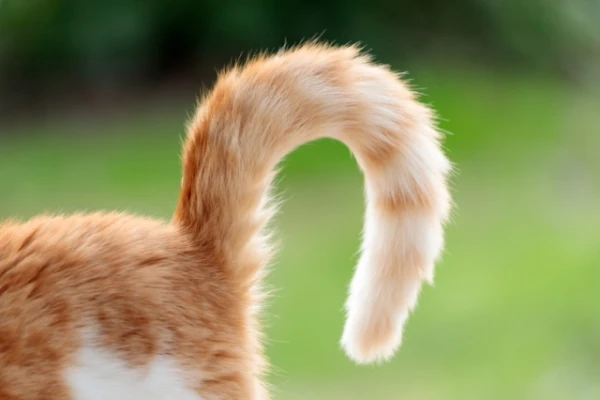
A cat's tail is an extension of its spine, consisting of 18–23 small bones called vertebrae. These bones are surrounded by muscles, nerves, and sensitive endings, giving the animal complete control over every twist and movement.
Tails Help Cats Maintain Balance
Balance is one of the main 'superpowers' of a cat, and the tail plays a key role here. When an animal walks along a narrow ledge, makes a sharp turn while running, or prepares to leap at prey, the tail helps to stabilize the body.
The Tail as a Means of Communication
Cats actively use their tails to express emotions and communicate. A tail held high indicates confidence, while a tail in the shape of a question mark signifies curiosity or playfulness.
A trembling tail may indicate strong excitement or marking territory. A bristled tail is a clear signal of fear or anxiety.
Cats also wag their tails, but differently than dogs. Slow swishes often express irritation, while quick movements are a sign of overstimulation.
'Tail Language' in the Feline Society
Cats communicate with their tails not only with humans but also with each other. The position of the tail during encounters shows whether the interaction will be friendly or tense. A tail held straight up indicates calmness, while a tail held low or curved indicates wariness.
This unique 'tail language' helps animals avoid conflicts or invite play. In households with multiple cats, observing their tails reveals the social dynamics of the group. Many animals, from dogs to birds, also use their tails for signaling, but cats have elevated this skill to a true art form.







Leave a comment