
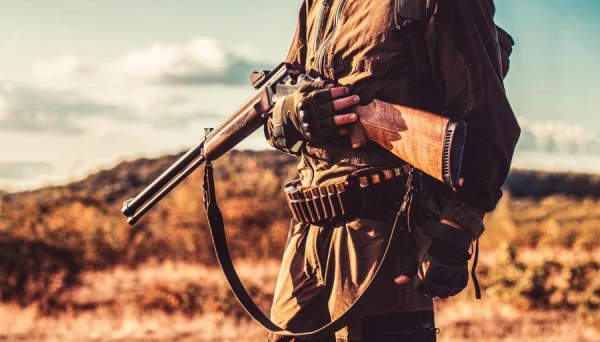
Hunting is traditionally perceived as a male activity, while a woman's role is to care for children and the household. If a woman seeks to bring food into the home, she may gather fruits, mushrooms, and roots. It is believed that this is how ancient hunter-gatherers lived, and that such traditions continue to this day.
These stereotypes are firmly rooted in popular culture: films, images, and texts depict women sitting by the fire with children and dishes, while men with tense faces and spears in hand chase after mammoths.
However, since the 1970s, anthropology has accumulated research dedicated to women hunters. Last year, researchers from Pacific University in Seattle decided to systematize this data in their article published in PLoS ONE. They used a database containing information about approximately 1,400 cultural communities leading a traditional lifestyle. Among them, sixty-three hunter-gatherer communities were identified, for which there was enough information to draw confident conclusions about their daily lives. Among these sixty communities, women hunted in fifty of them.
Women of modern hunter-gatherers do not go hunting by chance or occasionally, but purposefully and regularly. Their arsenal includes a variety of weapons: from spears and crossbows to machetes and nets; sometimes female hunters go hunting with dogs. Children are not a problem: they are either taken along (older children can help with hunting or learn useful skills) or left at home under supervision. The hunting methods of men and women within the same community may differ. For example, male indigenous Filipinos of the Aeta (Agta) prefer to hunt alone or with a partner using bows, while Aeta women hunt in groups and with dogs, preferring knives. It cannot be claimed that there are strict prescriptions about who can hunt and who cannot — anyone who wants to and knows how to do it hunts.
Most likely, among ancient hunter-gatherers, hunting was also not strictly divided by gender. Although both men and women hunt among modern hunter-gatherers, this does not exclude the possibility of communities where hunting is done only by men or, why not, only by women. In any case, when finding ancient weapons at archaeological sites, one should consider whether it belonged to a hunter or a huntress.













Leave a comment