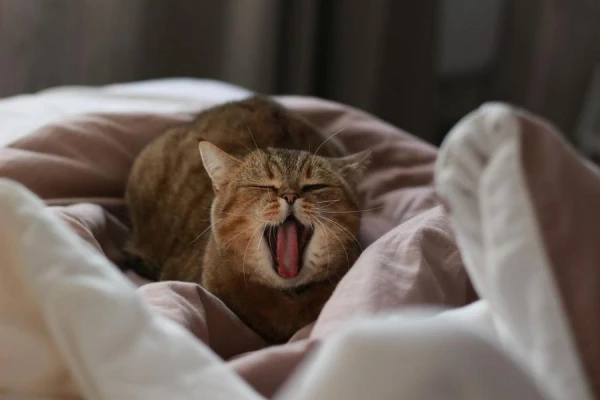
The tongue of cats has a keratinized surface and feels rough, like sandpaper. But why do our furry friends need such a "tool"?
The tongue of cats has many functions. It not only helps in eating and grooming but also serves to clean prey of feathers and fur.
If you have ever experienced a cat's lick, you surely know how unpleasant it can be. The fact is that the tongues of these animals are covered with tiny papillae made of keratinized epithelium. In fact, these papillae serve various functions. Thanks to the rough surface of the tongue, cats can effectively eat and groom themselves.
The first and perhaps most important function of the papillae on a cat's tongue is to assist in food intake. When the animal drinks, it uses its tongue to capture liquid. Water, when it reaches the tongue, does not roll back into the bowl thanks to the papillae: they hold the liquid until the cat swallows it.
The second important function is autogrooming (licking themselves). As the papillae pass through the fur, they catch and remove hairs. This allows the animal to get rid of fallen hairs, dirt, or simply to neatly groom its coat. Additionally, this procedure helps eliminate unpleasant odors by removing hairs and the substances absorbed in them.
It is also believed that with the help of the papillae on the tongue, a cat can separate the fur of its prey to access the meat. The primary diet of these animals—birds and small rodents—has fur that makes it difficult to reach the meat, and using claws is challenging. Therefore, if the covering is too dense, cats first scrape it off with their tongues and then proceed to eat. This is most often observed in wild cats, which have larger papillae on their tongues. Studies show that the special structure of these papillae allows them to collect both fur and pieces of meat while licking.