
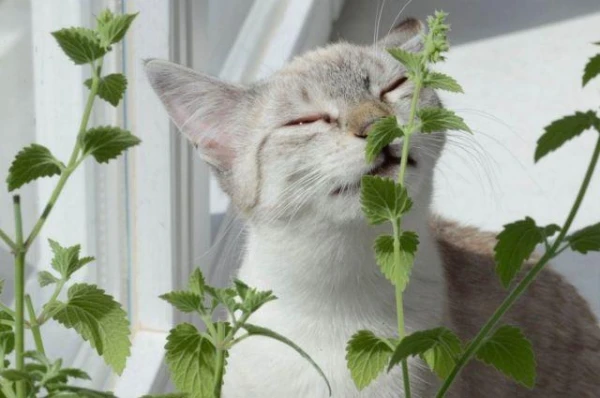
Many pet owners, following the principles of veganism or vegetarianism, are switching their pets to plant-based diets. Let's find out from experts how safe and acceptable a vegan diet is for dogs and cats.
Cat Health and Their Diet
In September 2023, an international team of scientists published a survey in the journal PLoS ONE, stating that vegan cat owners visit veterinarians less frequently with health complaints about their pets. The study involved 1,369 cat owners, of which 9% reported that their pets were fed vegan diets. When respondents were asked about specific diseases, 42% of meat-eater owners indicated at least one disorder out of 22 possible. Among vegan cat owners, this figure was 37%. Overall, cats on a vegan diet showed better health outcomes across all health indicators, although these data were not statistically significant, the researchers noted.
According to Professor Andrew Knight from the University of Winchester, biologically, cats do not need meat but a specific set of nutrients. These include the sulfur-containing amino acid taurine, which is found only in meat, arachidonic acid, and vitamins A (retinol) and B12. However, as Andrew Knight emphasizes, these substances can be synthetically obtained from plant sources and added to vegan feeds.
The Nature and Absorption of Nutrients
While it is possible to synthesize nutrients from plants, it is much more important whether an animal's body can absorb them, believes Professor Alexey Ermakov, Doctor of Biological Sciences. “For example, zinc, which is vital for the immune system, protein synthesis, and sex hormones, may be present in sufficient quantities in plant sources but not absorbed by the body due to the presence of calcium and phytic acid, which bind zinc and make it unavailable,” explains the scientist.
Another example is iron. This element supports many important functions in the body, including respiration. If a dog or cat receives iron from animal food, it comes in the form of heme iron, which is well absorbed. In contrast, iron from plant food is absorbed significantly worse, notes Alexey Ermakov.
Plants also do not contain cholesterol, which is necessary for the synthesis of several hormones and biologically active substances, and plant sources have little vitamin B12, the scientist adds.
The Omnivorous Nature of Dogs and Their Diet
Unlike cats, which are obligate carnivores and obtain all necessary nutrients from meat, dogs are facultative carnivores. This means they can eat both animal and plant foods. Because of this, there is an opinion that dogs are omnivorous animals; however, experts disagree.
“Omnivorousness in dogs means that they are capable of adapting to various food sources of both animal and plant origin — this is important for survival. However, adaptation for survival does not mean that the animal will feel perfect, fully realize its genetic potential, and have optimal health and immunity,” believes Alexey Ermakov.
Regarding the anatomy and physiology of dogs, their teeth are not designed for grinding plant food but are perfectly suited for holding and tearing prey, notes dog expert Vladimir Golubev. Additionally, dogs cannot synthesize protein from plant food, which is the building material for the body. Their bodies also contain very little amylase, which is necessary for breaking down carbohydrates, which primarily come from plant food.
“A dog can survive on a plant-based diet for some time, but it will never be completely healthy and capable of handling loads,” emphasizes Vladimir Golubev.
Alternative Sources of Protein
Experts unanimously oppose switching pets to a plant-based diet. However, they allow the use of alternative protein sources in the diets of dogs and cats, such as insect-based feeds.
According to Vladimir Golubev, insect protein feeds, supplemented with necessary ingredients, can fully meet the needs of dogs and can be used on a regular basis. However, before eliminating animal protein, it is recommended to consult a veterinarian to consider all risks and balance the pet's diet.
Entomoprotein is also used in the production of cat food. As noted by one of the manufacturers, Denis Ter-Akopov, the amino acid profile of entomoprotein is similar to that of regular meat. However, he adds that completely excluding meat from cats' diets and switching to insect protein is not recommended by their company.
“All cat communities worldwide do not support the idea of completely eliminating meat. We also adhere to this point of view, advocating for enriching the meat composition with functional additives that will help the cat and its owner cope with modern challenges,” emphasizes the manufacturer.
In some cases, it is necessary to increase the content of plant components in a dog's or cat's diet for medical reasons.
For example, the body requires more fiber in certain intestinal diseases, diabetes, or obesity, explains Professor Alexey Ermakov. It is important that the new diet provides the animal with energy and necessary elements for cell renewal and metabolic maintenance, adds the expert.
The approach to solving this task has many nuances, so the formulation of diets for pets should be handled by professionals, summarizes Alexey Ermakov.









Leave a comment