
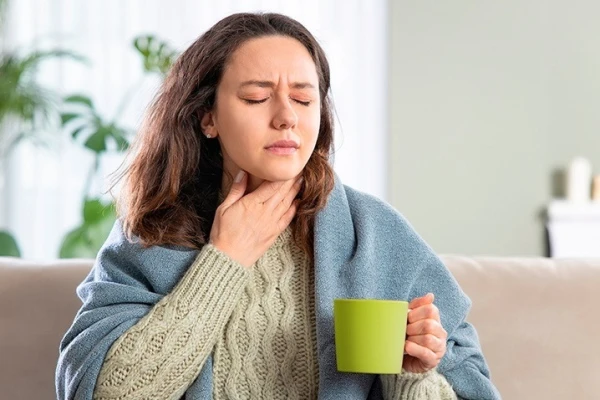
If you woke up in the morning with an unpleasant sore throat, elevated temperature, and malaise, you most likely have tonsillitis — inflammation of the tonsils. What should you do next?
ENT doctor Anna Gulakova shared proven methods that allow for quick relief of throat pain and restoration of normal well-being without the risk of worsening health. But remember, self-medication can be dangerous.
Causes: virus or bacteria, how to distinguish
Angina, or acute tonsillopharyngitis (ATP), is an acute infectious inflammation of the mucous membrane of the oropharynx, its lymphatic structures (palatine tonsils), as well as lymphoid follicles located on the posterior wall of the oropharynx. The cause of inflammation is 90% viruses and 10% bacteria. If it is a viral infection, there is no need to worry at all; it will pass on its own.
The bacteria that often provoke the disease is beta-hemolytic streptococcus group A (BHS, Streptococcus pyogenes). It has many different enzymes and toxins in its arsenal, and it causes not only angina but also scarlet fever, acute rheumatic fever, endocarditis, erysipelas, and more.
Bacterial tonsillitis manifests with symptoms such as:
-
sore throat that worsens when swallowing;
-
absence of viral symptoms (runny nose, cough);
-
enlargement and tenderness of cervical lymph nodes;
-
deterioration of general well-being (weakness, muscle pain, etc.);
-
swelling and plaques on the tonsils (not always);
-
body temperature above 38 (not always).
It is important to note that there is no single symptom that defines inflammation in the throat caused by BHS; everything is assessed only in combination.
To accurately determine whether tonsillopharyngitis is caused by a virus or bacteria, at home during acute throat pain, it is necessary to perform a rapid test for BHS. Such tests can be purchased at a pharmacy or any marketplace. If you performed the test and saw 2 lines, then the test is positive. In this case, you need to urgently consult an ENT doctor or a therapist so that the doctor can prescribe antibiotics.
If there is no allergy to antibiotics, preference is always given to penicillin antibiotics; in case of allergy, to third-generation cephalosporins. Antibacterial therapy is always prescribed only by a doctor and strictly for 10 days.
Many are frightened by the plugs in the tonsils — small white crumbs, clumps. Without the above symptoms, do not do anything with them. These clumps mean nothing; they are just pieces of food and epithelium from the palatine tonsils stuck in the crypts (depressions) of the palatine tonsils. Everyone has them; some have more, some have less, and some notice them while others do not.
How to help yourself with angina
Whether it is viral or bacterial angina, here is what you can do:
-
take antipyretics if the temperature rises;
-
if the throat hurts a lot, prefer pain relievers from the NSAID group;
-
to relieve discomfort in the throat, drink warm or cool beverages (ice cream) — whatever is more comfortable and easier for you. Choose what works best for you;
-
lozenges may be prescribed, but they are needed to moisturize the throat mucosa by increasing saliva production. Prefer any sugar-free candies.
What you should NOT do at home when experiencing a sore throat, warns the doctor, is to take homeopathy, antiviral drugs, immunomodulators (they do not work), lubricate the throat with Lugol's solution, iodine, kerosene, and so on, or use folk medicine (mustard plasters, breathing over potatoes, etc.).
"So, if you suddenly have a sore throat in the morning, it is ideal to do a BHS test at home on an empty stomach before brushing your teeth," the doctor summarizes. "If there is one line, the test is negative, stay home and treat symptomatically. If there are two lines, the test is positive, then urgently consult an ENT doctor or a therapist for the prescription of antibacterial therapy."










Leave a comment