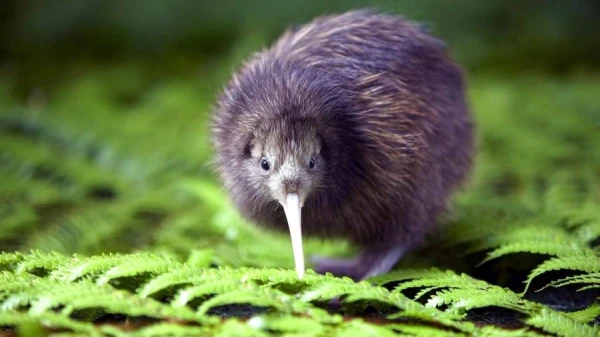
Five species of kiwi inhabit New Zealand: northern brown kiwi (Apteryx mantelli), southern kiwi (Apteryx australis), rowi (Apteryx rowi), great grey kiwi (Apteryx haastii), and little grey kiwi (Apteryx owenii).
According to the charity organization Save the Kiwi, the population of these flightless birds in New Zealand once exceeded 12 million individuals. Currently, it has decreased to 68,000.
The decline in the kiwi population is largely related to invasive species: these birds evolved in predator-free conditions and could not adapt to new species introduced by Europeans. Moreover, kiwis have a distinctive smell that is easily detected by predators.
In 2022, the Capital Kiwi Project released several dozen adult kiwis into the wild around Wellington. Animal welfare advocates hoped to restore the population of these birds in the region.
During a recent check, animal welfare advocates discovered four brown kiwi chicks in the hills surrounding the capital of New Zealand. These chicks are the first to have hatched in the wild in this area in over 150 years.
At the moment, the team continues to monitor the chicks until their weight reaches approximately 800 grams. This weight is considered sufficient for the birds to protect themselves from stoats (Mustela erminea), which pose one of the main threats to the kiwi population.
Additionally, the Capital Kiwi Project has taken other steps to protect the birds: participants have set up about 4,600 traps to combat invasive predators with the support of local cyclists.