
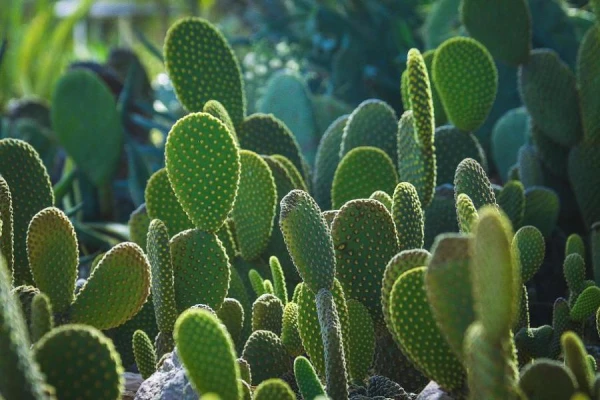
In emergency situations, it is useful to know a few survival tips. For example, the first rule of survival in the desert: do not “drink” a cactus!
In cowboy movies and documentaries about distant lands, people are often shown eating and “drinking” cacti. We all know from childhood that these plants contain a lot of water, but is it worth trying to extract this moisture if you find yourself in the desert?
Animals living in arid regions avoid cacti for a reason. It’s not just about the thorns: the water in cactus flesh has high acidity, and many species contain toxic alkaloids. Quenching your thirst with a cactus may lead to vomiting and diarrhea, which will only exacerbate dehydration.
The acidity of the moisture inside the cactus is explained by the fact that many succulents perform photosynthesis in a somewhat unconventional way. Typically, gas exchange during photosynthesis occurs during the day when the pores are open to absorb carbon dioxide. Sunlight acts as a catalyst, initiating a reaction that releases oxygen. However, cacti cannot open their pores in sunlight to avoid losing moisture. Therefore, they do this in the evening, accumulating carbon dioxide, which, in the absence of sunlight, turns into malic acid.
Although many plants contain malic acid, cacti have it in significantly larger quantities. It is also worth noting that some cultures consume the flesh of this plant, and the secret is that the acid is usually broken down during cooking.
In addition to malic acid, succulents produce oxalic acid, which is a toxic byproduct of photosynthesis. For humans, it poses a danger as it binds with calcium in the body, forming calcium oxalates that can disrupt kidney function.
5 Interesting Facts About Cacti
There are over 2000 species of cacti, ranging from miniature to giant ones like the cardon cactus.
Some cacti can live for decades and even centuries, thanks to their ability to survive in unfavorable conditions.
The spines of cacti are modified leaves that protect the plants from predators and help retain moisture.
Many species of cacti have a special waxy layer on their surface that minimizes water evaporation.
Some species of cacti are used in traditional medicine to treat various ailments, including joint pain and infections.










Leave a comment