
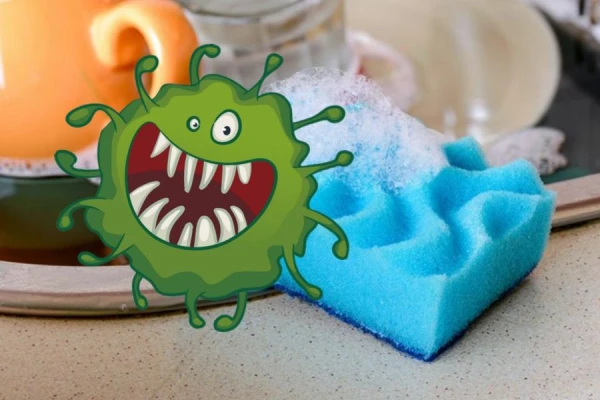
The use of sponge dishwashing sponges seems convenient to many residents of our country. Biotechnologist Maria Zolotareva explains why such sponges can pose a danger.
According to Maria Zolotareva, sponge dishwashing sponges create ideal conditions for the proliferation of bacteria. In just one week of use, a sponge can harbor 200,000 times more microorganisms than a toilet seat.
“The porous structure of the sponge retains food and grease residues, which promotes rapid bacterial growth. I conducted an experiment and found that after just three days of use, the number of microorganisms significantly increases. Yeasts, molds, Escherichia coli bacteria, and staphylococci can be found in the sponge,” Maria Zolotareva specifies.
The greatest concern is caused by Klebsiella, which belong to opportunistic pathogenic bacteria.
“They can lead to respiratory diseases. They cause bronchitis, pneumonia, rhinoscleroma, lung abscesses, and sometimes they lead to joint damage, mucous membrane lesions of the eyelids, and urogenital infections. The bacteria can cause acute intestinal infections, peritonitis, and sepsis. Their danger lies not only in the complexity of the diseases but also in their ability to develop resistance to antibiotics,” the expert adds.
To avoid potential health problems, Maria Zolotareva recommends changing the sponge for a new one once a week. It is optimal to have one sponge for washing the sink, another for dishes, and a third for vegetables and fruits. The best solution would be to abandon conventional sponges in favor of plastic brushes, which can be easily rinsed with boiling water and disinfected.














Leave a comment