
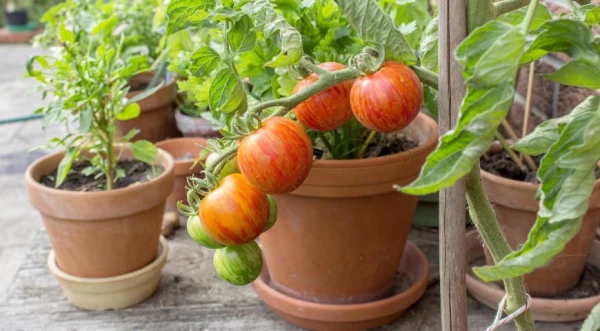
In summer, they can be grown in the garden, in autumn dug up and kept all winter at home in pots, and in spring replanted in the beds. And so on indefinitely!
Not everyone knows, but many vegetables that we traditionally grow as annual crops are perennials in nature. This means they can yield multiple harvests. So let's take advantage of their generosity.
5 vegetables that you can take home:
Tomatoes
Peppers
Basil
Green onions
Mint
Tomatoes
Theoretically, you can dig up a tomato bush and plant it in a large pot. Then all the unripe fruits will ripen peacefully at home. But there is a problem: by the end of the season, many varieties reach a height of 1.5–2 m – where would you put such a bush?
If you have a large bright room and space for such giants, great – you will be able to enjoy tomatoes until the New Year. In spring, you won't have to deal with seedlings – just cut the tops from the bushes, root them, and plant them in the garden.
If your apartment is small but you have space on the windowsill, start right away with the tops – cut them directly in the garden. Once they root, plant them in small pots. You won't get fruits from them, but you will preserve the mother plants. In spring, again cut cuttings from them, which can be planted in the garden instead of seedlings. And this can be repeated year after year without spending on seeds.
Peppers
They are more compact than tomatoes, and their root system is small. So you can confidently transplant them into pots and grow them on the windowsill.
Sweet varieties will give a little extra harvest – everything that didn't ripen in the garden will mature. Hot peppers can bear fruit all winter, provided they receive good supplemental lighting.
Hot peppers can be grown right in the kitchen under grow lights – the hostess will always have a spicy seasoning at hand.
Basil
Basil is great in every way, an excellent seasoning, but gardeners know how difficult it can be to grow it from seeds. In the central region, you have to deal with seedlings, and there is never enough space for them. But you don't have to do that!
If you have basil growing in your garden, dig up one or several bushes and plant them in pots. On a bright windowsill, they will grow all winter. As needed, pluck the lower leaves and use them as seasoning.
Gradually, the basil will stretch, and the stems will become bare, but that's not a problem – trim the bushes to 2/3, and after a while, they will grow back again.
In spring, you can cut cuttings from these bushes, root them, and plant them in the beds.
Green Onions and Others
Now, tell me, who hasn't put sprouted onions in a glass of water during winter? Everyone! It's very convenient – you always have vitamin greens at hand. But that will be in winter. Now for greens, you can use bunching onions, leek, chives, fragrant onions, and other perennials – feel free to dig them up from the beds when the first frosts arrive, transplant them into pots, and send them to the windowsill – greens are guaranteed until the new season.
In spring, they can be replanted in the garden or kept at home.
Mint
If you have your own mint in the garden, dig up a division or just a few pieces of the rhizome and plant them in a container. All winter, it will delight you with its greenery.
In spring, it's better to transplant the mint into open ground – there it will gain strength, and at the end of summer or in autumn, transplant it back into a pot – and into the house.











Leave a comment