
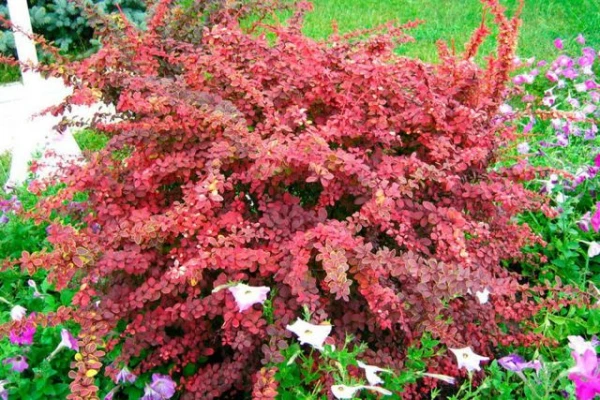
Thunberg barberry is attractive because of its dense branches and striking foliage. How to shape the crown of the shrub to keep it appealing is explained by gardener Inna KARATAI.
There are several types of pruning.
Sanitary pruning is carried out in early spring before the sap begins to flow and in autumn after leaf fall.
Shaping pruning (where branches are given a neat appearance – cutting them back to the ground is not necessary) is done 2–3 times a season – in May, June, and late July.
Rejuvenating pruning is done once every 5–7 years (removing old branches). Regardless of the type of pruning, it should only be carried out on barberries starting from the second year after planting. During pruning, remove dry, damaged, and inward-growing branches, and shorten overly long shoots that disrupt the harmony of the bush.
To achieve impeccable results, the tool must be sharp (pruning shears, loppers) and disinfected. Cuts should be made above the outer bud at a 45-degree angle. Thick branches (over 1 cm) should be covered with garden varnish. After pruning, feed the plant with potassium-phosphorus fertilizer. Typically, barberries take about 3 years for quality rooting, and they begin to grow actively when fertilization starts.
IMPORTANT!
When shaping the bush, adhere to the rule: do not remove more than 30% of the crown in one pruning session.














Leave a comment