Pruning perennial ornamental plants is an important stage in preparing the flower bed for winter.
This operation is best carried out in October, when perennials enter a dormant stage, the underground parts of the plants have accumulated nutrients during the warm period, and there is no risk of stimulating the growth of new shoots with pruning.
Main Autumn Tasks in the Flower Bed:
Cut the panicled phlox almost to the ground, leaving 2-3 cm from the stems. Cut a few taller stems at the edges of the bush slightly higher, so that in spring you can find the clump in the flower bed.
Low pruning is also necessary for herbaceous peonies, astilbes, daisies, rudbeckias, perennial asters, and tradescantias. When the astilbes have finished blooming, you can start pruning. It is convenient to cut a large mass of greenery with special grass scissors.
Remove plant debris with rakes.
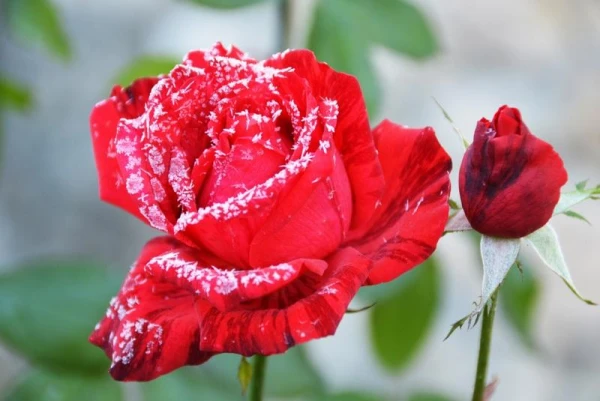
For roses, it is necessary to remove the fruits and flowers.
Carefully cut out the non-woody shoots. They can be easily distinguished by the light green color of the bark. Thick dried branches can be conveniently cut with long-handled loppers.
Use special lightweight rakes to remove the cut debris from the bush and thoroughly treat the rose garden with copper-containing preparations.
It is also necessary to remove the inflorescences from tree and panicle hydrangeas. Some gardeners leave them to enjoy the winter views. In this case, spring pruning must be completed before the sap begins to flow.
When cutting clematis that bloom on this year's shoots, leave about 20 cm of stems. Mound the bushes with compost or dry peat (one bucket per bush) and, with the onset of stable cold weather, cover them with non-woven material (density 60 g/sq.m). Clematis that bloom on last year's shoots should not be cut for winter; they are removed from supports and laid under winter cover.
When cutting perennials with hollow stems, such as delphiniums, false solomon's seal, ligularias, and lilies, it is advisable to first cut the stem to a height of 20 cm.
Then simply bend the remaining stem in such a way that water does not flow inside. Otherwise, if the end of the tube is sticking out above the snow, cold air or moisture may reach the roots, which is undesirable for successful wintering. When preparing bearded irises for winter, cut the fan of leaves with grass scissors to a height of 15-20 cm, so that water can run off.
Some perennials do not require and may even be harmed by winter pruning. Daylilies and hostas winter without pruning; however, it is essential to remove the flower stalks of these plants with pruners.
For Korean chrysanthemums, only the flowers and buds are removed, leaving the stems for winter. The dead above-ground parts of these plants are removed in spring, cutting with pruners to a height of 3-5 cm, so as not to damage the young shoots and buds. Lily of the valley, ferns, brunneras, heucheras, lady's mantle, and garden violets also do not require pruning.