The choice of products is influenced by both the economy and religion.
Fish in Germany is not just food, but a part of history and culture. To understand why herring is honored here as a delicacy, one must look into the past and at least briefly learn about the history of fishing and culinary practices.
Fish played a key role in the lives of the northern regions of Germany as early as the Middle Ages. The inhabitants of the North and Baltic Sea coasts depended on their catch just as farmers depended on their harvest. This industry was not without reason: huge schools of fish made it stable. Historians describe instances where herring was caught literally by hand. Thus, fish in medieval Germany was an accessible product for all social classes.
The Hanseatic League played a special role in the trade of fish resources. This association of trading cities controlled the supply of fish throughout Northern Europe. For example, herring was massively sent to Novgorod, while furs and grain were brought back.
However, the most significant breakthrough was the Dutch method of salting in the 14th century. It allowed fish to be stored for months. As a result, herring became a truly strategic commodity.
How Fish Changed the Economy in Germany
In addition to providing jobs for thousands of people, fishing sparked the development of related industries.
What developed thanks to fish:
- shipbuilding;
- barrel production;
- salt extraction;
- port infrastructure;
- trade between regions.
For example, salt for fish salting was supplied from the city of Lüneburg. At the same time, up to a third of all catches went specifically for processing herring. Thus, fish alone influenced the economy of entire regions.
Traditions and Laws of Fishing
Today, Germany strictly regulates fishing. To catch fish, one must obtain a license. This may surprise newcomers, but the rule applies everywhere. In addition to respect for the law, ancient traditions are preserved in the country. For example, fishermen still greet each other with the words “Petri Heil” — a wish for a good catch. This greeting literally translates to “glory to the apostle Peter” — he is considered the patron saint of all fishermen. In meaning, it is akin to the Russian “ne khvosta, ne cheshui!”
Interestingly, one of the oldest fishermen's associations appeared as early as 987. This refers to a brotherhood in the Sieg River area. It still exists today and is engaged in preserving crafts.
“A tired fisherman leisurely floats on the calm waves of the lake. What was the night catch? Did the sea reward him generously, and is it enough to provide for his wife and children? Have his worries remained in the darkness of the night or risen with the sunrise? Ne khvosta, ne cheshui, fisherman!”
Fish in German Cuisine
Thus, fish has secured a firm place in the gastronomy of Germany. However, preferences vary greatly by region. In the north, fish is eaten more often. There, it is part of everyday cuisine. In the southern regions, fish dishes are more often served in restaurants or on holidays.
Popular types of fish: salmon; pollock; trout; herring; pike-perch; pike; eel; carp. Germans traditionally prepare carp in the fall. Trout is often fried or smoked.
Traditional Fish Dishes
German cuisine offers a variety of recipes. Many of them are simple and hearty.
Famous dishes:
- baked cod with herbs and beer;
- pike-perch in mushroom sauce;
- pike cutlets;
- mussels in white wine;
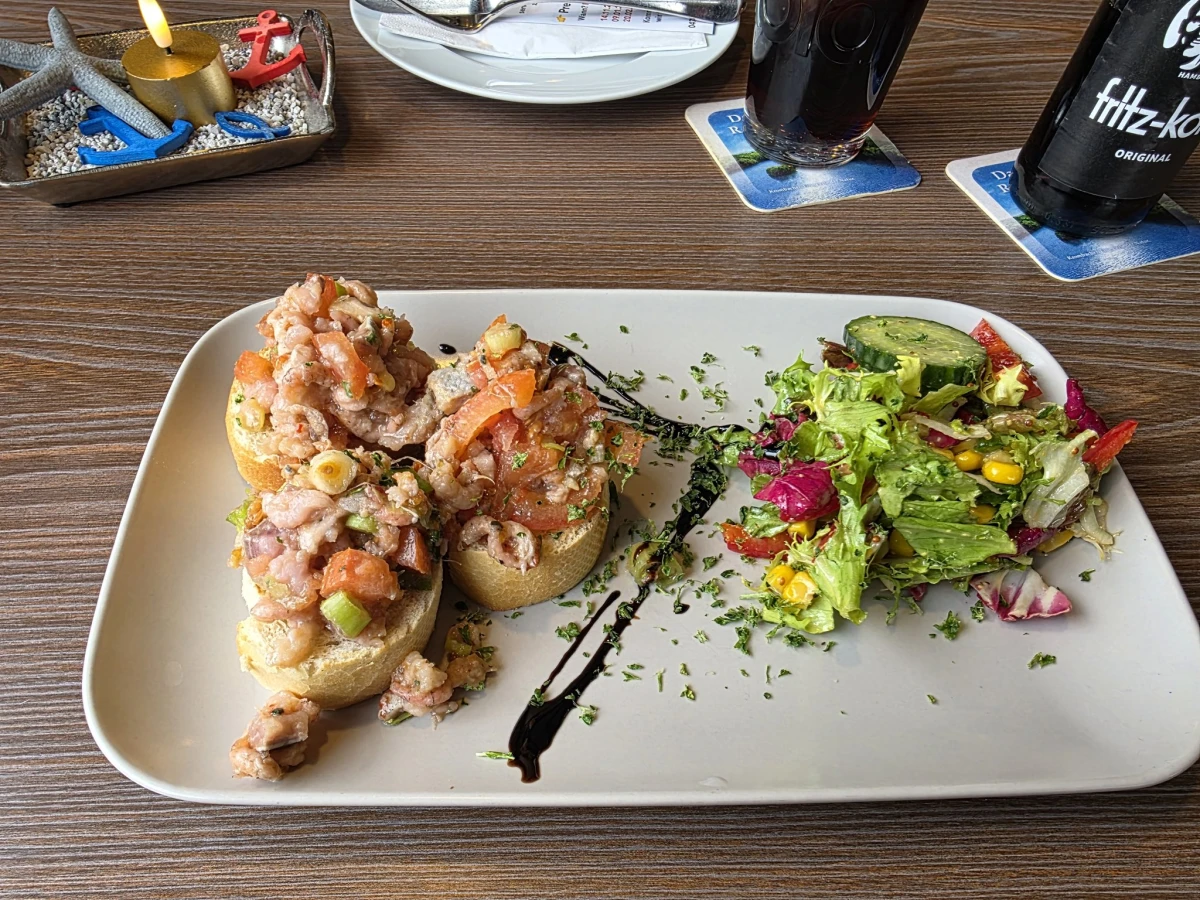
- herring with potatoes and bread.
In addition, fish soups and stews are popular. They are often prepared on the coast.
Why Herring Holds a Special Place
Despite the variety, herring has become a symbol of German cuisine. The reason is simple: it was accessible, nutritious, and easy to store. Moreover, herring was long considered “food for the poor.” However, over time it transformed into a strong gastronomic brand.
Herring Festival in Glückstadt
Today, traditions are alive. The most famous celebration takes place in the city of Glückstadt in Schleswig-Holstein. Every year on the second Thursday of June, the Matjes season — young pickled herring — is opened here.
What happens at the festival:
- tasting of the first barrel;
- street festivities;
- competitions and games;
- concerts;
- sale of local dishes.
Matjes is a special type of herring. It is prepared using traditional technology without accelerated fermentation. Therefore, the taste differs from mass-produced counterparts.
How to Properly Eat Matjes
Experts recommend eating this fish as simply as possible. This may surprise those accustomed to complex recipes.
Main recommendations:
- do not soak in milk;
- do not overload with sauces;
- do not add too much onion;
- eat fresh.
This reveals the natural flavor of the product.
Herring and European Cuisine
Interestingly, herring is popular not only in Germany. In the 19th century, salads with this fish were prepared throughout Northern Europe. It was then that dishes similar to the iconic “herring under a fur coat” appeared. They were made from accessible ingredients: potatoes, beets, and eggs. Such recipes can be found in popular old cookbooks from England and Germany.
Modern Changes
However, the situation changed in the 20th century. Fish stocks decreased, and then recovered, but with new problems: for example, parasites appeared. Therefore, today the catch is necessarily frozen right on the ships. This means that the modern recipe for Matjes herring differs from the historical one. The herring is gutted and processed according to new standards.
How Much Fish is Eaten in Germany
According to recent years, fish in Germany has not lost its popularity: Germans continue to actively purchase it. On average, one person consumes about 13.2 kg per year. However, the structure of consumption is changing.
Main trends:
- rising prices for fish;
- decreasing consumption volumes;
- increasing expenses;
- popularity of frozen products.
For example, in 2023, residents of Germany bought more than 418 thousand tons of fish and seafood. At the same time, total expenses exceeded 5 billion euros. This is a record figure.
Which Types of Fish Germans Choose
Today, salmon ranks first. It is popular due to its versatility and omega-3 content. Next are tuna, herring, and shrimp. At the same time, fresh fish lags behind canned and frozen varieties.
Regional Differences
Northern Germany remains the leader in fish consumption. For example, in Schleswig-Holstein, the figure reaches 6.7 kg per person. In the southern regions, the numbers are lower. This is due to the distance from the sea and culinary traditions.
Fishing as Culture
Fishing in Germany is not only food but also a way of life. For example, when the Fishing Day takes place in the city of Memmingen, about 1500 people participate. They catch trout right in the city canal. The winner receives the title of “King of Fishing.”
In addition, the country hosts many festivals and fairs dedicated to fish.
Culinary Records
Germans love to impress with scale. For example, chef André Domke has set several records. He prepared a fish jelly weighing over 180 kg and a soup with a volume of 268 liters. These achievements were recorded by the Institute of Records of Germany.
How Fish Cuisine Developed
German cuisine developed under the influence of geography. In Germany, the north is marine fish, while the south is lake fish.
Fasting played an important role. In the Middle Ages, meat could not be eaten for up to 140 days a year. Therefore, fish became the main source of protein. This led to the formation of simple and hearty recipes and cooking methods: salting, pickling, baking, and stewing. These methods still form the basis of German cuisine.
Traditions of Fish Processing
Germans have historically valued practicality. Therefore, fish was processed in such a way that it could be stored for a long time.
Main methods: salting in barrels; pickling in vinegar; smoking on alder; drying (less often than in Scandinavia); boiling in beer or wine. For example, herring was salted for at least a week. This was not accelerated — otherwise, the taste was considered “empty.”
<iframe width="560" height="315" src="https://www.youtube.com/embed/OX0bG1-O5SA?si=AQ4WWpd2Js-jzgrl" title="YouTube video player" frameborder="0" allow="accelerometer; autoplay; clipboard-write; encrypted-media; gyroscope; picture-in-picture; web-share" referrerpolicy="strict-origin-when-cross-origin" allowfullscreen></iframe>