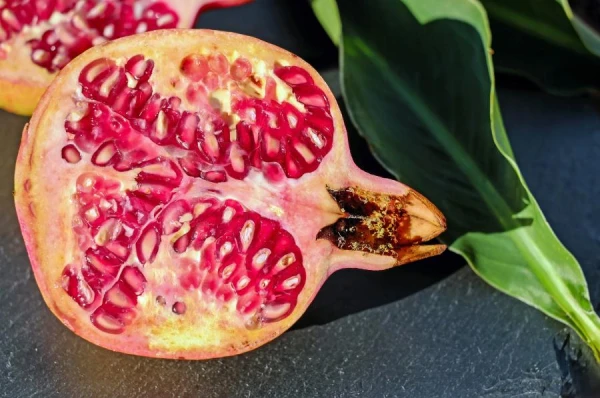
There are many opinions on whether consuming pits is harmful or, on the contrary, beneficial to health. However, it is worth noting that seeds are created by nature for reproduction and are not intended to bring benefits or harm to the body. They have a hard shell and streamlined shape, and special enzyme inhibitors protect them from digestion.
Seeds have a structure that allows them to pass through the gastrointestinal tract of humans or animals with minimal damage. Based on this, it can be concluded that both beneficial and harmful substances from seeds and pits are unlikely to enter the body unless they are ground in a mortar or thoroughly chewed before swallowing, reports Novochag.
Pomegranates
Pomegranate seeds are quite edible and are especially rich in beneficial substances for the heart and blood vessels. They contain polyphenols, tannins, quercetin, and anthocyanins, which have anti-inflammatory, antiviral, and antimicrobial properties. Pomegranate seeds also contain vitamins B, A, and E, as well as various beneficial elements including iron, sodium, calcium, potassium, and iodine. People with a sensitive gastrointestinal tract may want to avoid consuming pomegranates with seeds; in other cases, it is safe. For example, the Chinese believe that crushed pomegranate seeds with sugar are very beneficial for men.
There is a legend that there are exactly 365 seeds in one pomegranate — the same number as days in a year, but in reality, their number exceeds one thousand.
Apples and Pears
Apple seeds do contain poison: each contains 0.6% of the glycoside amygdalin, which breaks down in the stomach into cyanide. However, to cause serious poisoning, one would need to consume about two kilograms of seeds, which seems unlikely, so there is no need to worry. Additionally, apple and pear seeds contain vitamin B17, which occurs naturally in small amounts, iodine, protein, and fatty acids.
Lemons and Oranges
The bitter taste of lemon and orange seeds is due to the presence of limonin — a substance with antiviral properties. However, lemon seeds also contain salicylic acid — the main component of aspirin. If you have a headache, don’t rush for medication; try chewing a few lemon seeds, as it might help. But remember, they need to be chewed; otherwise, there will be no benefit. Citrus seeds also contain vitamin B17, which may help in the fight against cancer and fungal diseases, as well as vitamin E, known as the elixir of beauty.
Grapes
Consuming grapes with seeds is recommended for people with heart diseases. Grape seeds have anti-inflammatory properties and are beneficial in treating colitis, gastritis, urinary tract infections, and intestinal issues. There is no need to be afraid of eating grapes with seeds — it will not affect the digestive process.
Dates
Few people consider the benefits of date seeds. However, studies show that they contain more protein and fats than the fruit's pulp. They are an excellent source of minerals such as selenium, copper, potassium, and magnesium, and powder from date seeds is used to treat gastrointestinal disorders and various inflammatory diseases. Additionally, date seeds have long been used to make coffee. It is believed that date seeds help with heartburn and improve digestion.
Watermelon
Watermelon seeds have never been particularly popular, but they can also be eaten. They are rich in zinc and iron, as well as fiber and protein. The seeds may help regulate blood sugar levels and improve skin condition.
Watermelon seeds are traditionally used in the cuisines of the Middle East and Asia, as well as in Sudan, Egypt, and Nigeria. They can be made into flour and oil, but most often they are eaten like sunflower or pumpkin seeds.
Melon
Melon seeds, if not chewed, are quickly expelled from the body naturally; however, they contain valuable digestive enzymes that can help with stomach disorders if chewed. Melon seeds also effectively cleanse the liver and pancreas and help lower blood sugar levels.
Seeds and Pits Best Not to Eat
The pits of cherries, peaches, nectarines, plums, and apricots contain the substance amygdalin. This glycoside, present in the pits of many plants, gives them a bitter taste. Under the action of gastric juice, amygdalin breaks down into glucose and cyanide, which accounts for the toxicity of cherry pits. There is a small amount of amygdalin in cherry pits, and if you accidentally eat a few berries with a pit, nothing serious will happen. The danger lies in intentionally consuming pits in large quantities. At temperatures above 75 degrees, amygdalin breaks down, and cyanide is not formed, so compotes and jams made from cherries are completely safe.