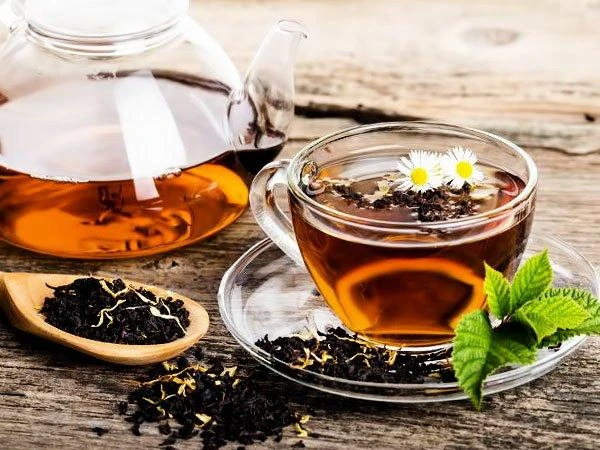
When consuming various products, it is important to maintain moderation, including regarding the daily norm of tea.
Tea has the ability to gently invigorate. Different types of tea have their unique beneficial properties, and the question of whether one can drink tea daily rarely arises, as this beverage has become an integral part of many people's lives.
Tea contains caffeine, which is bound to tannins (phenolic compounds with astringent properties), making its effect on the body milder compared to coffee, as explained by dietitian Svetlana Fus.
The expert emphasized that this beverage should not be considered completely safe — tannins can bind iron. The dietitian also noted that tea promotes the stimulation of urination.
Pediatrician Yevgeny Komarovsky also pointed to the negative impact of caffeine in tea on the human body. The doctor claimed that caffeine indeed hinders the absorption of iron from the stomach.
Therefore, it is important not to overindulge in tea — one must know the limits. Fus reported that it is safe to consume no more than three cups of tea a day, provided that coffee is not included in the diet. The expert recommended drinking tea after meals, as the beverage itself is considered a snack.
What is the Fatal Dose of Tea
A cup of black tea with a volume of 200 ml can contain up to 60 mg of caffeine, while green tea can have up to 50 mg. A person is allowed to consume up to 400 mg of caffeine per day, and the fatal dose for an adult is considered to be about 10 g. Thus, it can be calculated that the lethal amount of tea is more than 160 cups a day.
What Happens with Excessive Tea Consumption
The most common problem that may arise is insomnia. Drinking green or black tea in the evening can invigorate, making it difficult to fall asleep. If you want something warm in the evening, it is better to choose herbal tea.
If one constantly drinks tea with meals, it can lead to more serious consequences — iron deficiency. A study conducted at the University of California in 2011 confirmed that tea significantly hinders the absorption of iron by the body.
Regularly drinking tea with food can lead to iron deficiency, which negatively affects the condition of hair and skin, and can even cause lethargy and anemia. According to experts, to avoid harm from tea, it is best to drink it at least 20 minutes after eating.
What Happens with Excessive Herbal Tea Consumption
Komarovsky emphasized that all herbs contain polyphenols — special chemical substances that hinder iron absorption. Thus, excessive consumption of herbal tea can lead to iron deficiency.

The medic also warned that herbal teas are not recommended for people with low hemoglobin levels.
In 2015, the American journal Food Chemistry published the results of a study of more than 40 different herbal teas intended for pregnant women, nursing mothers, and children under one year old. In almost 90% of the samples, researchers found toxins produced by certain flowering plants (for example, coltsfoot) — pyrrolizidine alkaloids.
If such tea is consumed in moderate amounts, the dose of harmful substances for an adult body will be almost safe; however, for infants, they pose a greater danger. The main target of the toxins is the liver.
What Happens with Excessive Black Tea Consumption
Scientists have found that excessive consumption of both black and green tea washes out iron, calcium, and magnesium from the body — trace elements necessary for health.
Practice also shows that excessive consumption of black tea, especially of poor quality, can worsen the condition of teeth — residue may remain on them.
What Happens if You Drink a Lot of Tea with Sugar
Sugar is a source of empty — fast carbohydrates that will not benefit the body. Due to sugar, tea becomes tastier and more caloric, which can lead to problems with skin, hair, and teeth.
What Happens if You Drink a Lot of Tea with Milk
Researchers concluded that tea with a preferred type of milk, such as cow's, goat's, or soy milk, negatively affects the body, especially the digestive system, and can lead to the formation of kidney stones.
Scientists noted that after consuming tea without additives, the vessels relax, whereas this effect is not observed after tea with milk. According to researchers, this is because the proteins and casein found in milk neutralize the beneficial substances present in tea, including antioxidants.
It is often claimed that excessive tea consumption contributes to weight loss. Thanks to caffeine, the body can burn more calories, and flavonoids (plant polyphenols) can accelerate metabolism and promote more efficient fat burning. Thus, quality tea can be a good assistant in the weight loss process, but it is not the main reason for weight reduction. To achieve results, it is necessary for the body to receive fewer calories than it expends.
Source: 1001sovet