
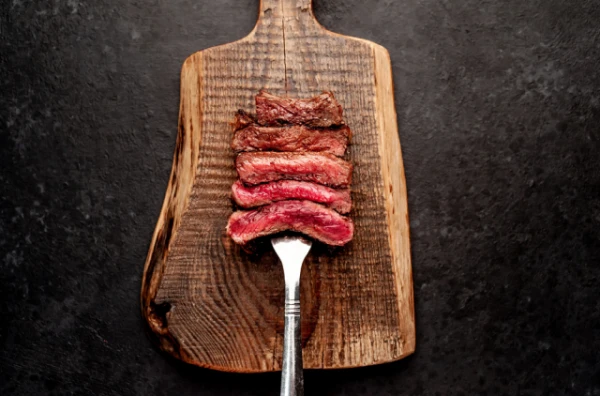
The question of meat doneness is particularly relevant among gourmets, especially when it comes to beef steaks. While they can be served at varying degrees of doneness — from rare to well-done, chicken must be cooked thoroughly to avoid food poisoning.
Beef, unlike chicken, usually consists of a whole piece of muscle, and bacteria are typically only present on its surface. The deep layers of cuts from a healthy animal remain sterile inside unless their integrity has been compromised (for example, if the carcass has been punctured).
When searing, the bacteria on the outside are killed, even if the inside of the steak remains medium-rare. Naturally, this does not apply to ground meat dishes, where bacteria can spread throughout the mass, so it needs to be cooked thoroughly.
In chicken, the meat has a looser structure and contains more connective tissue and blood vessels. This makes it more susceptible to bacterial penetration. Additionally, bacteria (such as Campylobacter and Salmonella) can be present not only on the surface but also inside the muscle fibers. This is due to the anatomical features of chickens and processing at meat processing plants.
Even if you are cooking a chicken breast steak, bacteria can remain inside the meat. Therefore, chicken must always be cooked thoroughly — to an internal temperature of at least 74 °C.














Leave a comment