
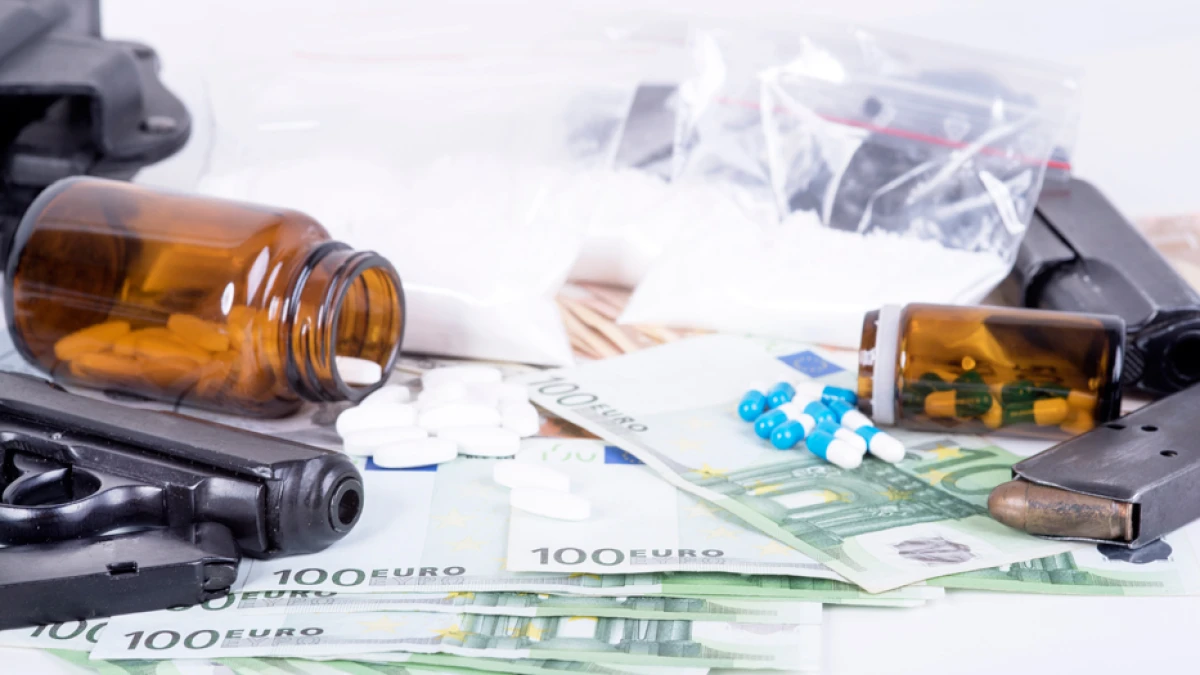
Mafia networks are slipping out of the control of law enforcement.
European experts are noting a worrying trend: drugs are becoming more accessible, and their range is becoming more dangerous. At the same time, criminal groups are increasingly involving teenagers not only in drug use but also in the trade of prohibited substances, as well as violent crimes.
The European Drug Agency (EUDA) has presented a new annual report on the drug situation in EU countries. The study covers all 27 EU member states, as well as Norway and Turkey.
According to experts, the market for illegal substances is developing faster than it did a few years ago. More new drugs are appearing on the streets of European cities, and their composition is becoming less predictable, writes deutschlandfunk.
Agency head Alexis Gusde Nolan warned that many consumers often do not even know what substances they are actually taking. This is particularly dangerous in cases where synthetic components with a high concentration of active substances are added to drugs.
Synthetic Drugs Are a Serious Threat
Experts are particularly concerned about synthetic drugs. New psychoactive substances are identified in Europe every week.
These are chemically created drugs that often turn out to be significantly stronger than traditional drugs. At the same time, their effects on the body are often insufficiently studied.
Experts note that synthetic cannabinoids are increasingly being added to cannabis-based products. Sometimes such substances even end up in e-cigarettes or food products. This creates additional risks for people who may be unaware of the actual composition of the products they purchase.
Drug Use: Cannabis Remains the Most Popular Drug
Despite the spread of new substances, cannabis retains its position as the most popular drug in Europe. According to EUDA estimates, around 24.9 million people aged 15 to 64 used it in 2025.
For Russian-speaking residents of Germany, it is important to consider that legislation in European countries varies. For example, in Germany, the regulations regarding cannabis have changed in recent years, but in several countries, possession of it remains a criminal offense.
Key data from the report:
- 24.9 million Europeans used cannabis;
- 4.3 million people used cocaine;
- at least 7,600 people died from overdoses;
- new psychoactive substances are identified almost every week;
- an increase in cocaine traces has been recorded in 48 out of 85 surveyed cities.
Cocaine Has Become More Accessible Than Ever
The situation with cocaine is particularly alarming. According to European Commissioner for Home Affairs Magnus Brunner, this drug is more accessible in Europe today than ever before.
Wastewater studies confirm this trend. In most surveyed cities, specialists found an increase in the concentration of cocaine traces.
This method is considered one of the most accurate tools for assessing the actual level of drug consumption, as it allows for data collection independent of population surveys.
Drug Use: Teenagers Are Increasingly Drawn into Criminal Business
One of the most alarming conclusions of the report is the active recruitment of youth by criminal groups. According to experts, drug cartels use teenagers not only for drug distribution. They are also involved in intimidation, assaults, and other violent actions.
Young people from socially disadvantaged areas are particularly vulnerable. It is there that criminals most often seek new recruits.
How criminal groups involve youth:
- through social networks;
- through acquaintances and local groups;
- through promises of easy earnings;
- through psychological pressure;
- through involvement in petty crimes followed by control.
Smugglers Have Found New Ways to Deliver Drugs
Increased control in major European ports has complicated the operations of criminal networks. However, it has not yet been possible to completely halt drug supplies.
Instead of traditional routes, smugglers have begun using smaller ports and less noticeable delivery channels.
Among the new methods, experts mention transshipment of cargo at sea, the use of speedboats, semi-submersible vessels, and drones.
According to EUDA specialists, such flexibility of criminal networks makes combating drug trafficking an even more challenging task for law enforcement in Europe.
Germany remains one of the largest drug consumption markets in Europe. Therefore, the conclusions of the report directly concern German cities and their residents.
The increased availability of cocaine, the spread of synthetic substances, and the active recruitment of teenagers through the internet are becoming problems not only for the police but also for schools, social services, and parents.
That is why European experts are calling for more attention to be paid to addiction prevention and protecting youth from the influence of organized crime.











Leave a comment