Latvian researchers concluded that agriculture can significantly reduce pesticide use without compromising yield. In some cases, it was possible to completely abandon insecticides while simultaneously achieving a higher yield.
More environmentally friendly methods of growing crops allow for a significant reduction in pesticide use and a decrease in the environmental burden without sacrificing yield or increasing farmers' costs. This conclusion was reached by participants in a state scientific project dedicated to the development of a sustainable food system.
During the study, scientists tested various plant protection methods while growing winter wheat. Among the solutions used were biological preparations and forecasting systems for plant diseases adapted to Latvian conditions.
The results showed that the volume of active substances in pesticides could be reduced by 18–28%. At the same time, the long-term impact on the environment decreases even more significantly — by 12–78%, while yield remains at the same level.
Particularly interesting results were obtained in horticulture.
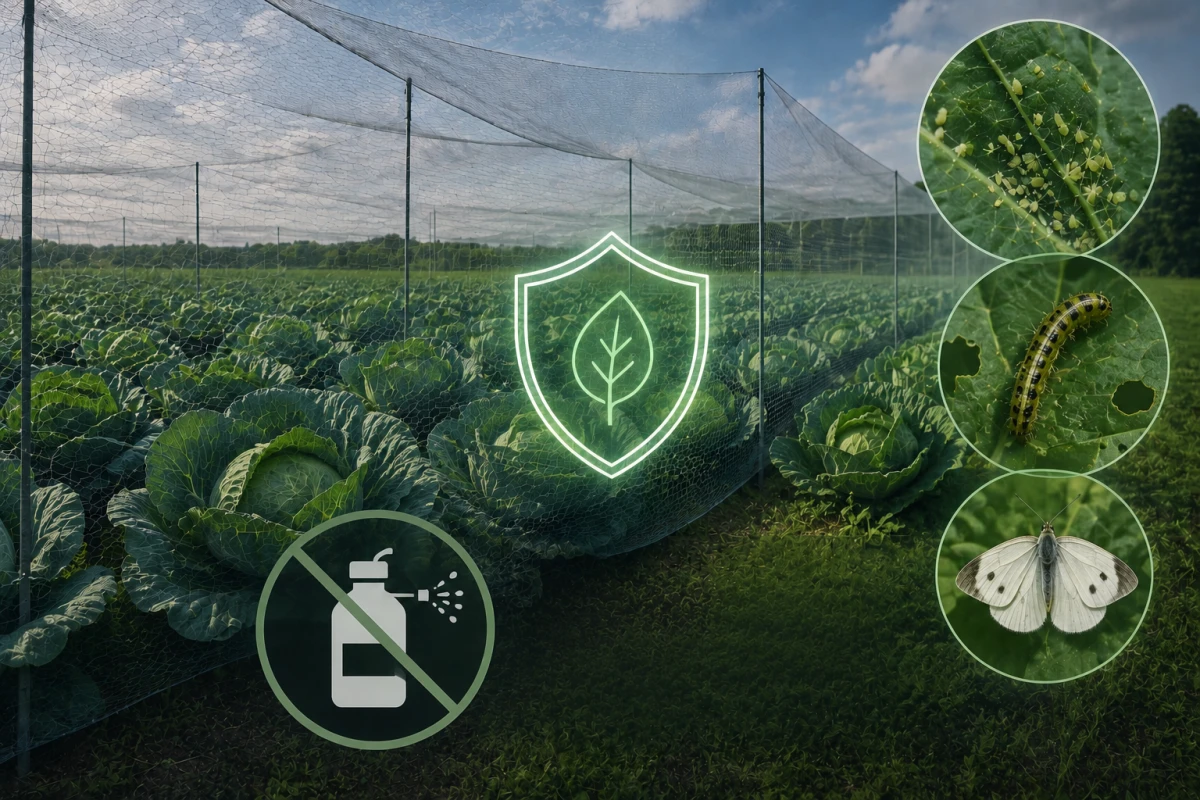
When growing cabbage, researchers used mulch and special protective nets against insects. This approach allowed for a complete abandonment of insecticides. Moreover, the yield turned out to be 20–26% higher than with traditional growing methods.
What is important to know: the study shows that eco-friendly technologies can be beneficial not only to nature but also to the farms themselves. In some cases, reducing chemical load does not lead to yield losses; on the contrary, it contributes to its growth.
Scientists also studied how the goals of the European Green Deal could affect Latvian agriculture in the coming years. To this end, three scenarios for the development of the sector by 2030 were developed.
They foresee an expansion of organic farming areas and a broader implementation of sustainable farming methods.
As a result of the project, researchers prepared analytical tools and recommendations that the Ministry of Agriculture and other government institutions can use in developing agricultural policy.
The project was implemented by the Latvian University of Bioeconomy and Technology, the Institute of Horticulture, the Institute of Agrarian Resources and Economics, as well as the scientific institute Bior. The total funding amounted to €2.04 million.
The study further confirmed that reducing dependence on chemical plant protection products is possible without serious losses to agricultural production.