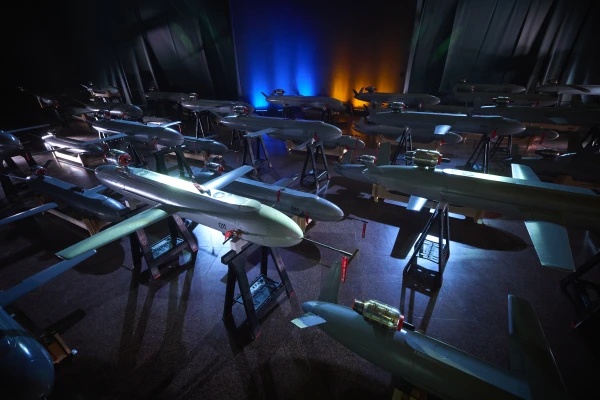
Several precise hits by "unidentified" drones on an abandoned oil depot and a lake in Latgale may, if not disrupt the season for local rural tourism, significantly undermine the holding of corporate events, which is already being complained about by the owners of guest houses and estates.
Nevertheless, the Latvian Investment and Development Agency (LIDA) continues to radiate optimism. At the Saeima subcommittee on Latgale, regional coordinator Andrei Zelch outlined the prospects for the end of the year.
Goals Defined, Tasks Set
"Created for growth. Driven by innovation," is the motto of LIDA. By 2026, it is planned to attract at least 1 billion euros in foreign investments to our republic; to ensure an increase in exports by 300 million euros; to raise the number of foreign tourists by 150,000 (currently 1.7 million). In the control figures, there is nothing unrealistic – in 2025, there was already this very billion in foreign investments, and the number of travelers who visited Latvia has actually returned to the pre-COVID/pre-war 2019 levels (-1.4%).
A national, Latvian brand is also being developed. LIDA has identified several breakthrough sectors for the country:
-
Future technologies;
-
Smart energy;
-
Smart manufacturing;
-
Bioeconomy and life sciences;
-
Defense.
Ukraine in Second Place
In terms of sectors, foreign businesses are primarily interested in bioeconomy in Latvia (460 million euros in investments in 2025), smart energy (428 million), and manufacturing (34 million).
Digitalization projects were implemented for 21 million, while the military-industrial complex received only 20 million, although, if you listen to our VIPs, the defense industry is supposed to become the driver of the entire national economy.
In terms of geographical distribution, investment projects in Latvia were distributed in 2025 as follows:
-
Lithuania (401.7 million euros),
-
Ukraine (125 million euros),
-
Netherlands (120 million euros),
-
Germany (100 million euros).
In this context, it is very interesting how a fighting, suffering country in Eastern Europe, which is receiving assistance from all over the world, is ahead in terms of investments compared to the economic engine of the European Union. In the top ten, there is only one non-European state – Canada (8th place, 25 million), while the United Arab Emirates took 11th place with a modest 5 million euros, which is significantly less than the golden mountains promised by investors for real estate projects on Andrejsala...
This One Got, That One Didn’t
One way or another, as a result of 31 foreign investments in Latvia, 1,350 new jobs were created. But again, there is a regional peculiarity – the overwhelming majority (20) are localized in the capital, while Latgale accounted for only 2.
Nevertheless, in 2025, the eastern region submitted 268 applications to LIDA for various projects (148 in 2024). A total of 2,462,211 euros in support was paid out, of which:
-
1,297,703 euros – to municipalities for strengthening the local economy;
-
438,256 euros – for digitizing national economic processes;
-
299,887 euros – financial support for a business incubator in Daugavpils;
-
210,538 euros – for a similar institution in Rezekne;
-
102,303 euros – for an export support plan;
-
76,696 euros – for artificial intelligence solutions.
Against the backdrop of lofty statements about priority funding for EU zones bordering "neighbors to the East," the numbers are, to put it mildly, unconvincing. In this context, the segment of the political spectrum that declares its ambitions to "lift Latvia" has become more active – an office has been established in the Daugavpils Fortress, beautifully imitating future prosperity, if the electorate makes the right choice...
Meanwhile, in Daugavpils itself, things are not going too badly – last year, for example, 140 additional "inclusive" (subsidized) jobs were created.
But the problem with Latgale is precisely that, with the exception of a couple of regional centers with ambitious leaders and functioning universities, in the rest of the province, away from the highways, we see hopeless abandoned places. In this regard, the appearance of new populated areas in the lists is worth its weight in gold.
This year, according to LIDA, the focus in Latgale is expected to be on the following projects:
-
Nordic Elite – plywood production with export potential in Daugavpils;
-
Verems – birch plywood production in Rezekne;
-
Biofactum – "smart" processing of animal fat in Daugavpils;
-
Vind R – expansion of the solar energy park in Līvāni;
-
Ingka Investments – wind energy park in Balvi.
Intangible Support
In manufacturing processes, according to the Investment and Development Agency, not only direct financial inflows but also other vectors of cooperation are expected to contribute:
-
Information exchange with potential partners about the opportunities in the Latgale region;
-
Solving problematic issues through the Ministry of Economics, identifying and eliminating delaying factors;
-
Promoting local territories;
-
Consulting for municipalities and businesses;
Just this week, under the auspices of LIDA, two major international events will take place: Aftercare Forums (for investors) and the European Bank for Reconstruction and Development (bankers from 74 countries). Guests from Latgale are invited to both!
But everything is being held, again, in the capital. And yet, the implementation of at least one large-scale, international business forum in Daugavpils would allow, purely in terms of organization, to ensure an influx of at least half of the aforementioned laughable sum for supporting the troubled region. However, before that, it would be necessary to clearly answer the question: whose drone? And to ensure that more of such drones do not fly here.
Who Will Pay for the Fear
Latvian President Edgars Rinkēvičs stated in an interview with Euractiv that the EU should provide additional financial support to countries affected by drone incursions.
Rinkēvičs stated that repeated air alerts in eastern Latvia in recent weeks have led to cancellations in the hotel sector. "The local economy is suffering, local residents are suffering. They are really scared," said the president.
Rinkēvičs mentioned that he raised this issue with European Commission President Ursula von der Leyen during a meeting in Vilnius and is now awaiting "concrete proposals."
Thus, the Latgale business is demanding financial assistance from Riga, while Riga has decided to ask for money from Brussels.