
The 2026 World Cup will once again bring a number of the most renowned national teams to the main stage of world football, but it will also leave several big names on the sidelines. For some countries, this is just a temporary pause, while for others, absence from the tournament has turned into a prolonged football wound.
The most striking absence remains Italy: the four-time world champions will miss their third consecutive World Cup, having last played in the tournament in Brazil in 2014. This is one of the deepest crises in the history of the Azzurri, especially considering that just two decades ago they were at the pinnacle of world football. The 2026 World Cup will also see several teams that played in Qatar in 2022 absent. Denmark, Poland, Wales, Cameroon, Serbia, and Costa Rica failed to qualify and will stay home. Nigeria, Russia, and Iceland will miss their second consecutive World Cup, having last participated in the tournament in Russia in 2018.
An even longer drought continues for Slovakia and Slovenia: they will miss their fourth consecutive World Cup after last participating in South Africa in 2010. Greece and Chile will extend their absence to three tournaments, with their last appearance being at the World Cup in Brazil in 2014. Among the most notable "long-term absentees" are Romania and Ireland. Romania will miss their seventh consecutive World Cup: the last time they qualified was for France 1998. Ireland, last seen at the World Cup in 2002, will now watch their sixth tournament in a row from home.
Main Absentees
Italy: a world giant in decline
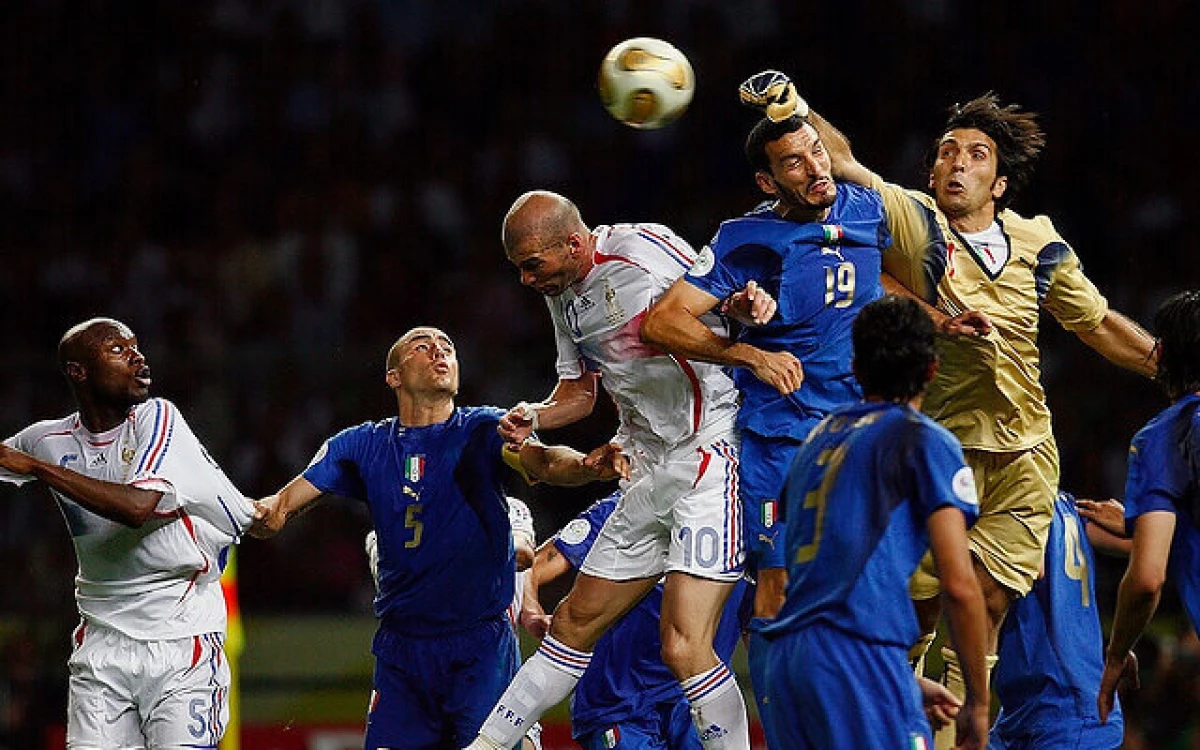
Few losses in world football appear as shocking as Italy's absence. The Azzurri remain one of the most successful teams in history, with four World Cup titles (1934, 1938, 1982, and 2006).
Their last triumph came in Berlin in 2006 in the final against France — a match remembered not only for Italy's victory but also for the famous red card shown to Zinedine Zidane for headbutting Marco Materazzi.
Since then, the decline has been swift: failures in the qualifiers for the World Cups of 2018, 2022, and now 2026, with each new blow being more painful than the last.
Romania: the magic of Hagi and a long wait since 1998
Romania's "golden generation" peaked at the 1994 World Cup in the USA. Under the guidance of Gheorghe Hagi, often referred to as the "Maradona of the Carpathians," the team reached the quarter-finals, showcasing one of the most spectacular styles of football in the tournament.
That tournament effectively marked the end of an era, although Romania did qualify for France 1998, where they reached the Round of 16. Since then, they have failed to qualify for the World Cup seven times in a row, although recent performances in European Championships give hope that the team is finally moving in the right direction again.
Wales: from Pelé to Gareth Bale
Wales had to wait 64 years to return to the World Cup: their qualification for Qatar 2022 set a European record for the longest gap between participations.
Wales' main achievement remains the 1958 tournament, where the team reached the quarter-finals and lost to Brazil after a goal from 17-year-old Pelé.
Their return in 2022, largely thanks to Gareth Bale, ended a historical drought. However, their exit in the qualifiers for the 2026 World Cup against Bosnia and Herzegovina was a heavy blow for Welsh fans, who will once again have to watch the tournament from home.
North Korea: the miracle of 1966 and return in 2010
North Korea created one of the biggest sensations in World Cup history by defeating Italy in 1966 and reaching the quarter-finals, becoming a global symbol of the underdog spirit.
They managed to return to the final stage of the tournament only 44 years later — at the 2010 World Cup in South Africa. But that campaign ended in disappointment: the team lost all three matches with a total goal difference of 1–12. Since then, they have not returned to the World Cup.
Canada: a new force in world football?
The Canadian national team first played at the World Cup in 1986, failing to score a single goal and finishing the tournament with a goal difference of 0–5.
Their return in 2022 after a 36-year absence marked the emergence of a promising generation led by Alphonso Davies. Although the team again did not earn any points, they managed to score twice against their opponents this time.
Now, as one of the hosts of the 2026 World Cup, Canada has a real chance to advance to the knockout stage — an achievement that would be the pinnacle of the country's football history.
Ireland: the fairytale of Italy '90
Ireland's star moment came at the 1990 World Cup: Jack Charlton's team reached the quarter-finals in their debut tournament, sparking a wave of celebrations across the country.
The Irish also qualified for the 1994 and 2002 World Cups, but have not returned since, and their success in Italy remains their greatest football achievement.
This time, the Irish fell just short: they lost to the Czech Republic in a penalty shootout in the semi-finals of the European playoffs, having led 2–1 until the 86th minute. Ultimately, it was the Czech Republic that secured their spot, defeating Denmark in the final on penalties.
Teams that are almost forgotten to have played in the World Cup
Cuba: the forgotten quarter-finalists of 1938
Few remember that Cuba reached the quarter-finals of the 1938 World Cup — still the greatest achievement in the history of Caribbean football.
At that time, Cuba defeated Romania in a replay after the first match ended in a 3–3 draw — at that time, penalty shootouts were not yet used. In the quarter-finals, the Cubans faced a powerful Swedish team and lost 0–8. Since then, Cuba has not returned to the World Cup.
Indonesia: pioneers of Asia
Indonesia, then known as the Dutch East Indies, became the first Asian country to play in the World Cup — also in 1938.
Their campaign lasted just one match, but its historical significance is immense. In the first round, the team faced Hungary and lost 0–6, but they had already secured their place in football history forever.
Israel: the only participation 56 years ago
The Israeli national team has only qualified for the World Cup once — in Mexico 1970.
The 1–1 draw with Sweden is still considered one of the key moments in the country's football history. Overall, Israel performed respectably: they drew 0–0 with Italy and lost only to Uruguay — 0–2.
Jamaica: the "Reggae Boyz"
Jamaica's only appearance at the World Cup came in France in 1998.
Heavy defeats to Croatia and Argentina did little to dampen the fighting spirit of the "Reggae Boyz," who saved their best football for the final group match against Japan. A memorable 2–1 victory earned Jamaica the admiration of fans worldwide, and the scorer of both goals, Theo Whitmore, forever etched his name in the country's football folklore.
China: a dream still waiting to continue
China first qualified for the World Cup in 2002 but was eliminated after three defeats, failing to score and finishing the tournament with a goal difference of 0–9.
Since then, the national team has not come close to qualifying again, and the dream of a second World Cup appearance seems as distant as ever.
Loud Returns
At the same time, several national teams are making a bright return to the World Cup. Japan, Saudi Arabia, and Algeria have qualified for the tournament again and continue to strengthen their status as regular representatives of Asia and Africa. Special interest surrounds the returns of several historic European teams. Turkey will play in the final stage for the first time since 2002, when they sensationally finished third in Korea and Japan. Norway is also returning after a long absence — now led by a new generation of stars, headed by Erling Haaland.
Erling Haaland is ready to lead Norway at the 2026 World Cup Aurel Obreja/Copyright 2025 The AP. All rights reserved
Scotland, Austria, the Czech Republic, and Paraguay are also returning to the main stage, adding extra color and historical depth to the tournament.
Thus, the 2026 World Cup promises to be an exciting mix of comebacks, disappointments, and new hopes. For some teams, missing the tournament is just a temporary setback. For others, each World Cup watched from the sidelines becomes an increasingly painful chapter in football history.














Leave a comment