
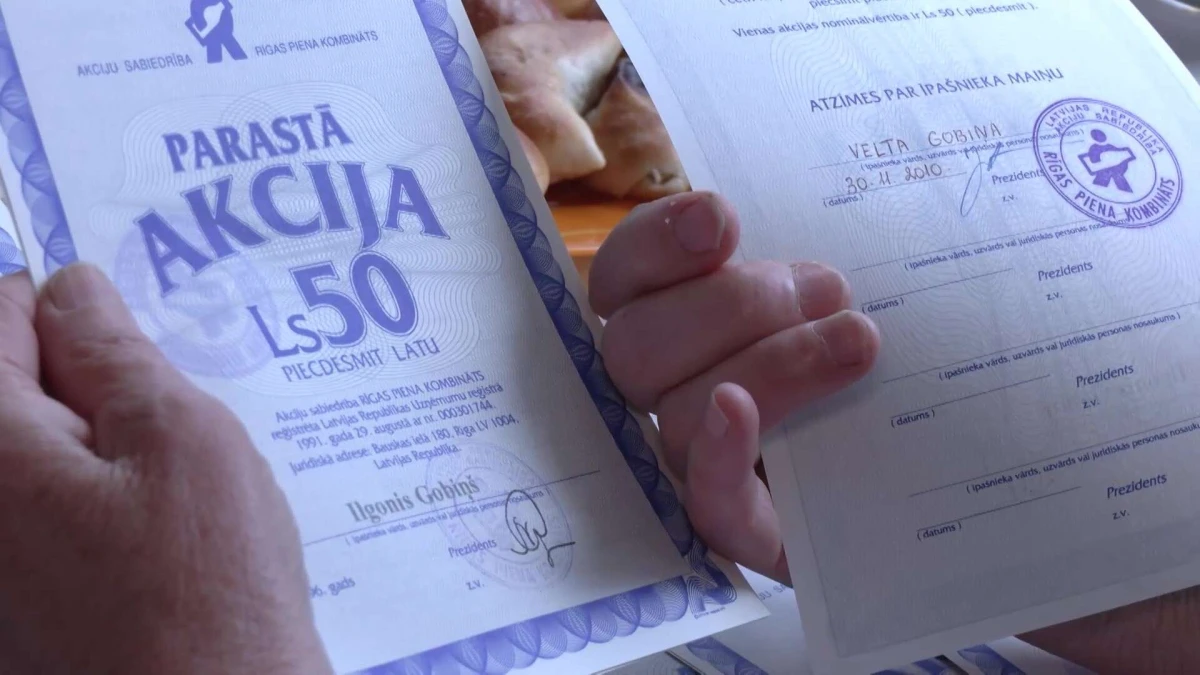
83-year-old Velta lives in a picturesque location near Lielvarde. She continues to work and, after chemistry lessons at school, enjoys restoring her strength in the garden at home, eagerly awaiting the blooming of peonies. However, this time the reason for her meeting with journalists turned out to be much less romantic.
In the 1990s, the woman's family bought several cows, sold milk to the "Riga Dairy Plant," and also produced various dairy products themselves, which they sold. Thirty years ago, the family was offered to purchase shares of the Riga Dairy Plant, as reported by the show Bez Tabu (TV3).
The head of the family bought 200 shares for a total of 2,500 lats, which, considering modern inflation, amounts to approximately 15,000 euros. Sixteen years ago, Velta's husband passed away, and the shares were divided equally among the widow and three children.
The honorary resident of Lielvarde and a knight of the Order of the Cross of Recognition admits that she has no idea what to do with these shares.
“At one meeting, we started talking about these shares; I know a few people who also have them at home. Neither I nor my children have ever dealt with shares. I would like to find out what can be done with them. Where should we turn in such cases?” Velta asks.
The Central Securities Depository "NASDAQ CSD" indicated that shareholders can contact them for assistance:
“For the family to freely manage these shares, the relevant person needs to open a securities account at their bank and submit an order to the bank to transfer these shares from the shareholder register maintained by the depository to their bank account. This process is called 'deregistration.' After that, the shares will appear in the securities account alongside the cash account.”
Representatives of the dairy plant essentially did not answer any questions from Bez Tabu and did not disclose what benefits or dividends the family might have missed over the years. The Bank of Latvia stated that Velta's case is not unique. Residents have shares of other companies stored at home.
“If people remember or think that they once bought shares—whether themselves, their parents, or grandparents—they should first contact the relevant companies. They have historical information. Companies have maintained lists of shareholders for a long time, unless they were public companies. Shares should not be thrown away—they have value. If the company still exists, these shares confirm a certain share owned by the shareholder. These shares also have historical value. There are collectors who see value in the document itself,” explained Kristaps Soms, head of the Capital Market Supervision Department at the Bank of Latvia.
Since the shares of the Riga Dairy Plant are not listed on the stock exchange, the possibilities for their sale, as well as the potential transaction amount, need to be negotiated individually with a potential buyer.






Leave a comment