
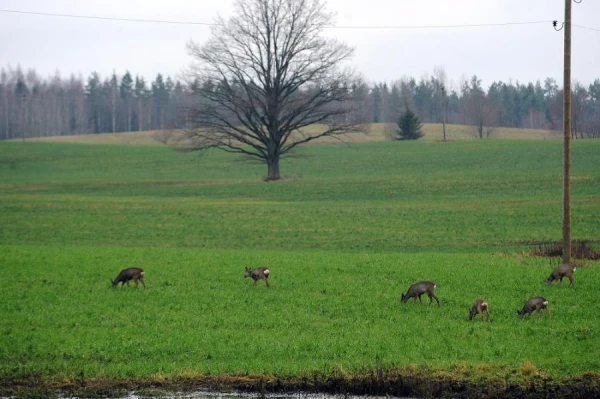
Residents of the Jekabpils region oppose the establishment of seven new nature reserves that deprive them of the ability to use the land at their discretion, writes Latvijas Avīze.
According to residents, these restrictions on agricultural land — meadows, pastures, and arable land — are an additional burden that brings them losses.
The owner of the "Džintari" homestead in the Zasulauks parish, Juris Krumiņš, states that out of his 35.8 hectares of irrigated agricultural and forest land, restrictions have been imposed on an area of 9.74 hectares, which is almost a third of the entire territory.
"These reserves tie our hands, as farmers," admits the owner of the "Karali" farm, Aivars Iesalnieks. "Out of my 39 hectares, 11 hectares are under restrictions. I keep 30 cows on the farm, but due to the reserves, which are also located not in one place but on separate plots, I can no longer cultivate the land. I even had to purchase an adjacent plot where there are no such restrictions."
Farmers believe that meadows need not only grazing and mowing but also occasional plowing and leveling, especially after last year's heavy rains when the softened topsoil was trampled by livestock and depleted. The restrictions affect not only farmers but also entrepreneurs.
The owner of the "Skardupites" farm in the Alksnīte parish and the head of the "Sēlijas laivas" society, Richard Šmits, notes that the new reserve limits the organization's economic activities.
The strategic planning specialist of the Jekabpils municipal government, Gunda Čermukša, reports that the previously established nature reserves in the region already occupy 30,589 hectares, not counting micro-reserves around bird nesting sites and other areas. For example, in the Atāši parish, reserves occupy 46.4% of the territory, in the Saukā parish — 24.8%, in the Ābeļi parish — 22%, and in the Elkšņi parish — 20.8% of the territory. Now, the areas of reserves in the region will increase by seven new territories with a total area of 652 hectares. Of these, about 400 hectares are irrigated lands, half of which are arable lands that, according to residents, should not be included in the reserves.
The new restrictions in the region affect the property of 560 individuals and legal entities.











Leave a comment