

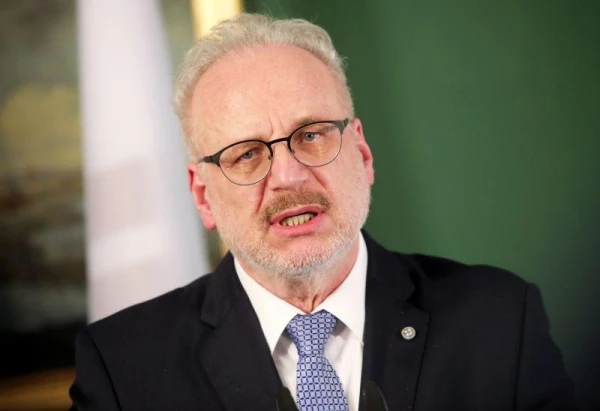
In the case of a prolonged conflict in Iran, its consequences may become significant for both businesses and households, said the chief economist of Citadele Bank, Karlis Purgailis, to the LETA agency.
The economist emphasizes that the conflict in Iran is not only a matter of foreign policy: its duration can directly affect the economy of Latvia and the eurozone. The longer the tension in the Middle East persists, the greater the pressure will be on energy prices, inflation, purchasing power, and economic growth. The bank's calculations show that if a short-term escalation causes only moderate disruptions, a prolonged conflict could have significant consequences for both businesses and households.
Purgailis explains that various scenarios are possible — from a quick stabilization of the situation to prolonged tension, which will affect economic growth, inflation, and trade differently. Therefore, it is important to assess how this may reflect on both the business environment and the everyday life of the population. For a better understanding of the potential impact on the economy, the economist outlines several scenarios for the development of the conflict depending on its duration — three, six, nine, and 12 months.
The bank's calculations show that a short-term — three-month — escalation of the conflict in Iran will have a limited impact on the economy of Latvia and the eurozone. In this case, economic growth trends will not change significantly: in Latvia, the growth of gross domestic product may reach 1.5%, while in the eurozone it may be 0.7%.
Purgailis points out that economic cycles respond slowly — GDP reacts to shocks in energy prices with a delay. For example, business cycle indicators show that in most eurozone countries, economic activity remains stable, and a significant reaction to rising energy prices occurs only when they persist for a long time.
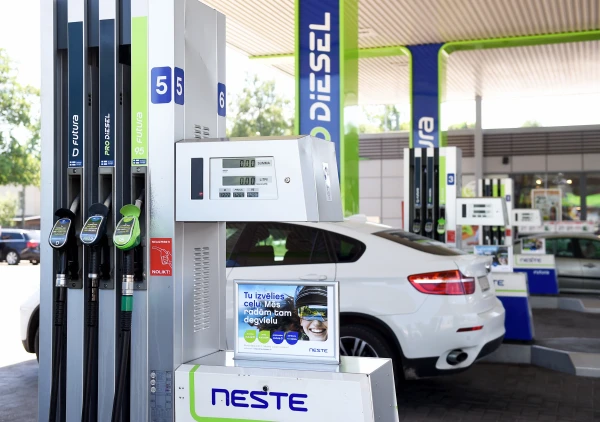
At the same time, inflation will rise moderately, mainly due to fluctuations in energy prices. In Latvia, it may reach 5.1%, while in the eurozone it may be 3.2%. Purgailis notes that price changes in the economy spread unevenly: for example, fuel prices react almost immediately, while other components respond with a delay of several months. Despite rising inflation, the purchasing power of the population will remain relatively stable, as wage growth (6.3%) will still exceed price growth. The unemployment rate will remain around 6.6%, indicating the resilience of the labor market.
If the conflict in Iran lasts for six months, its impact will become more pronounced. In Latvia, GDP growth will decrease to 1% as uncertainty will dampen investment and consumption. Inflation will rise to 7.8% as the impact of energy prices increasingly spreads to other categories. Although wage growth (5.8%) will still support incomes, it will already be below inflation, leading to an overall decrease in purchasing power. Unemployment may rise to 6.8%. In the eurozone, growth will slow to 0.4%, while inflation will increase to 4.5%.
If the conflict lasts for nine months, the impact on the economy will become even more significant. In Latvia, GDP growth will decrease to 0.5%, while inflation will rise to 10.6%. Under such conditions, wage growth (5.5%) will no longer be able to compensate for rising prices, and real incomes will decline. The unemployment rate will increase to 6.9%, indicating a weakening labor market. In the eurozone, the economy will effectively stagnate, and inflation will reach 5.8%, creating a risk of stagflation.
If the conflict drags on for 12 months, more structural consequences will emerge in the economy. In Latvia, GDP growth may drop to 0%, while the eurozone economy will enter a recession with a decline of 0.4%. In Latvia, inflation will rise to 13.4%, while in the eurozone it will reach 7.1%. Wage growth in Latvia will continue to slow down to 5.1%, while unemployment will increase to 7.1%. In this scenario, the purchasing power of the population will significantly decrease.
Overall, the bank's calculations show that the key factor determining the impact on the economy is the duration of the conflict. If it is short-lived, the economy of Latvia and the eurozone will maintain stability. However, in the case of prolonged tension, inflation will gradually rise, and economic growth will slow down, increasingly affecting the well-being of the population.







Leave a comment