Latvia can and should claim top positions in the European Central Bank (ECB), where three senior management vacancies will soon be available.
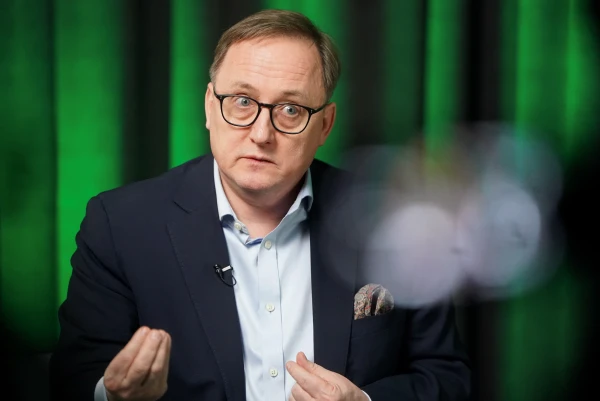
The President of the Bank of Latvia confirmed in a conversation with nra.lv his readiness to run for these positions, but noted that success will require active coordination of Latvia's position with other EU countries.
Kazaks emphasized that the issue of representation is not limited to just one institution or one position.
"This is not just a question about the ECB — it is a question about all the institutions of the European Union where Latvia can become part of the decision-making process. This is important for the state," noted the President of the Bank of Latvia.
In his opinion, Latvia is mature enough to claim top-level positions. The country has been a member of both the European Union and the eurozone for a long time, accumulating the necessary experience and skills. However, one of the main problems, according to Kazaks, is the lack of coordination in the region. He emphasized that Latvia should cooperate more closely with the Baltic and Nordic countries, developing a common strategy for candidate nominations. This would increase the chances of ensuring representation in institutions such as the ECB and allow for more active protection of the region's interests.
In the coming years, new opportunities may arise. By 2027, the terms of several members of the ECB's board will expire, and candidates for these positions are nominated by the governments of EU countries. This means that Latvia also needs to determine its strategy, and decisions must be made in a timely and strategic manner.
Kazaks does not rule out the possibility of running for one of the positions himself if circumstances are favorable:
"Yes, I am ready to run for other positions on the ECB board, but such an opportunity must be realistic. There is no point in running just for the sake of it. But not only Latvia, the entire region, in my opinion, has good candidates to be on the ECB board and advocate for a Europe-oriented approach and stronger economic growth, as well as the goal of making the EU a geopolitical superpower rather than a weak player subject to external influence. We must be major players — both economically and geopolitically."
At the beginning of the year, Kazaks' candidacy for the position of Vice President of the European Central Bank was nominated with relatively broad political support in Latvia. The government officially nominated him — the decision was prepared by the Ministry of Finance, highlighting his international reputation and experience in monetary policy. At the same time, it was planned to ensure diplomatic support at the European Union level in cooperation with the Ministry of Foreign Affairs.
At the European level, Kazaks was also not a peripheral candidate — he received support from the European Parliament's Committee on Economic and Monetary Affairs, which named him one of the preferred candidates. This indicates that his candidacy was taken seriously beyond Latvia, notes nra.lv.
However, a significant factor was competition — six candidates were vying for the position, including representatives from Portugal, Finland, Croatia, as well as all three Baltic countries. This meant that Kazaks was not the only candidate from the region — on the contrary, each of the Baltic countries nominated its representative, which fragmented potential regional support. Estonia nominated Madis Müller, while Lithuania nominated Rimantas Šadžius.
The Baltic countries attempted to coordinate their positions and jointly emphasized the need for regional representation in the ECB leadership, but in practice, coordination was incomplete as a single candidate was not nominated. The competition among the Baltic countries led to a dilution of votes. Instead of uniting around one strong candidate, the region effectively competed against itself, reducing the chances of obtaining the position.
The need for closer regional cooperation is also pointed out by Kazaks himself:
"In the coming year, the terms of three members of the ECB board, including the president, will expire. This term is not extendable, so three new candidates will emerge to fill these positions. When exactly the process will start and who these candidates will be is still too early to say. But the most important thing is to look at this question not only from the perspective of Latvia but also from the entire region to increase the chances of our region's representation in such institutions."
The appointment of officials to the ECB board is a multi-stage political process. According to the official procedure, candidates are first nominated by eurozone countries. Then they are considered by the format of eurozone finance ministers — the so-called "Eurogroup," which agrees on one candidate. This is followed by a formal procedure at the EU level — the Council of the EU gives a recommendation to the European Council, which consults with the European Parliament and the ECB Council before making a final decision. The final decision is made by the European Council, which includes the leaders of member states. The decision is made by qualified majority — at least 16 eurozone countries representing no less than 65% of its population must vote for the candidate.