Investors are investing in an area of explosive growth and high geopolitical priority.
The European Union, along with the United States, facilitated China’s accession to the WTO, which took place on December 11, 2001, hoping to manage China’s financial and economic processes and its development as a whole. However, they did not take into account that by that time, China had established strong relationships with its diasporas in the region's countries. Beijing learned the rules of the game in trade and business, began to gather necessary data, process it, draw conclusions – and developed its strategy for increasing its presence in Latin American markets.
As part of this strategy, in the first quarter of the 21st century, China gradually increased its presence in Latin America through the active foreign economic activities of Chinese companies. The average annual trade growth from 2001 to 2024 was 18.5 percent. China confidently pushed competitors out of the region, increasing its share of total regional trade turnover to 17–18 percent. For individual countries, including large economies like Brazil, Chile, and Peru, it simultaneously became the largest market for sales and the main supplier of imported products.
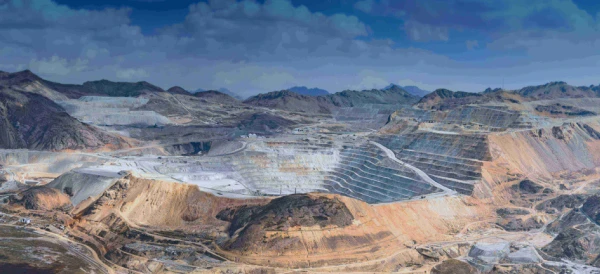
In China’s strategy, cultural, social, and psychological factors were taken into account for each Latin American country. For example, in Peru, China hit the mark: during 2007–2008, under Alan Garcia, whose presidency was marred by corruption allegations, the PRC – thanks to an agreement between the Chinese state metallurgical company Chinalco and the government of Peru – acquired what is potentially the richest copper deposit in the world. This is about the Toromocho mountain (translated from Spanish as "Hornless Bull"). This mountain, located 138 kilometers from the Peruvian capital Lima, rises 4,600 meters above sea level and consists almost entirely of copper ore with an average zinc content of 0.4 percent, molybdenum – 0.03 percent, silver – 12 g/t. According to experts' estimates, the copper ore reserves in the mountain amount to 2 billion (!) tons. At that time, this was one of the largest Chinese investments in Latin America.
Investments in the Toromocho copper mine project from 2007 to 2013 amounted to over 4.3 billion US dollars. They involved relocating the old town of Morococha to the new town of Nueva Morococha. Barely making ends meet, the townspeople received small houses or apartments in the new location.
The deal is considered highly beneficial for both countries. The Peruvian government, which is in dire need of funds to boost its economy, receives substantial financing from China, while the Chinese side has another opportunity to push other players, including the United States, out of the region and expand its regional influence through economic means.
It should be noted that China leads in investments in Peru's mining sector, having at least seven major projects under development – Pampa de Pongo, El Galeno, Chalcobamba, Don Javier, Reposición Ferrobamba, Río Blanco, and Toromocho – and a significant share in national copper and iron production. It continues to strengthen its position as the main foreign investor in the Peruvian mining sector.
In addition to investments in Peru's mining sector, the PRC has already invested over 1.5 billion US dollars in the construction of the largest port in Latin America, located 80 kilometers north of Lima, in the city of Chancay.
This megaport, bearing the same name, is the first logistics center in South America controlled by China. The share of the Chinese logistics company COSCO Shipping in the project is 60 percent. Total investments amount to 3.4 billion dollars.
To close the supply chain of mineral resources from Peru to China, China Power Construction Company will build a railroad worth 420 million US dollars, which will connect the mines in the central part of the country with Chancay. The PRC – the largest consumer of minerals in the world – has begun exporting mineral resources from Brazil to diversify supplies of certain metals that were previously sourced mainly from Australia or Africa.
Chinese investments in Brazil's mining sector are significant and strategically important. They are primarily focused on the extraction of iron, copper, nickel, and other minerals that are critical for industry and the energy transition.
Chinese companies HBIS Group Steel Company (formerly Hebei Iron & Steel Group), Baowu Steel Group (the largest steel producer in the world), Zijin Mining Group, China Minmetals Corporation, CITIC Group, Tianqi Lithium, Ganfeng Lithium, and Ningbo Shanshan Co. have entered the Brazilian market mainly through
-
full or partial acquisition of existing mines or promising projects (Zijin, HBIS);
-
joint ventures with Brazilian giants, particularly with Vale (Baowu in niobium);
-
procurement agreements: Chinese banks and companies provide loans to Brazilian mining companies (including Vale in the past) in exchange for long-term contracts to purchase a significant portion of the output, ensuring them stable supplies without direct exploitation.
In recent years, the focus has shifted from iron to "minerals of the future": copper, nickel, lithium, graphite, and niobium, necessary for batteries, renewable energy, and high technology.
Chinese investments in strategic and critically important minerals (also called rare earth elements) in Brazil are an area of explosive growth and high geopolitical priority. The Chinese government, encouraging its companies to acquire assets abroad, seeks to diversify and secure supplies of these vital resources for high-tech industry, for the energy transition, and for the further economic development of the country.
It should be noted that interest in rare earth elements is high, but projects are still in the exploration or early development stages. Brazil has the second-largest potential reserves of rare earth elements in the world (after China), especially in monazite deposits (which also contain thorium, a radioactive element).
The most significant Chinese players in Brazil's raw materials sector are Shenghe Resources Holding and China Northern Rare Earth Group. Shenghe has entered into a strategic marketing and potential investment agreement with the Brazilian company Mineração Serra Verde, which is developing one of the most advanced rare earth element mining projects outside of China, in the state of Goiás. This project is unique in that it allows for the economically viable production of a full range of heavy and light rare earth elements.
These companies do not so much buy deposits as they secure supplies through forward purchase agreements, which gives them control over the final product without taking on all operational risks. This is a very common Chinese tactic.
In turn, companies like Xiamen Tungsten, China Molybdenum (CMOC), Zijin Mining Group, Tianqi Lithium, and Ganfeng Lithium (the two largest lithium producers in the world), Contemporary Amperex Technology Co. Limited (CATL), Ningbo Shanshan Co., BTR New Material Group, and Baowu Steel Group are conducting research on rare earth elements, extracting nickel, cobalt, gold, copper, white gold, acquiring stakes in Brazilian exploration projects and small mining companies, and making strategic investments in lithium projects in Brazil, ensuring direct supplies for their gigafactories.
Their presence is changing the global landscape of critical raw material extraction, making Brazil a central arena for competition over future resources. Many of them have close ties to the Chinese government and access to preferential financing from state development banks, giving them an advantage in the competitive struggle for market positions.
Thanks to the activities of these companies, China is transitioning from being the largest buyer of Brazilian minerals to being an owner or key financial partner of mines, which not only invests in the extraction of critical resources but also seeks control over intermediate processes (in particular, the conversion of lithium into carbonate or graphite into anodes). This is where the greatest profit is extracted. Chinese businesses are seeking ways to enter the Brazilian market through direct investments (CMOC, Zijin), joint ventures (Baowu), supply agreements (Shenghe), and so on.
China is also making every effort to build a railway between Brazil and Peru to export resources through the Peruvian port of Chancay.
Brazil maintains a cautious stance regarding its participation in China’s Belt and Road Initiative, primarily due to geopolitical and economic factors. One of the key reasons is the influence of the United States in the region. Brazil seeks to maintain strong relations with Washington, which views BRICS as a strategic expansion of China’s global influence.
However, the situation is changing. As Brazil's relations with China deepen, Lula da Silva’s administration is showing greater openness to the idea of joining this initiative. Lula’s return to power has revived discussions about its benefits, especially in such important areas as green energy, technology, and infrastructure.
On July 7, 2025, the Government of Brazil and the Chinese Research Institute of Railways signed an agreement to study the feasibility of constructing the Brazil-Peru Interoceanic Corridor – a railway line that will connect the Atlantic and Pacific Oceans through South America.
The agreement will allow for the analysis of the possibility of connecting the Peruvian port of Chancay (Pacific coast) with the Brazilian railway network through the Fiol, Fico, and "North-South" lines passing through the Brazilian states of Acre, Rondônia, and Mato Grosso. The total length of the corridor will be about 4,500 kilometers.
According to the Brazilian Ministry of Public Communications, this project aims to facilitate access for South American countries to Asian markets, especially to China, by improving transportation links between the two oceans.
Thus, in its strategy to penetrate Latin American markets, China has bet on large-scale investments in infrastructure projects in the region, as well as increasing the export of goods and services. China aims to establish itself as an active player in Latin America by increasing control over strategically important sectors of Latin American economies, primarily in the raw materials sector – and the Chinese strategy, as practice shows, works flawlessly.