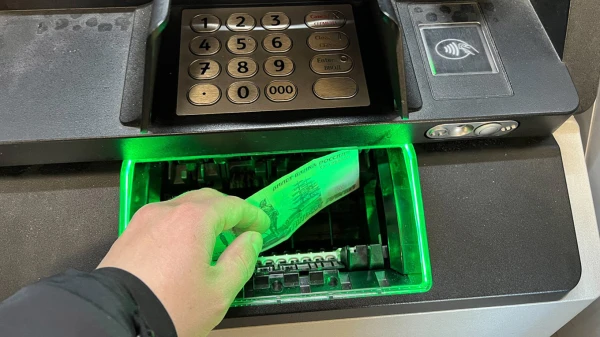
So far, the number of cash withdrawal points has decreased to a minimum in 16 years.
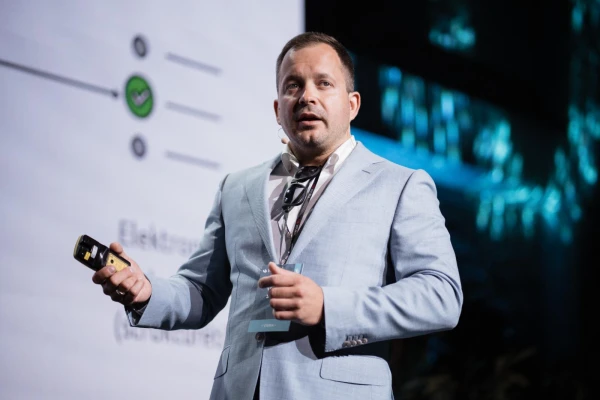
A state network of ATMs will be established in Russia, which will accept cards from all credit organizations and carry out transactions with them. The installation and maintenance of the ATMs will be handled by the Central Bank's subsidiary "Rosinkas," which is the largest cash and valuables carrier in the country, said the head of the organization, Sergey Vereykin, to "RIA Novosti." According to him, banks will be able to connect to the network for a "small fee," while cash withdrawals and deposits will be made free for clients.
"As a result, participating banks will transition from an ownership model to a service model, gaining access to the devices through a subscription or by paying only for the volume of transactions conducted by their clients," Vereykin noted. In this case, "Rosinkas" predicts a reduction in the costs of credit organizations for ATM maintenance by up to 30% from the current level. Vereykin added that the ATMs in the network will be white, without any bank branding, as is "common in international practice." At the same time, according to him, the unified network will allow for the placement of ATMs according to the real needs of the population, "and not just in areas of high commercial profitability." Currently, similar devices are already being installed in the Tambov region as part of a pilot project.
According to the Central Bank, by the end of 2025, the number of ATMs in Russia will have decreased to a minimum since 2010. As of January 1, 2026, there were 138,602 self-service devices in the country, of which 110.4 thousand had cash withdrawal functions. Over the course of a year, the network shrank by 5.9 thousand units. Moreover, the trend of decreasing the number of ATMs has been observed in the country for about 10 years. The maximum number of devices in Russia was recorded in 2014 — 222.8 thousand. The reduction of the network is associated with the development of digital services and cashless payments, as well as with the optimization of banking expenses.
Previously, Russian banks began blocking transactions for withdrawing large sums of cash through ATMs. Prior to this, the Central Bank, as part of its fight against fraud, identified signs that credit organizations should follow to detect suspicious transactions and limit cash withdrawals at ATMs. Among them are unusual times of day when requesting money, atypical amounts or locations of ATMs, as well as requests for cash withdrawals that are uncharacteristic for the client — for example, not from a card, but via a QR code.
<iframe width="560" height="315" src="https://www.youtube.com/embed/Kr0iFJaJdNQ?si=WLiTIPF0PVxAytTM" title="YouTube video player" frameborder="0" allow="accelerometer; autoplay; clipboard-write; encrypted-media; gyroscope; picture-in-picture; web-share" referrerpolicy="strict-origin-when-cross-origin" allowfullscreen></iframe>